The collection is in connection with the archaeological research of the fortress “Kalyata” near Yakoruda, which began in 2007 and continued intermittently until 2021 under the leadership of Asst. Dr. Mariela Inkova. It covers movable cultural values with a wide chronological range related to the occupation of the site:
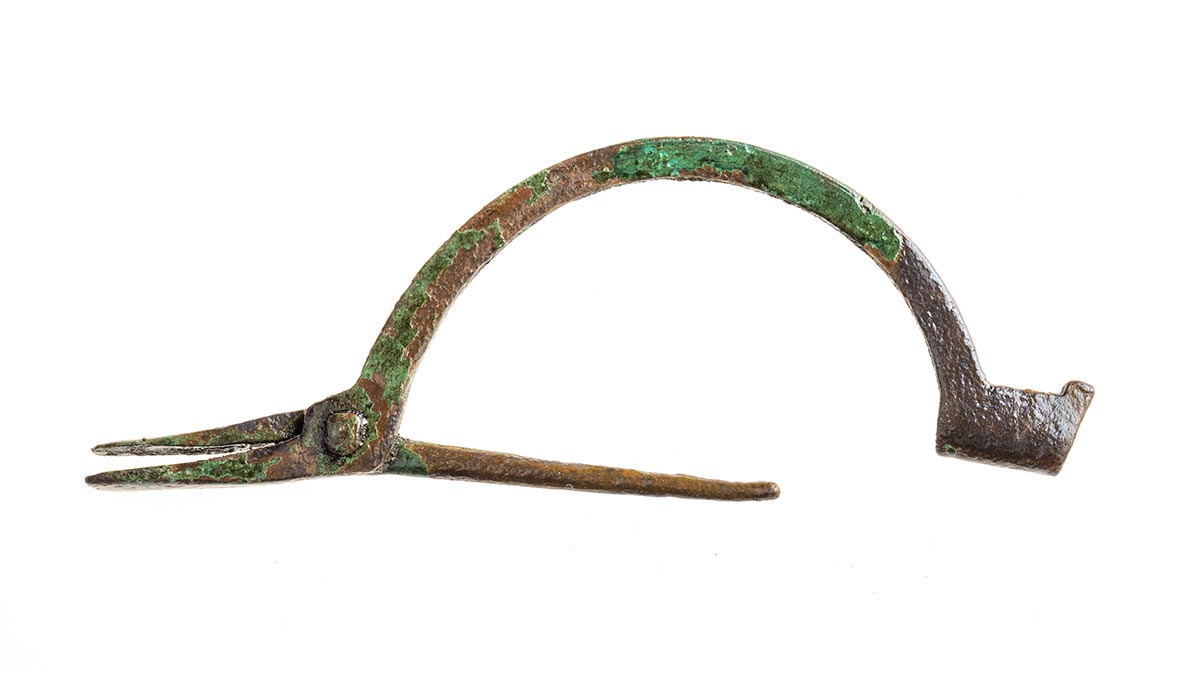
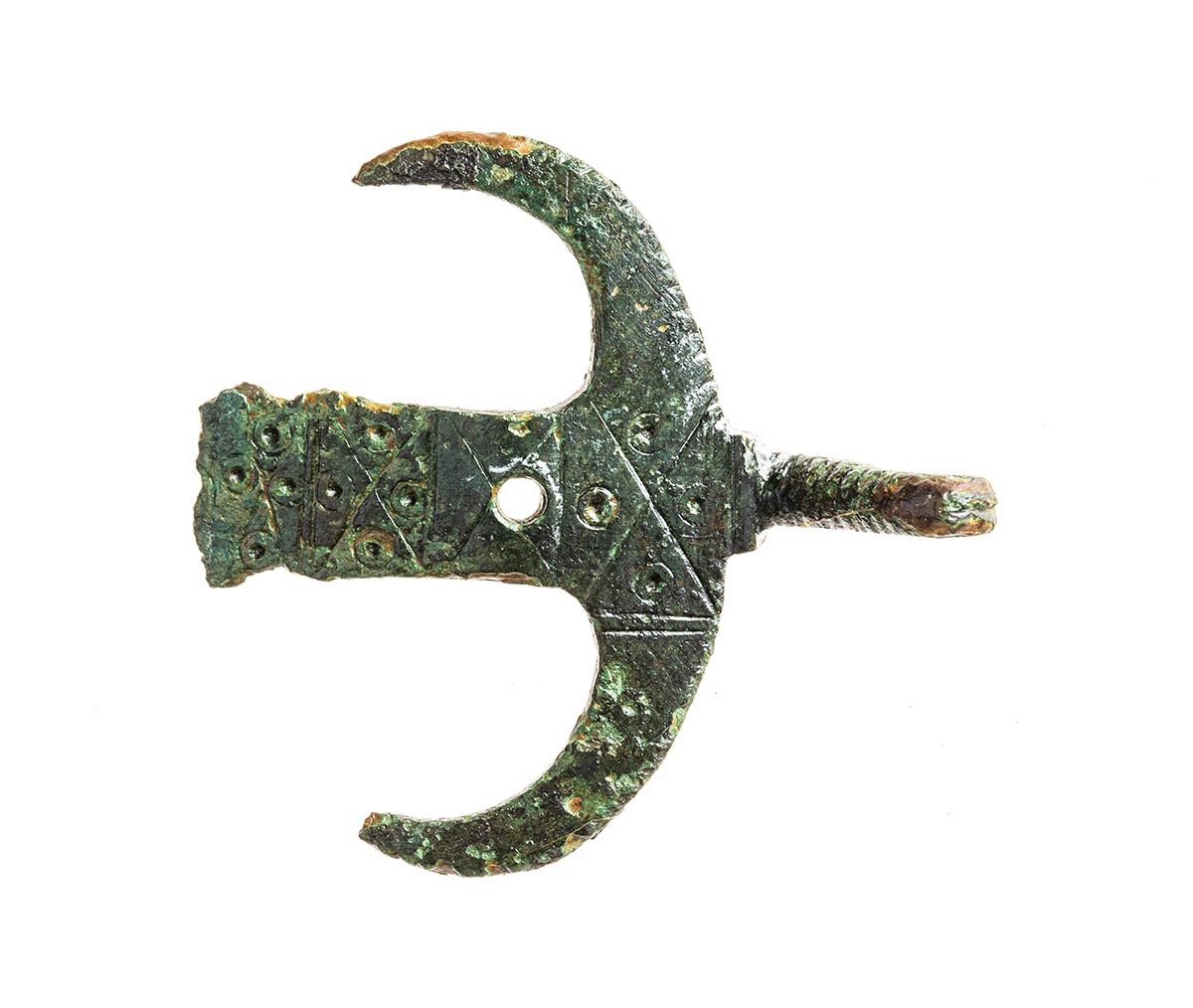
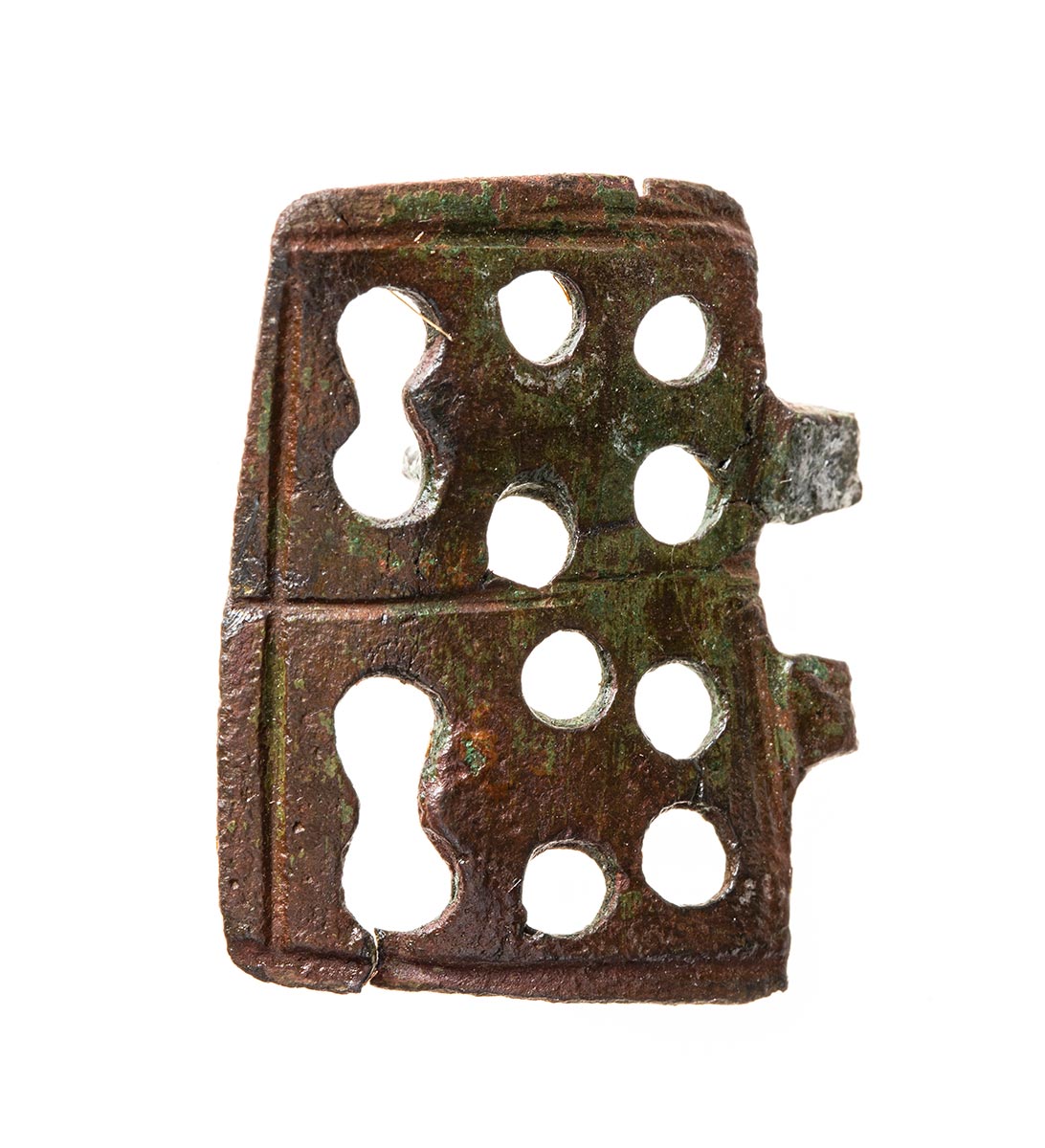
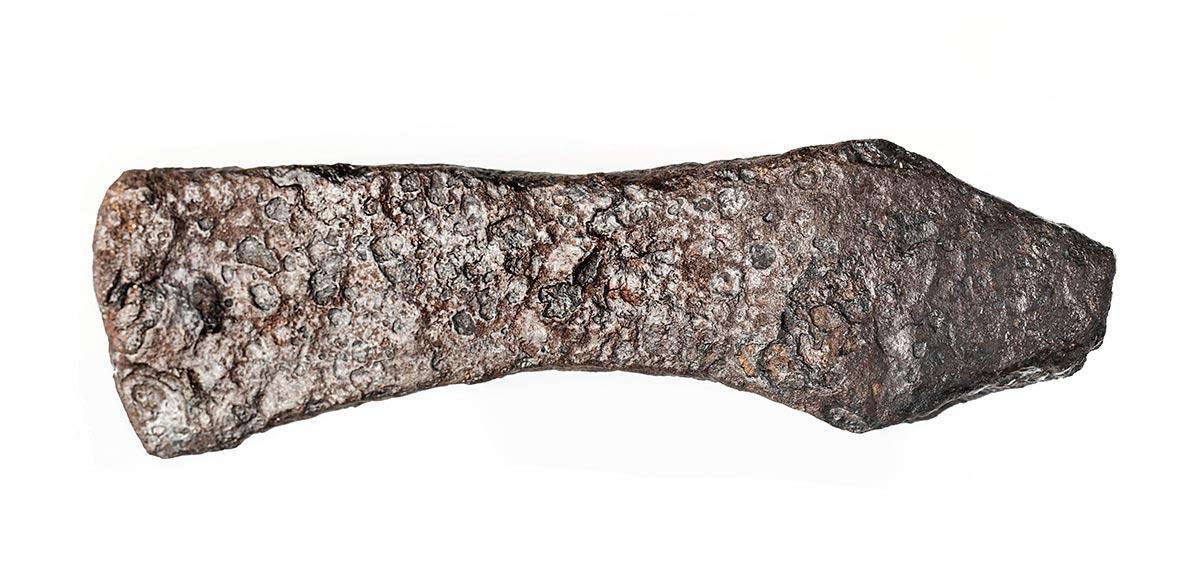
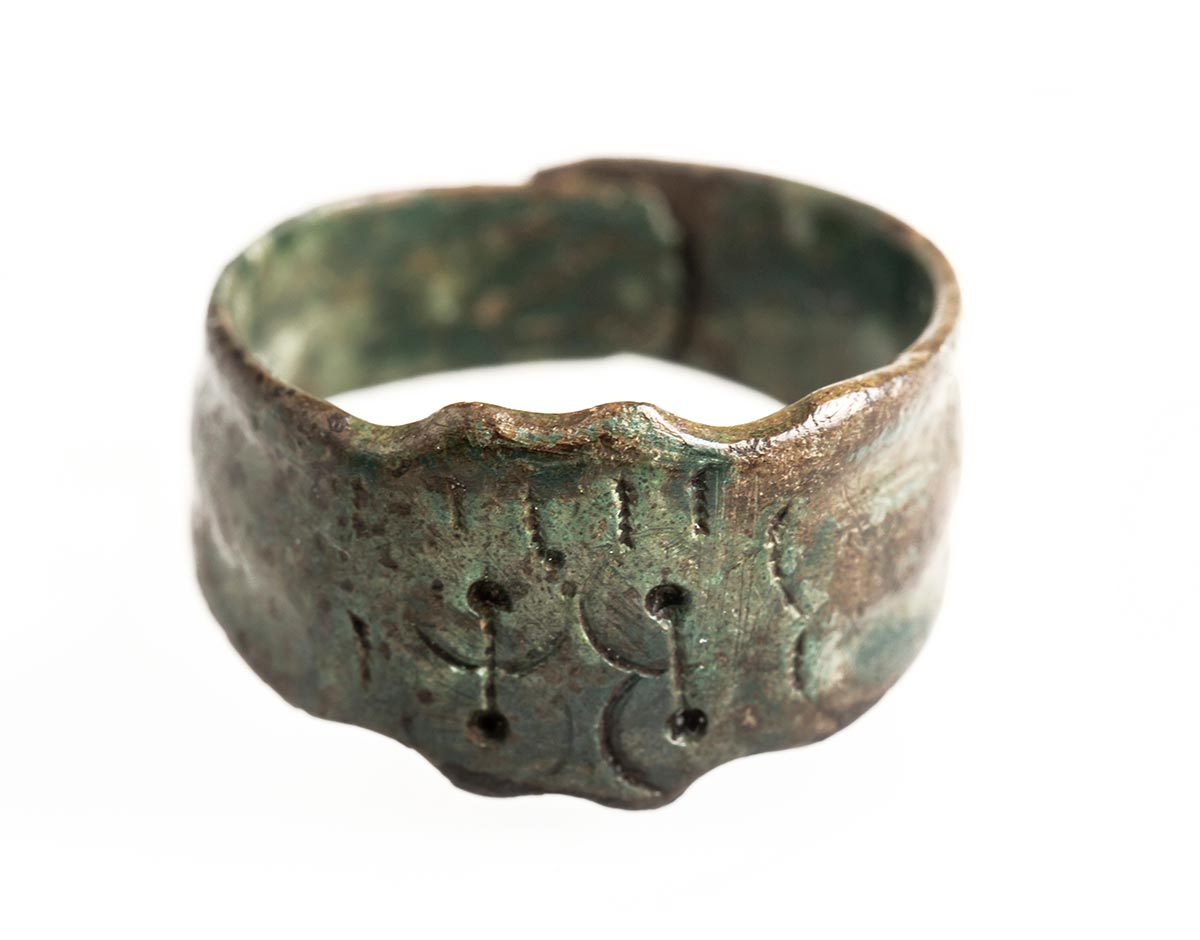
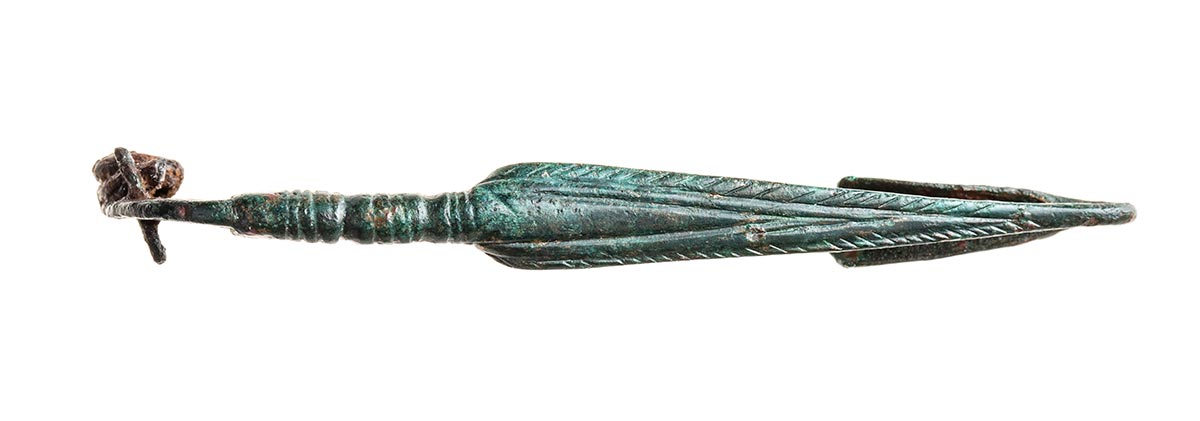
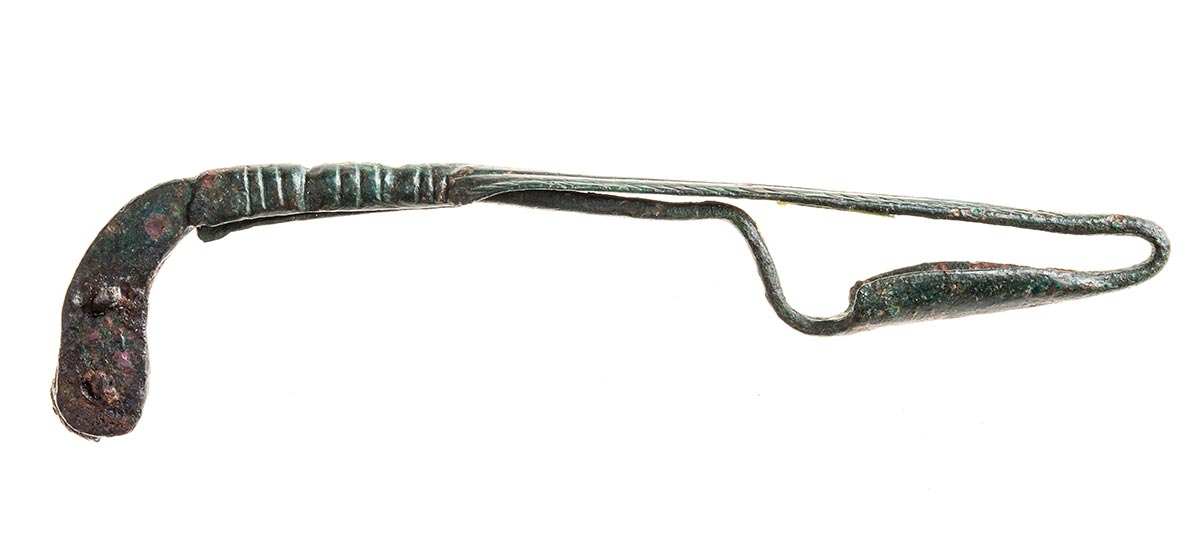
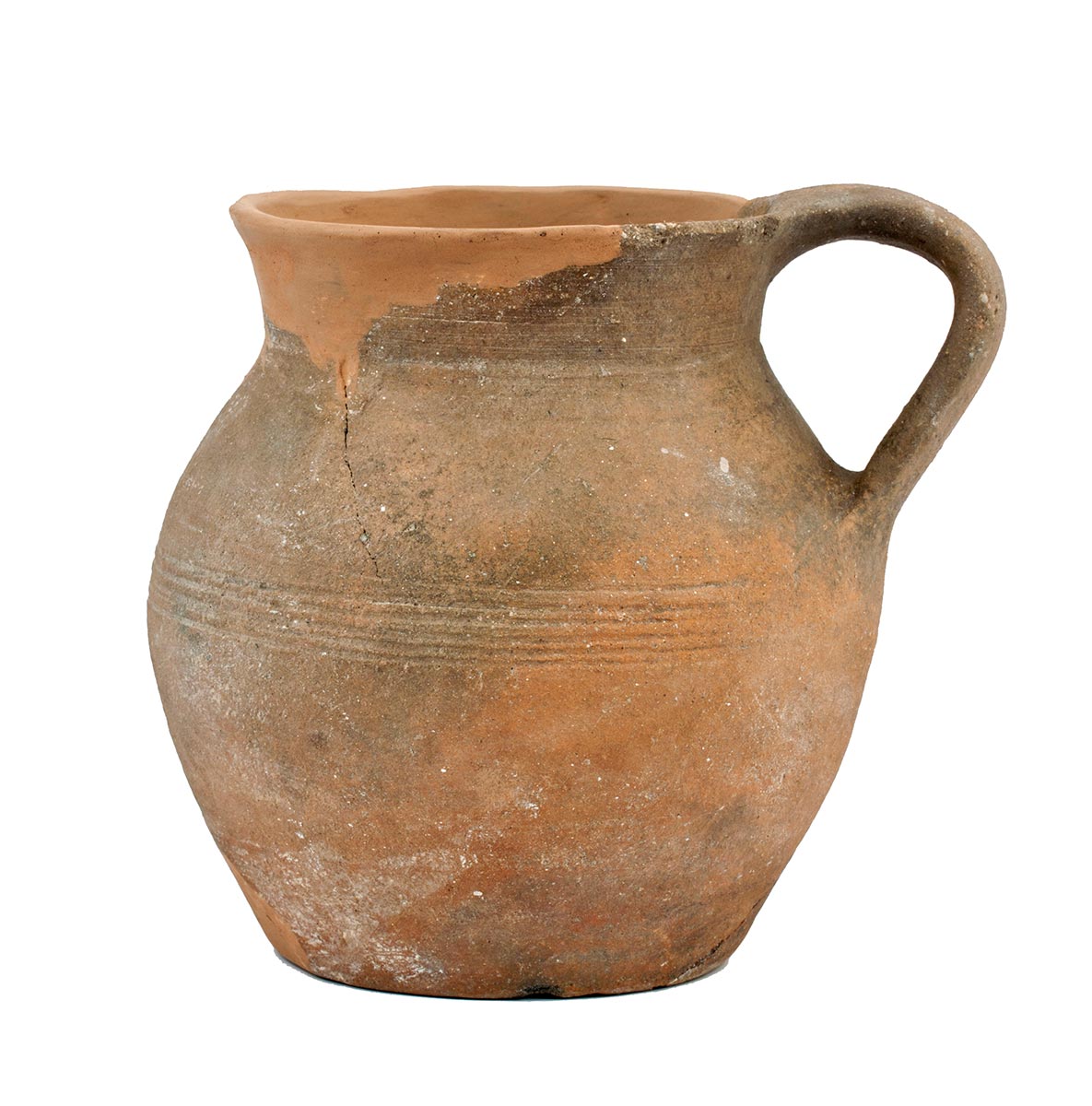
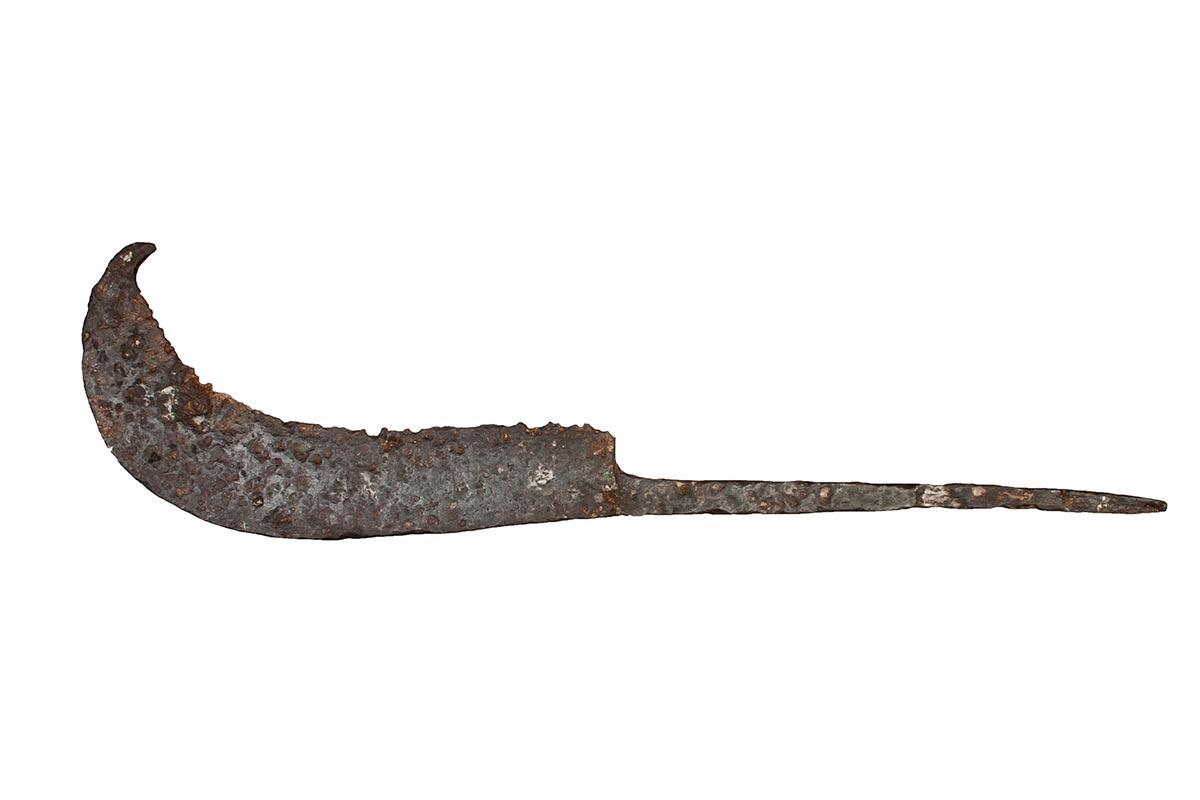
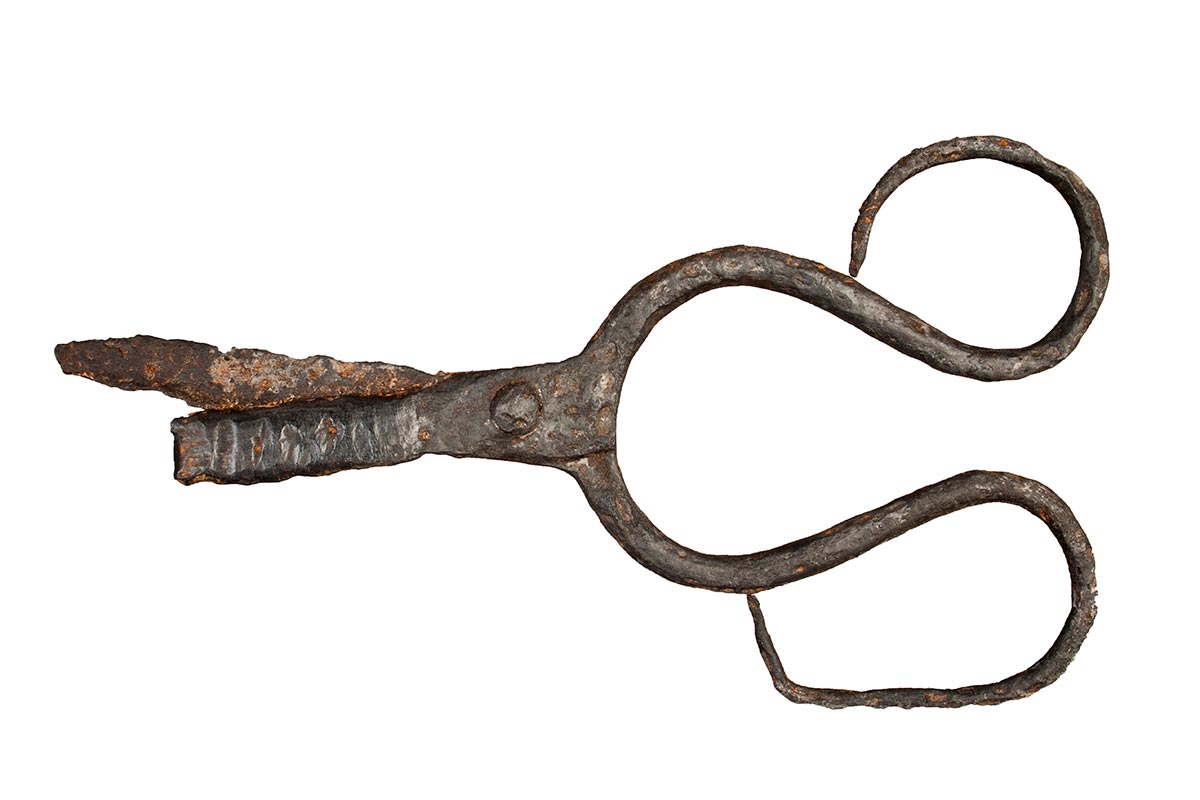
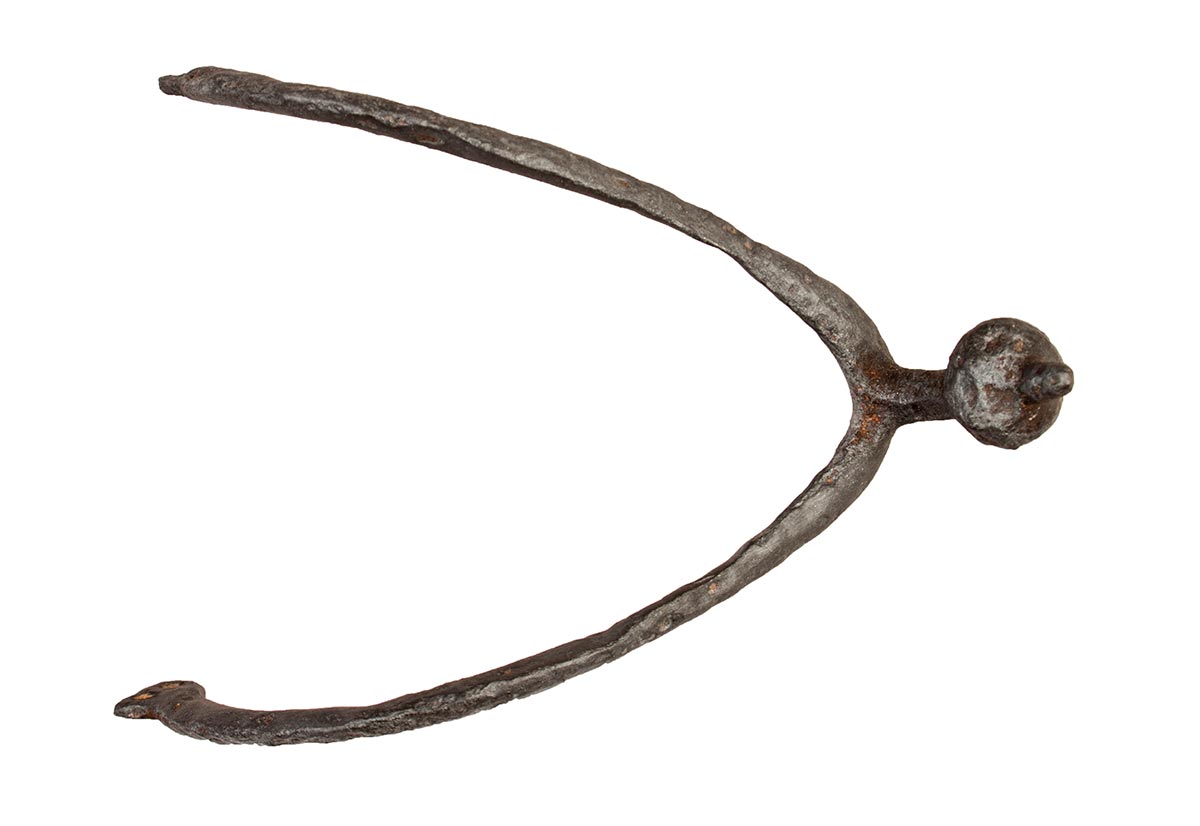
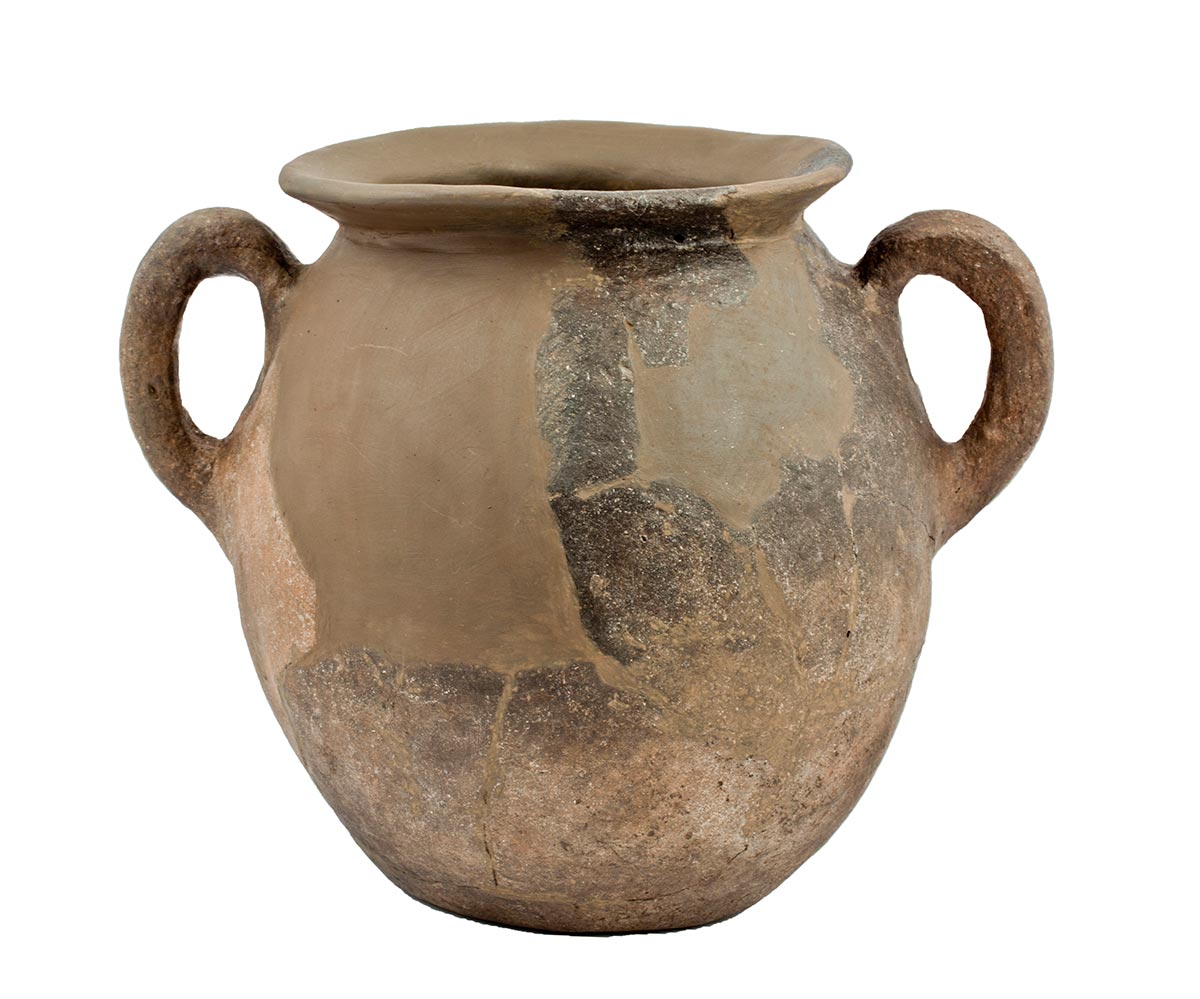
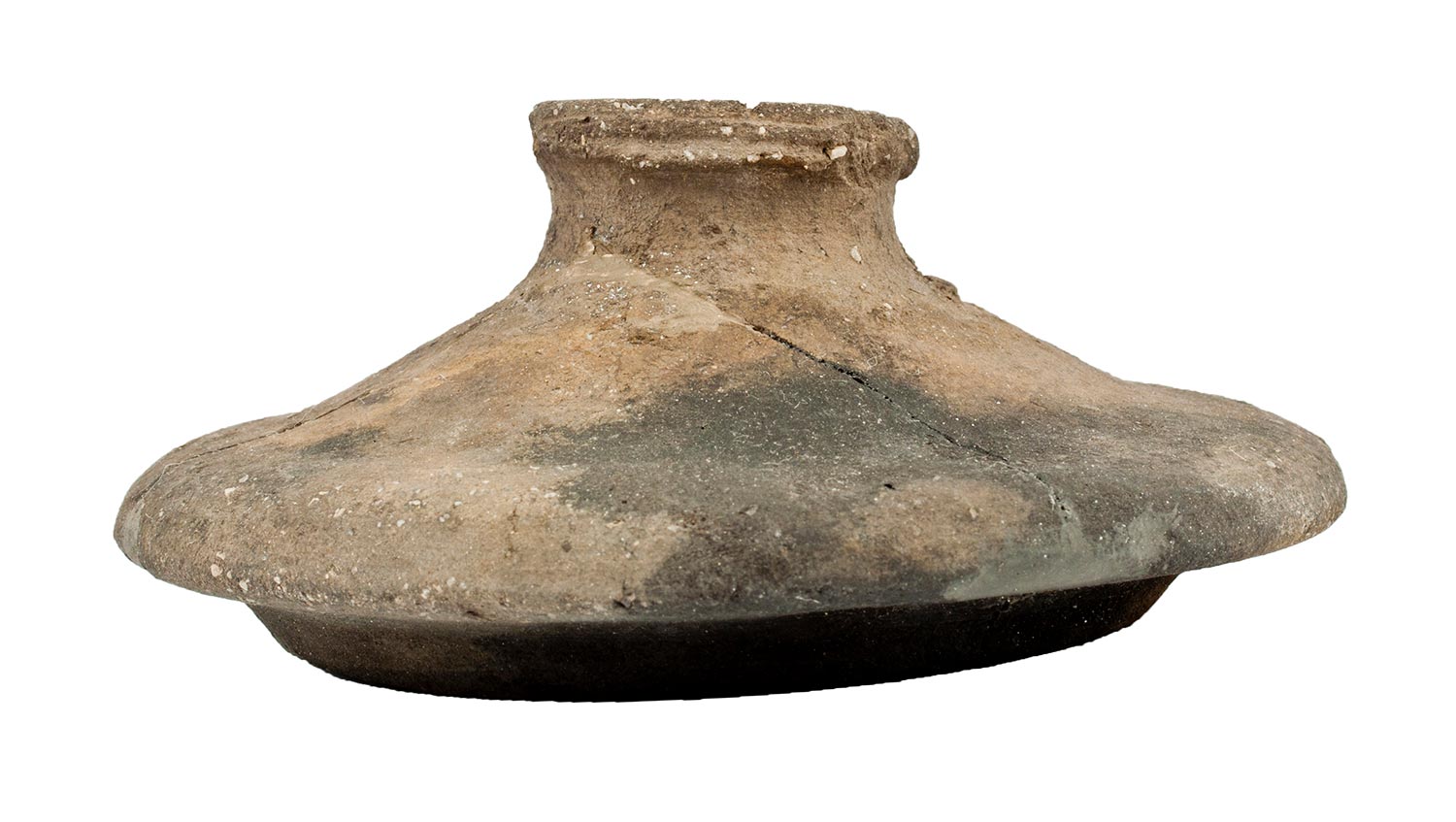
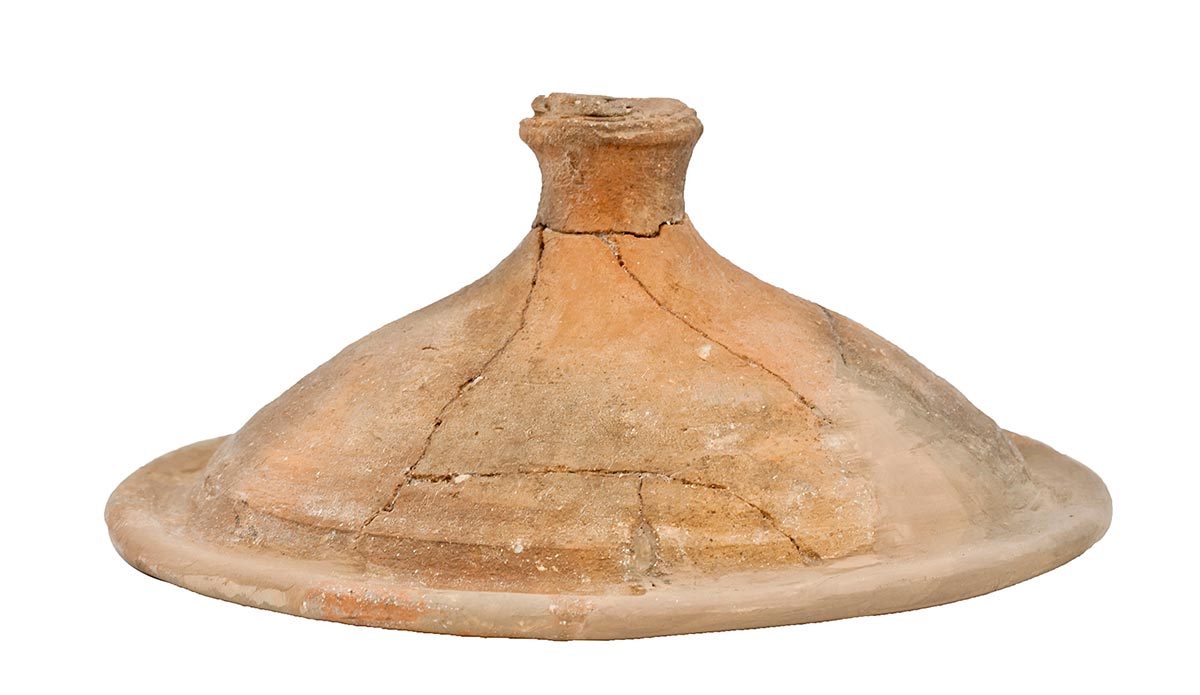
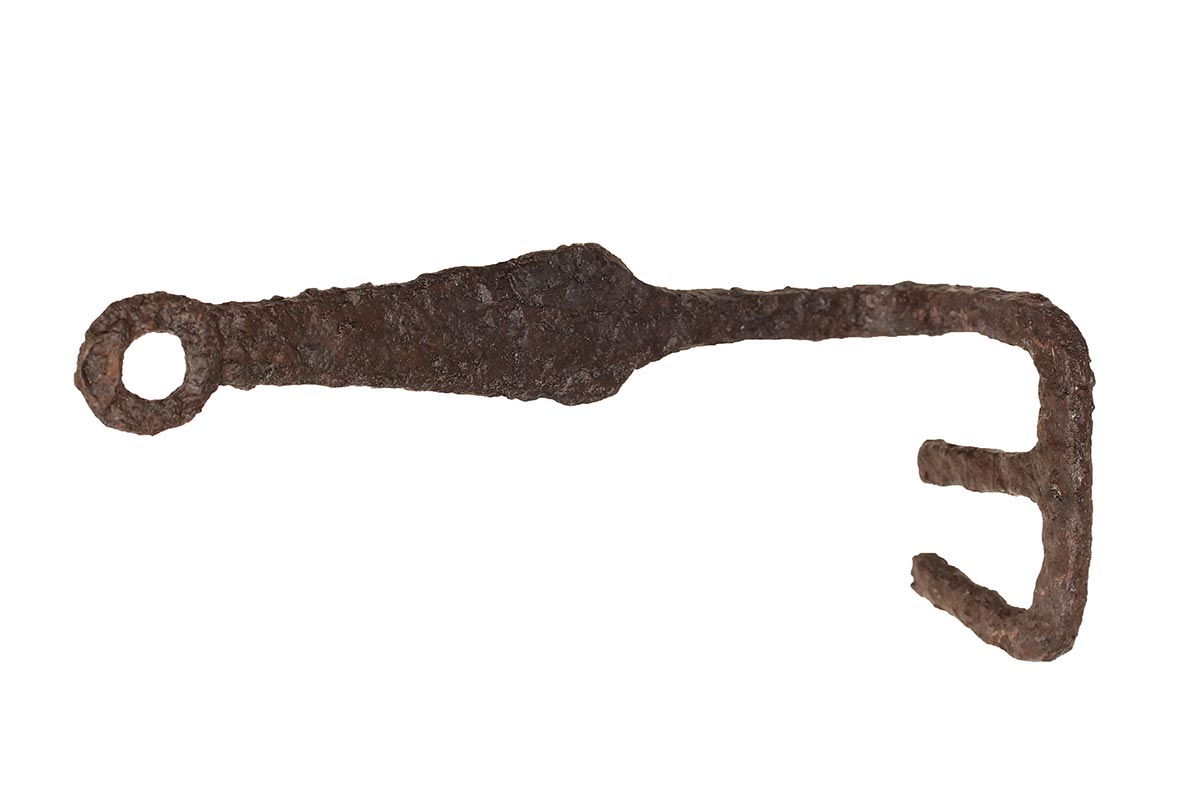
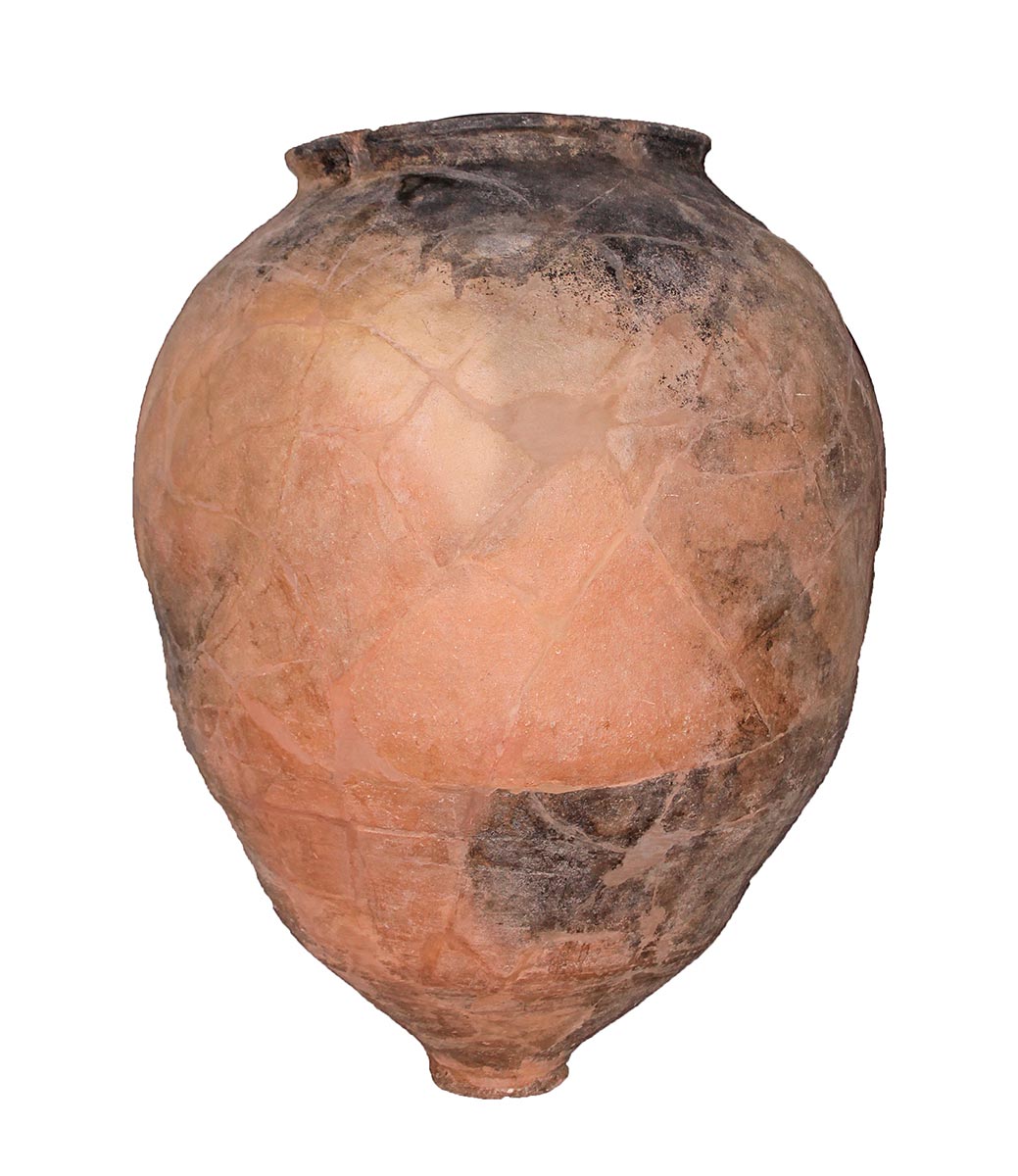
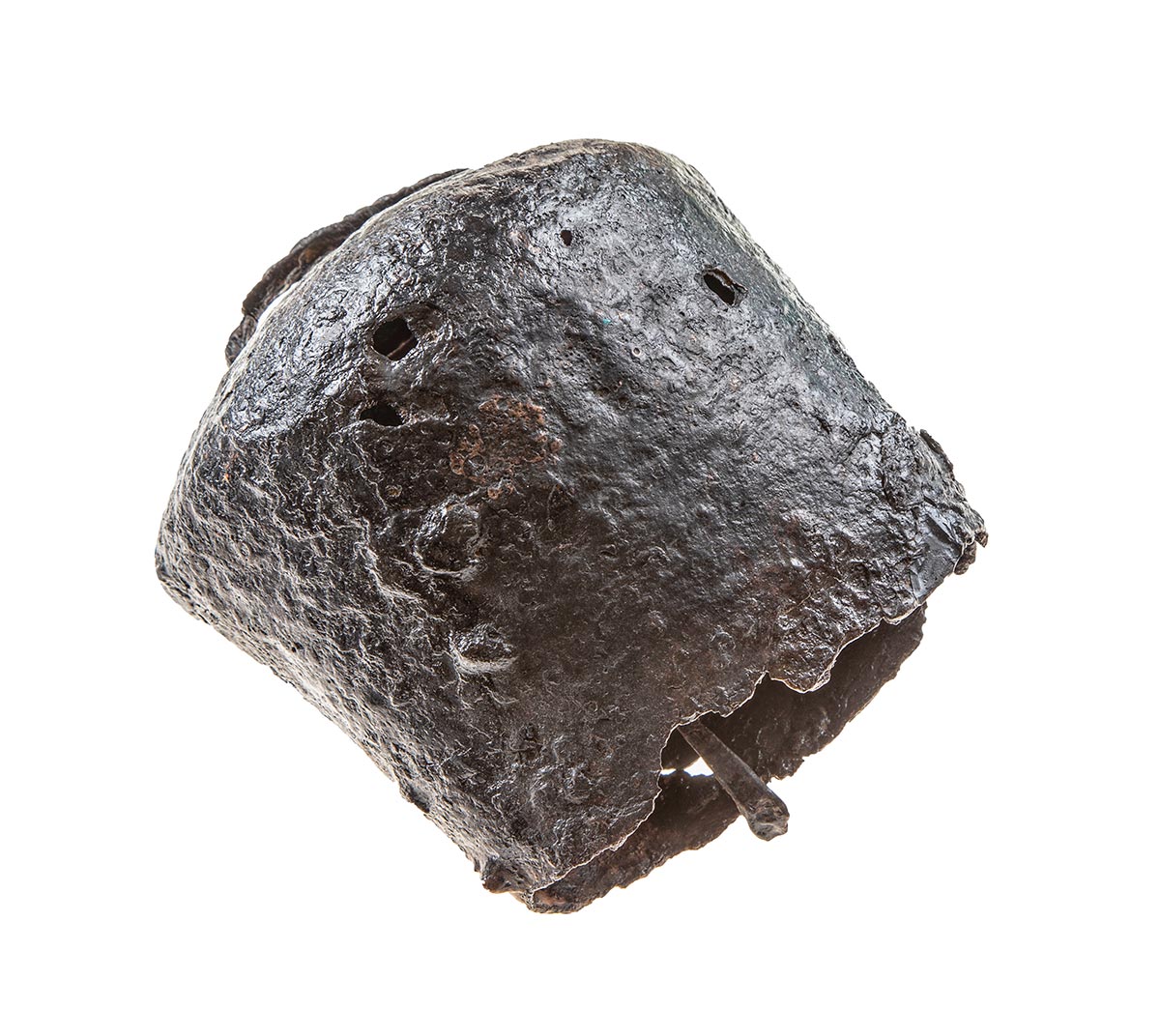
ceramic fragments of the “Zepina” type /1/, including portable altars, spindle vertebrae, fibulae, dated III – I century BC, predating the construction of the fortress /2/; Late Antique, related to its functioning as a fortified settlement of the local population – mainly household objects /2c, 2c/ and the crafts practiced: kitchen ceramics /2a/, pithos /3/, a roaster (brazier) /4/, a frying pan, a pot lid /5/, spindle whorls, knives, whetstones, sheep-shearing shears, clapper, weights for a vertical loom, spindle whorls, thimble-hooks with an image of a bird /7/, trowel with mortar stuck on it /8/, accessories to clothing – toques /9, 10, 11/, appliqués /6/, fibulae, fragments of a wooden chest with bone appliqués and metal fittings /12/ and armament, among which iron spikes /13/, a spearhead /14/, arrowheads, an umbo on a shield /15/ stand out, dated to the 6th century. The burning of the fortress, probably during the Slavic-Avar invasion in the area of the r. Struma and Mesta in the 70s of the century led to hiatus, which is why there are no monuments from the next few centuries.
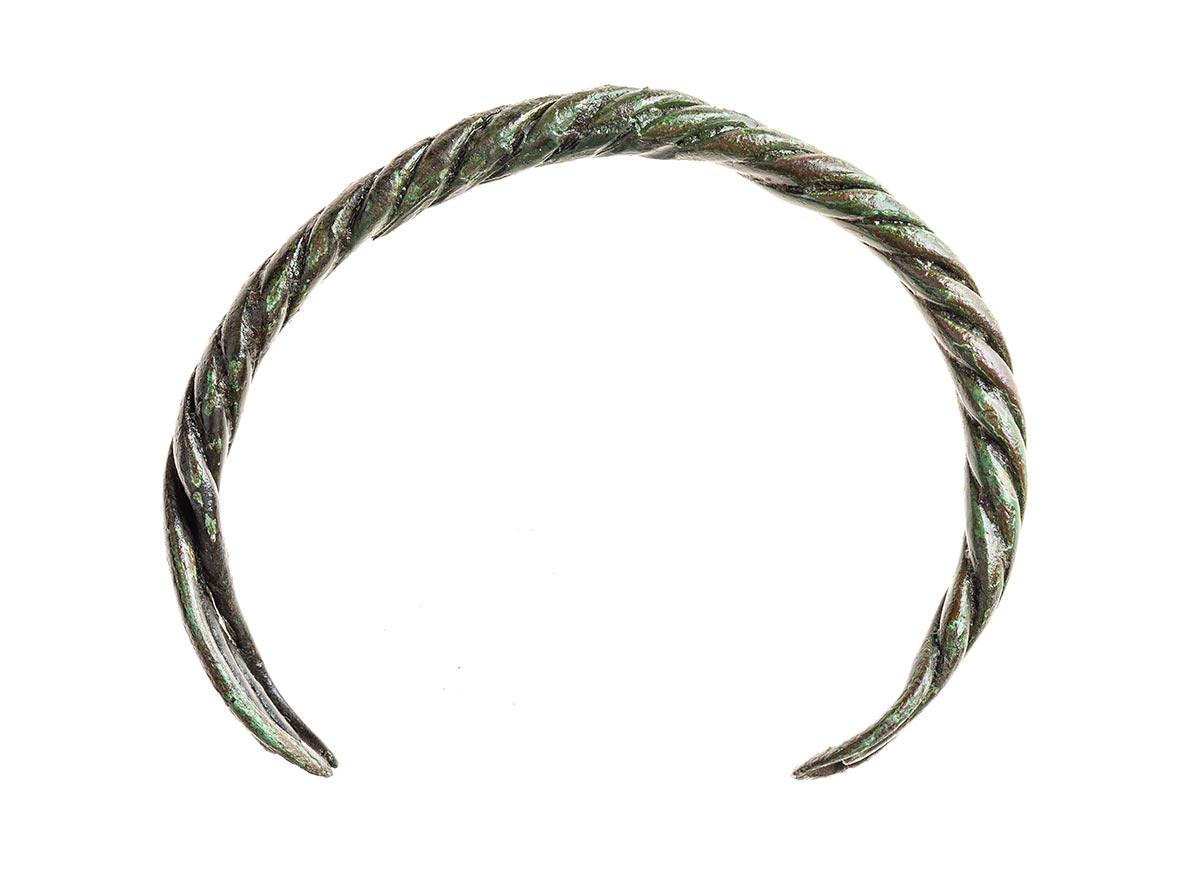
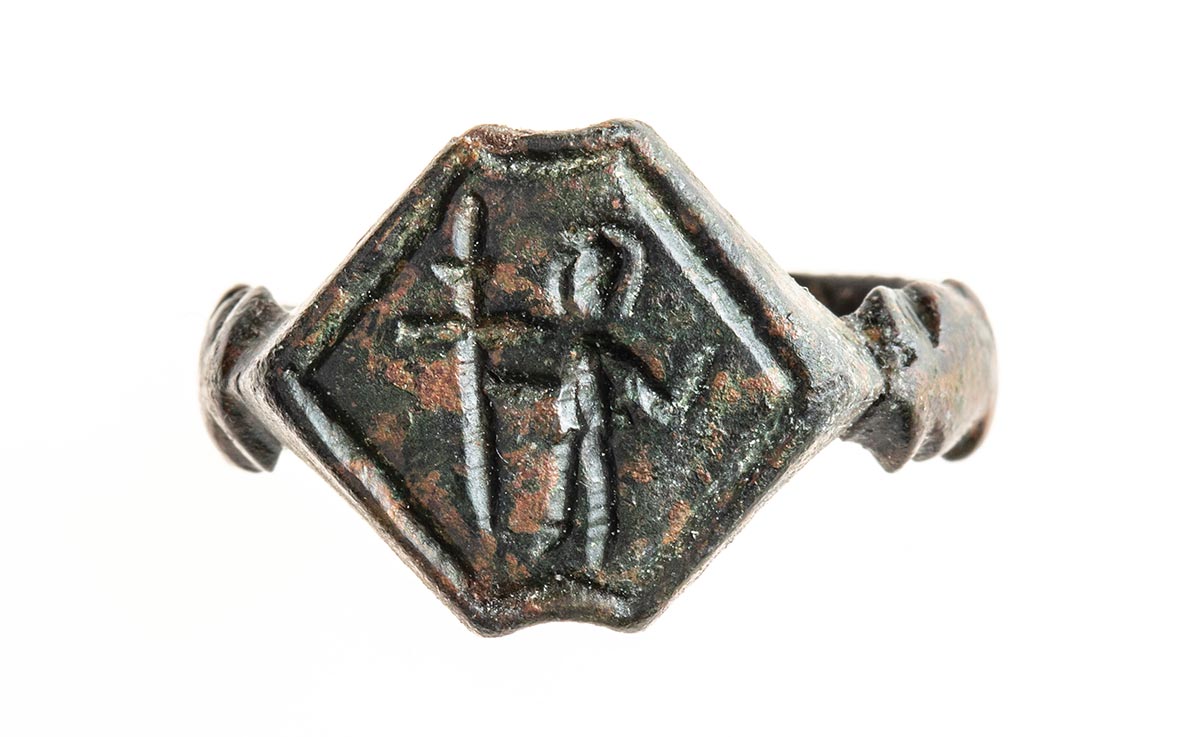
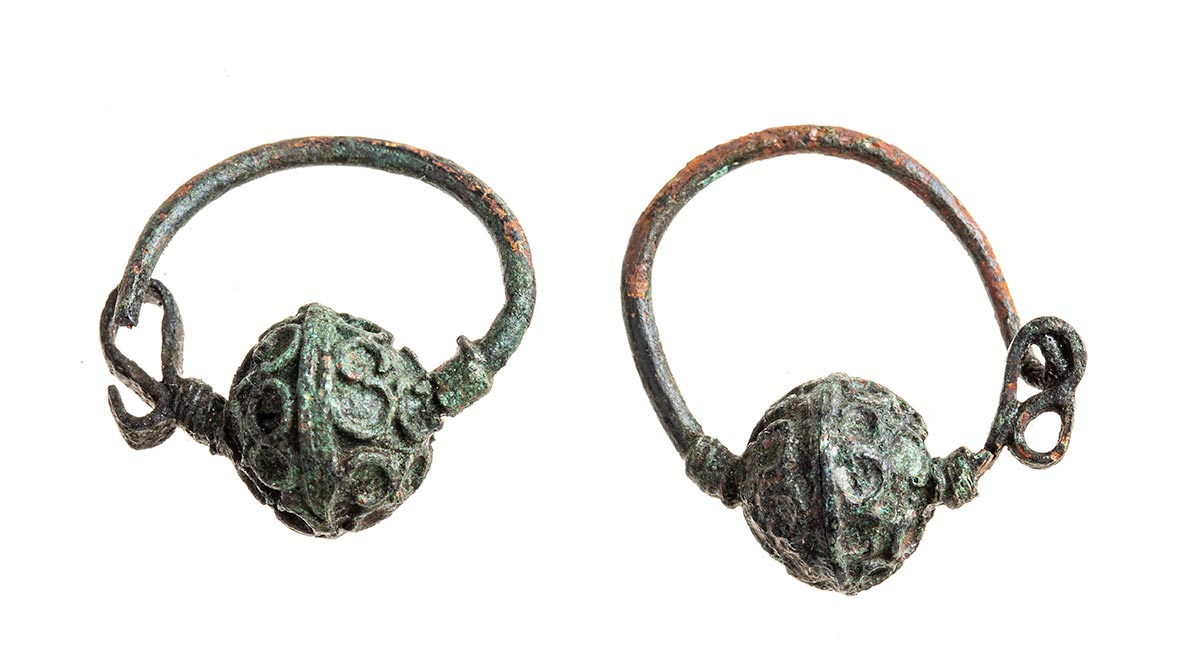
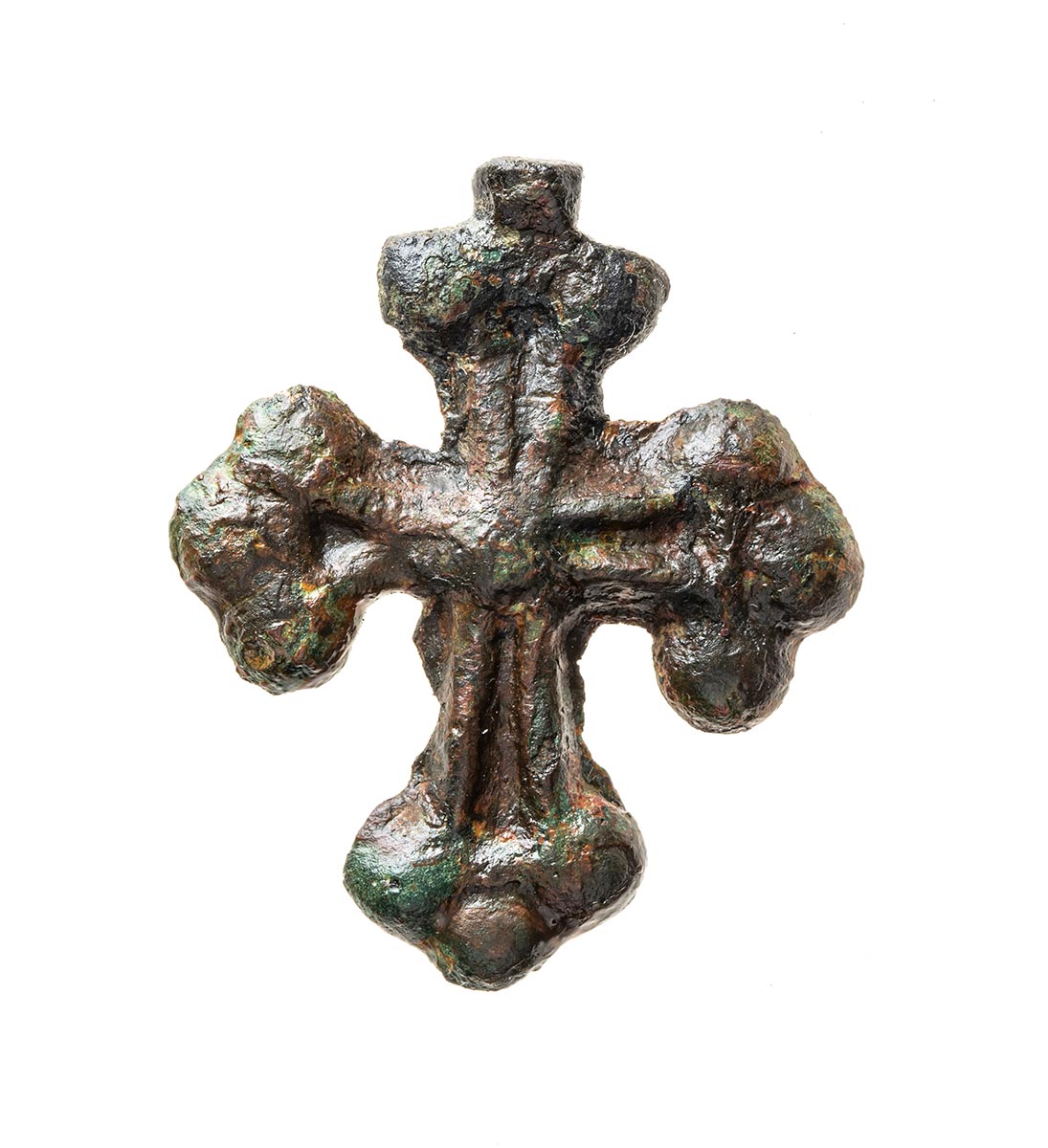
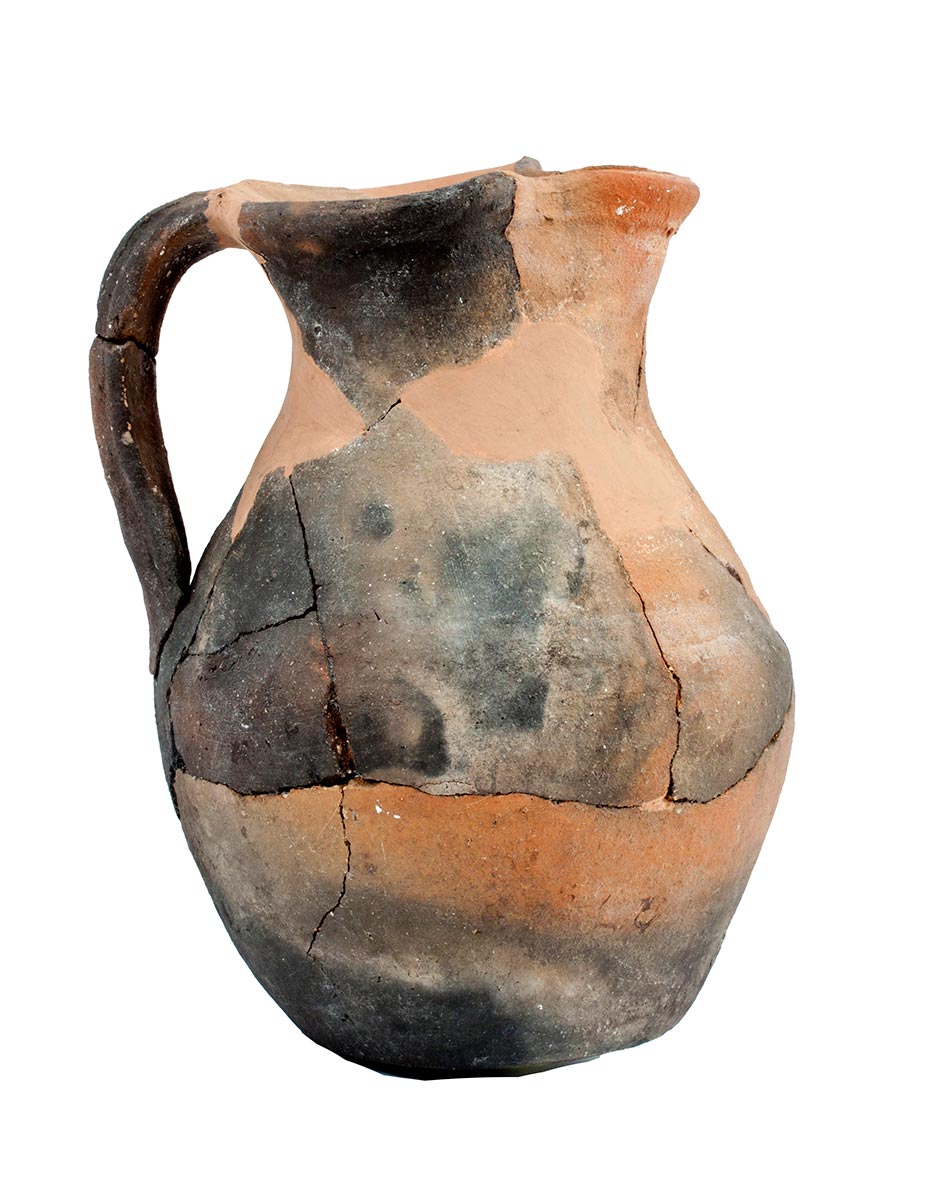
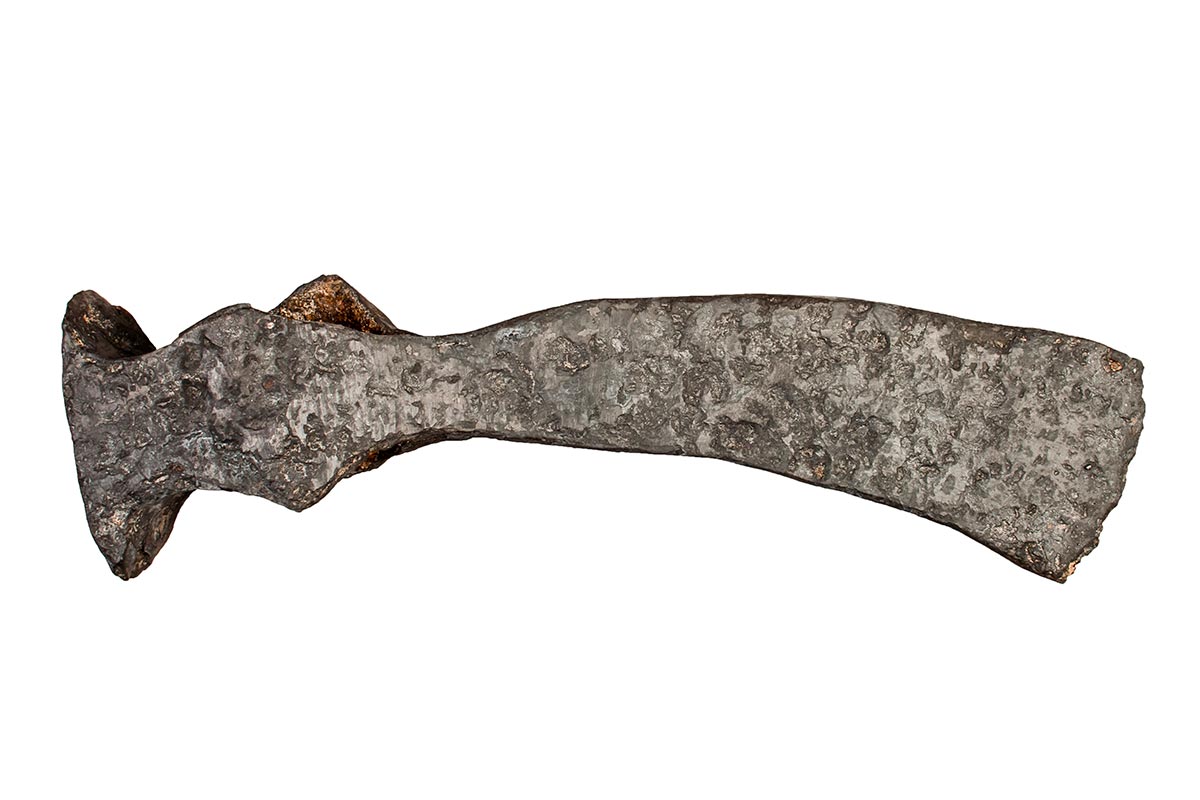
The medieval artefacts in the collection reflect the resumption of life in the fortification during the 11th /8th/first half of the 13th century, when a new fire interrupted the occupation. Items related to carpentry /16/, animal husbandry, household pottery, spindle whorls, jewellery, etc. predominate. /17,18,19/. Noteworthy is a collective find with 6 crosses. Valuable items for the population were probably hidden in a pot with rye seeds. Among them there are elements of ecclesiastical polyoleum or polycandelion /20/ and breast reliquary crosses with the depiction of the pair of twin saints Sts. Sts. George /21/ and Sts. Dimitar – St. Nicholas, the patron saints of agriculture /22/.
The traces of the coin circulation of the fortress from the 3rd – 1st centuries BC, the 6th century and the 12th – the first half of the 13th century are preserved in the collection “Numismatics and Sphragistics”.