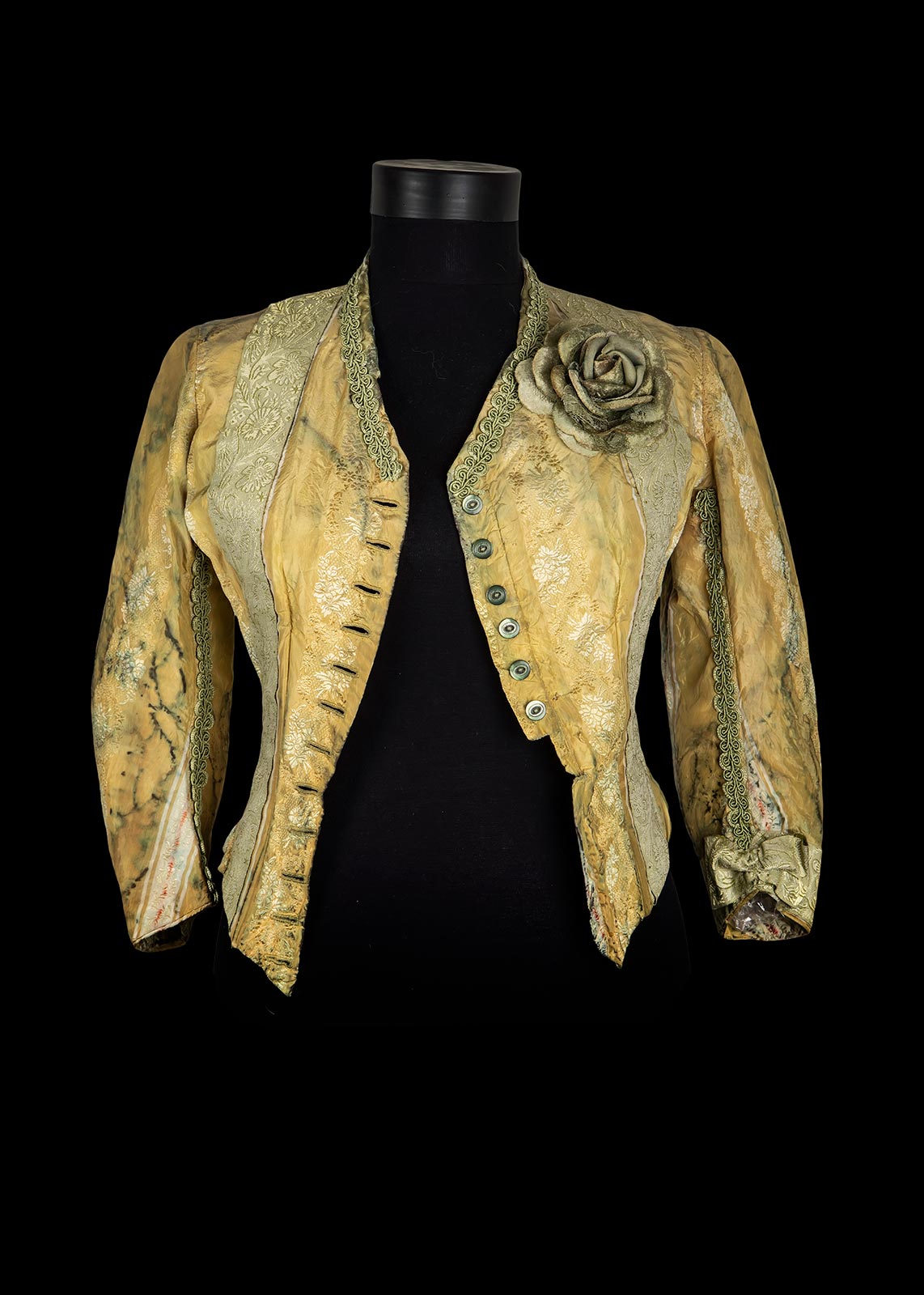
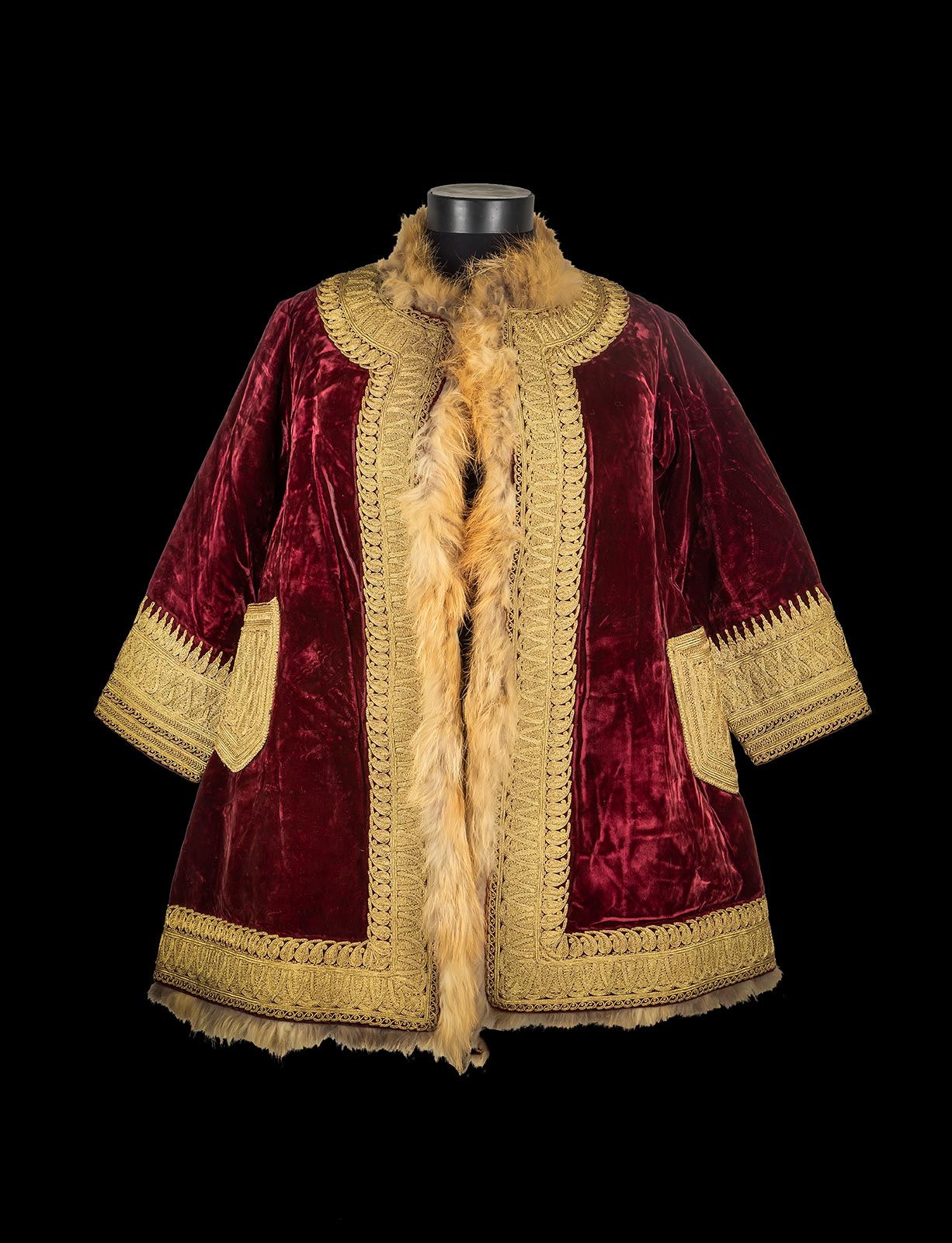
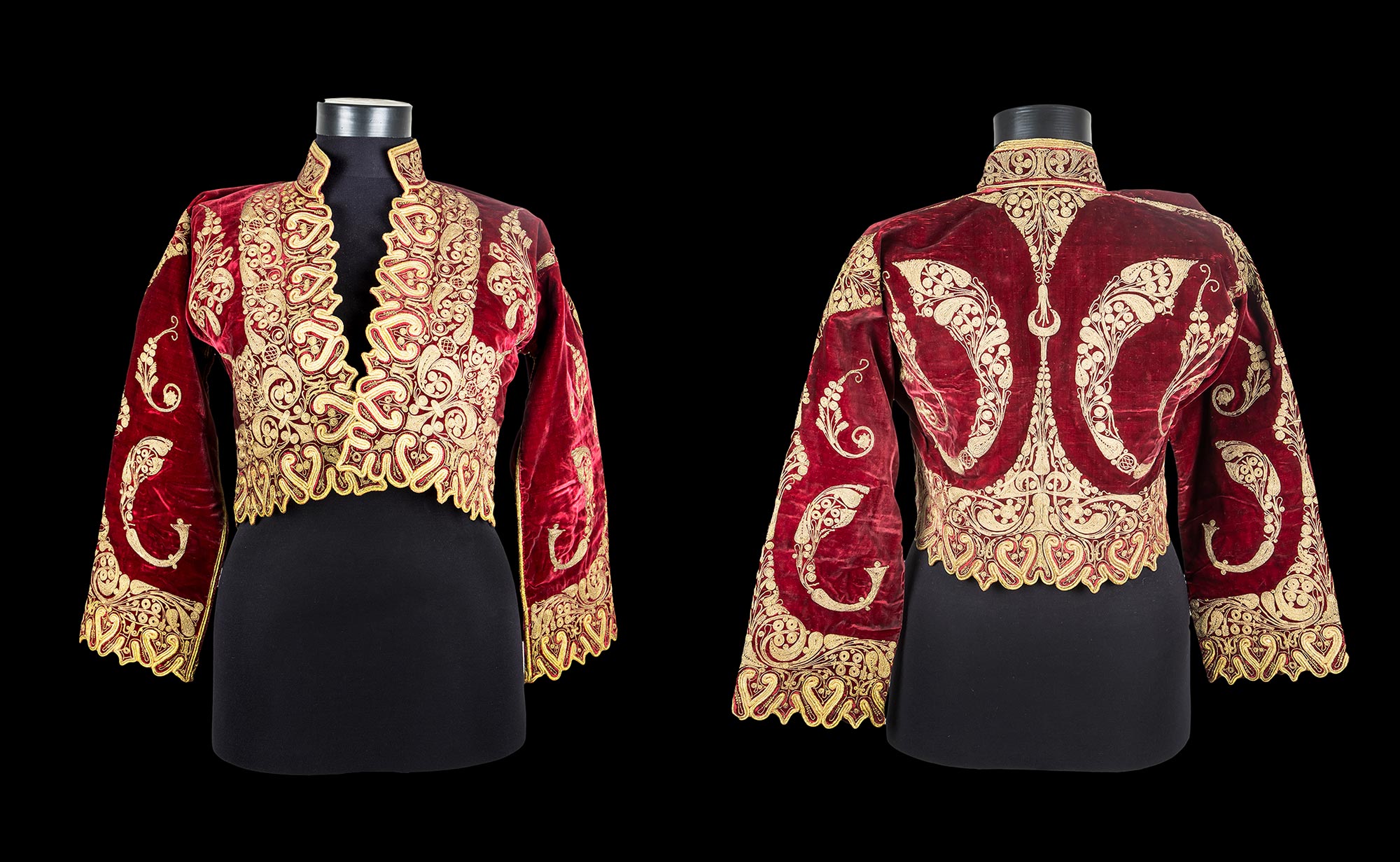
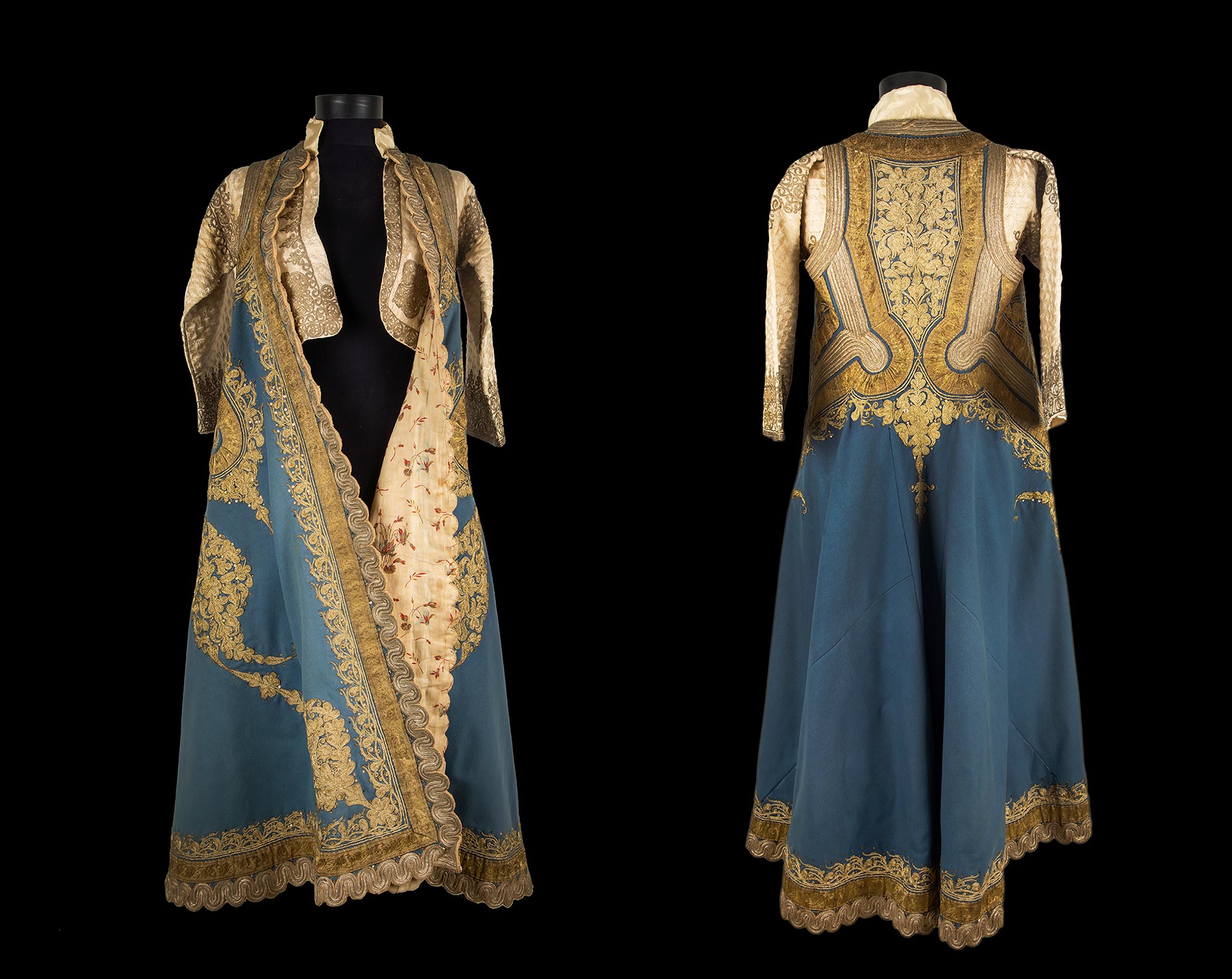
The collection was established in 1976 and contains about 1400 museum objects. The “uniforms” section includes military, service and school uniforms as well as individual items.
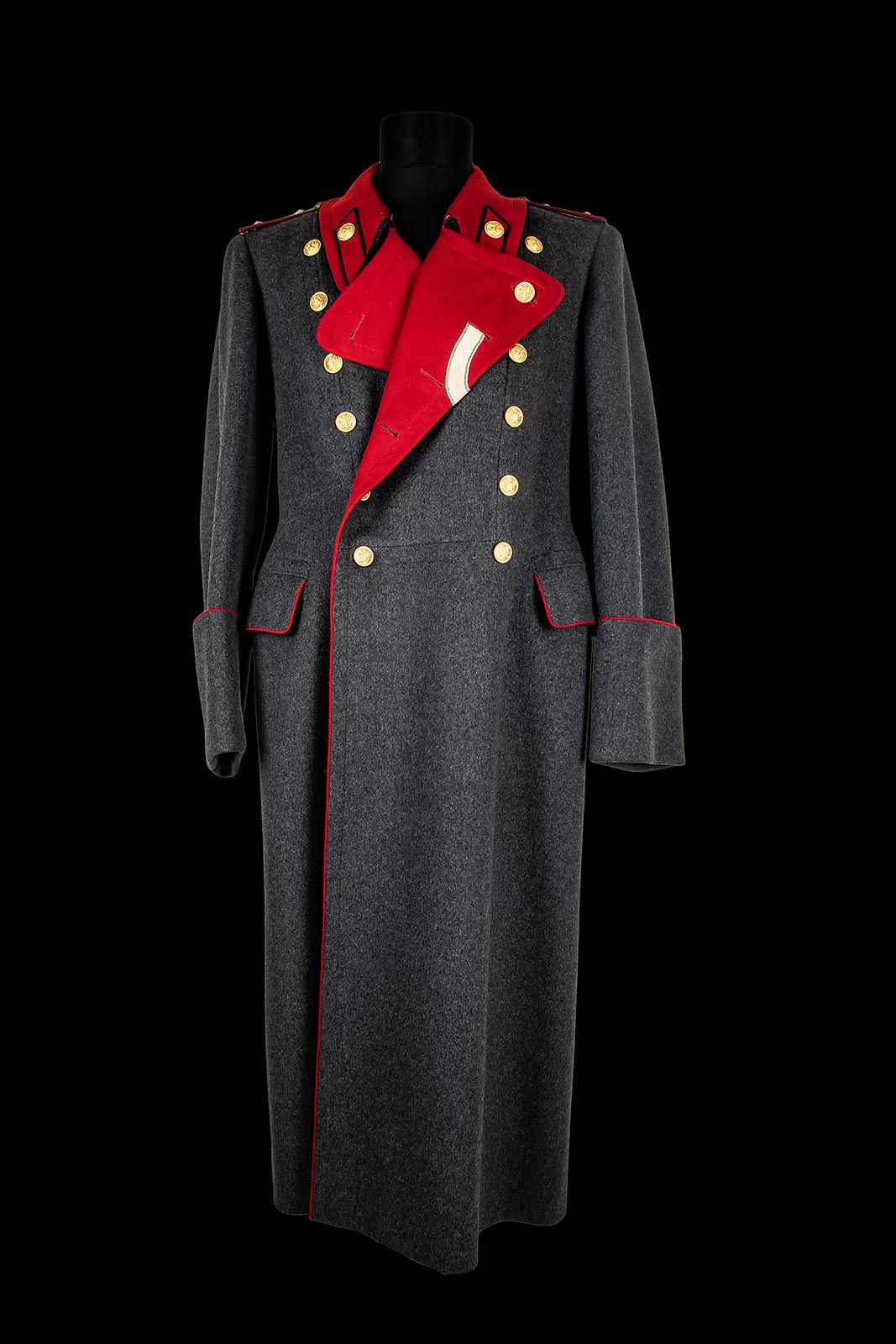
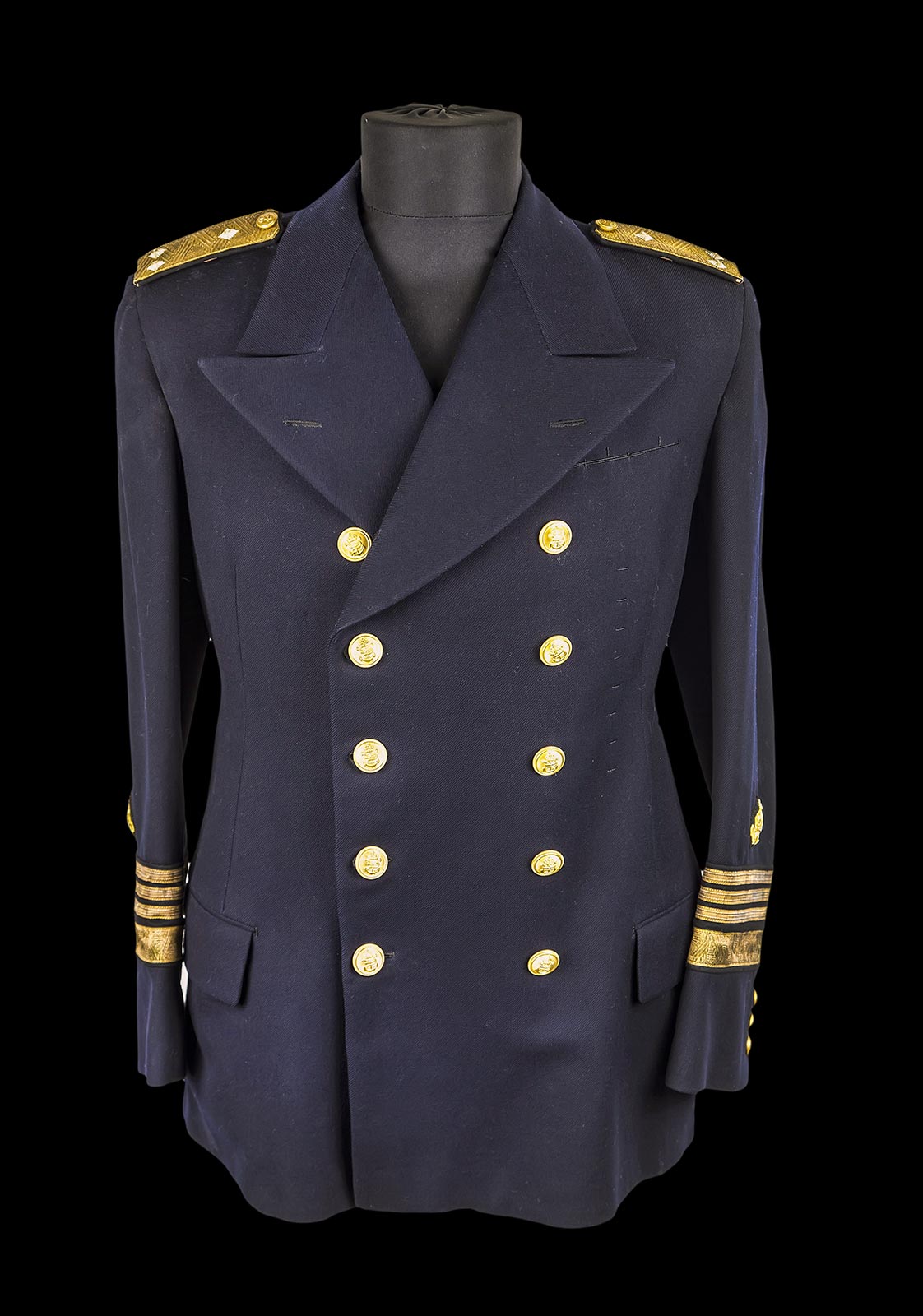
Among them are the uniforms of participants in the wars for national unification, uniforms of officers of the Bulgarian Air Force. Interesting exhibits are the elements of the uniforms of Tsar Boris III – admiral’s uniform and cape, general’s overcoat and parade helmet.
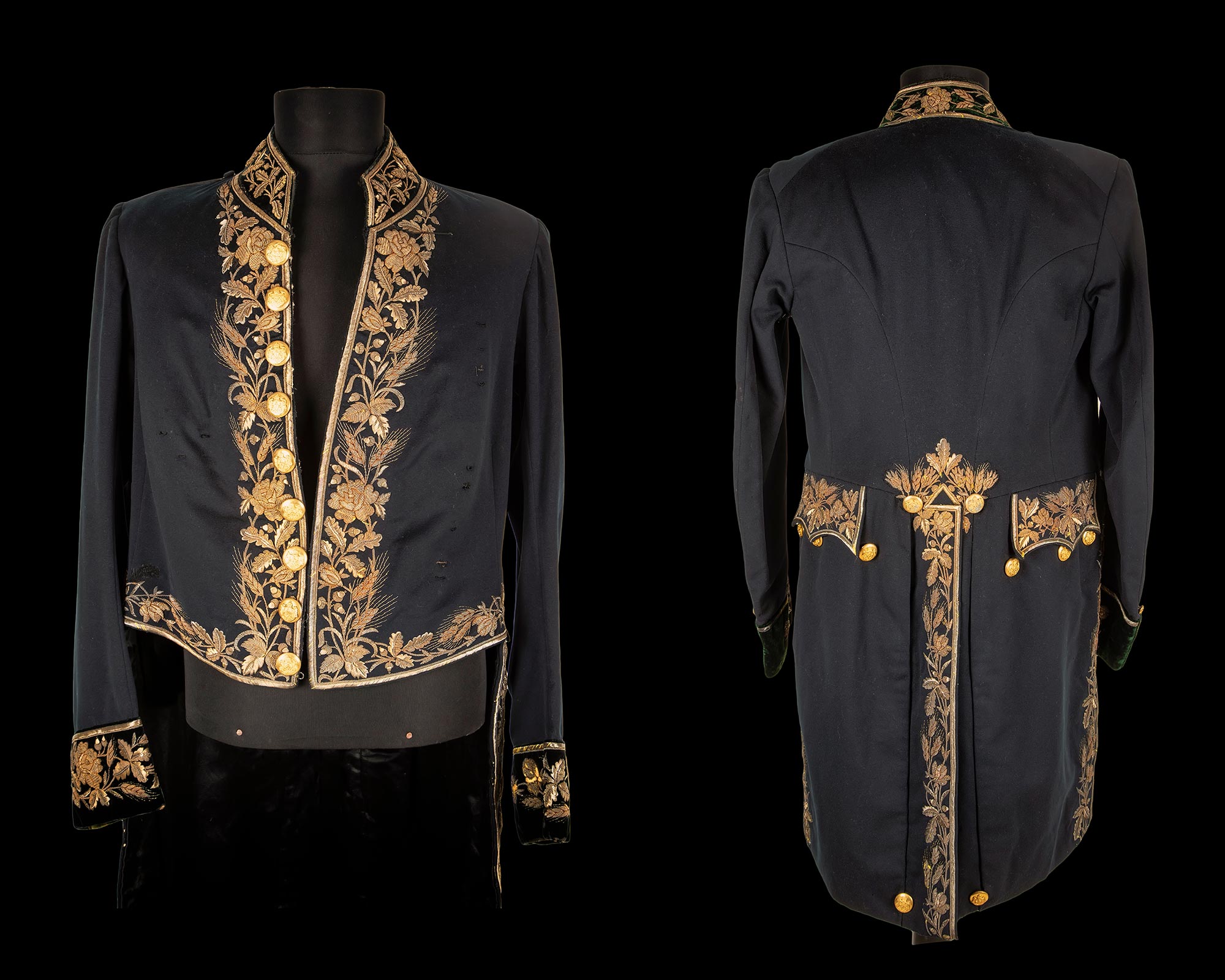
Among the service uniforms, suits of diplomatic uniforms with rich decoration stand out. The number of uniforms of palace officials is also significant: those of senior officials in the palace office, as well as those of various ranks of service staff.
Student uniforms are few and far between. They are also from more recent times.
Urban clothing includes men’s, women’s and children’s clothing, as well as accessories from the late 19th century to the present.
Men’s clothing is represented by formal suits – tailcoats, tuxedos and casual ones. They belong to prominent Bulgarian politicians, public and cultural figures, as well as to ordinary citizens. Among them are the tailcoats of Andrei Lyapchev – Bulgarian politician, Stefan Bobchev – politician and public figure, personal belongings of Dragan Tsankov, casual suits of Tsar Boris III, etc.
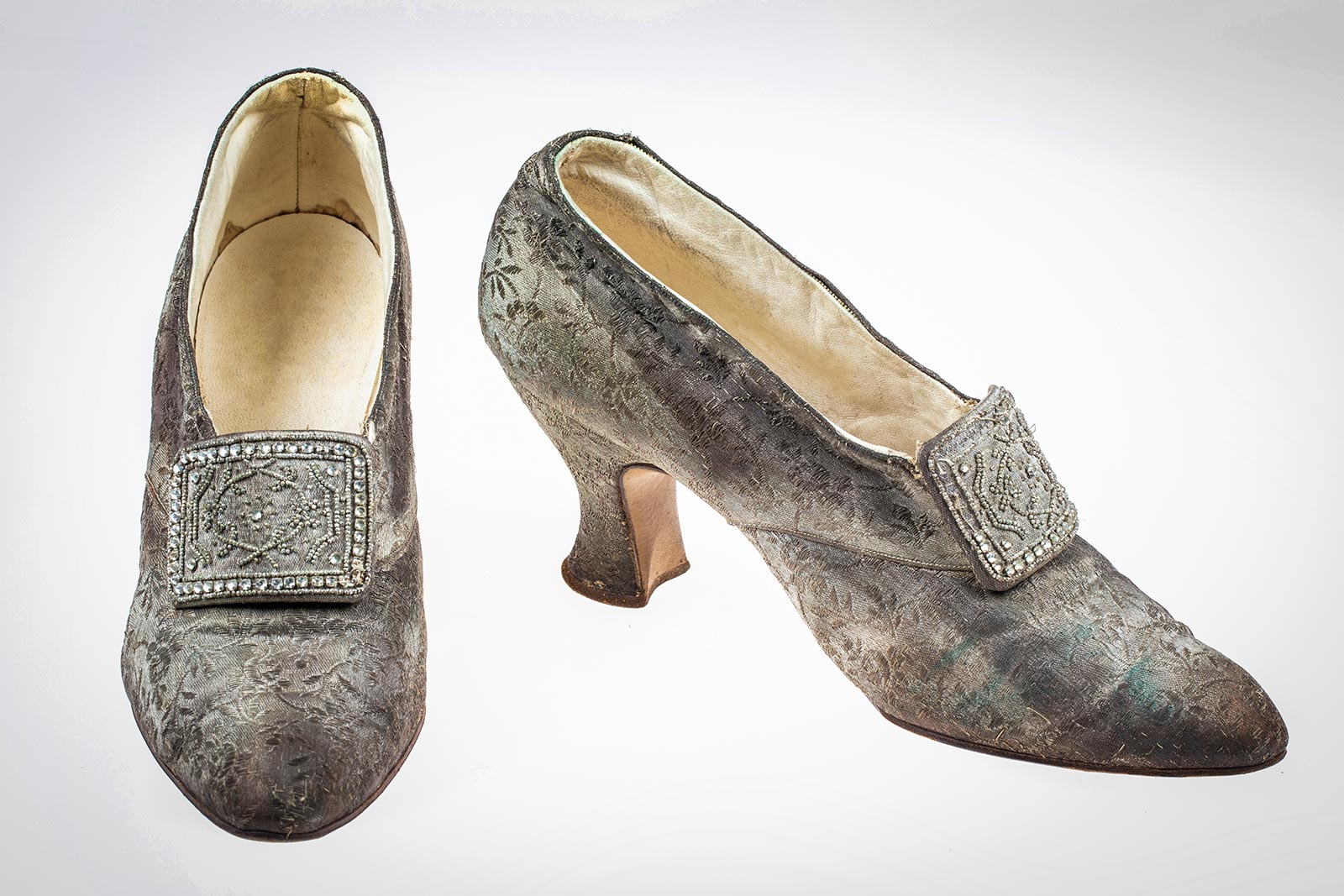
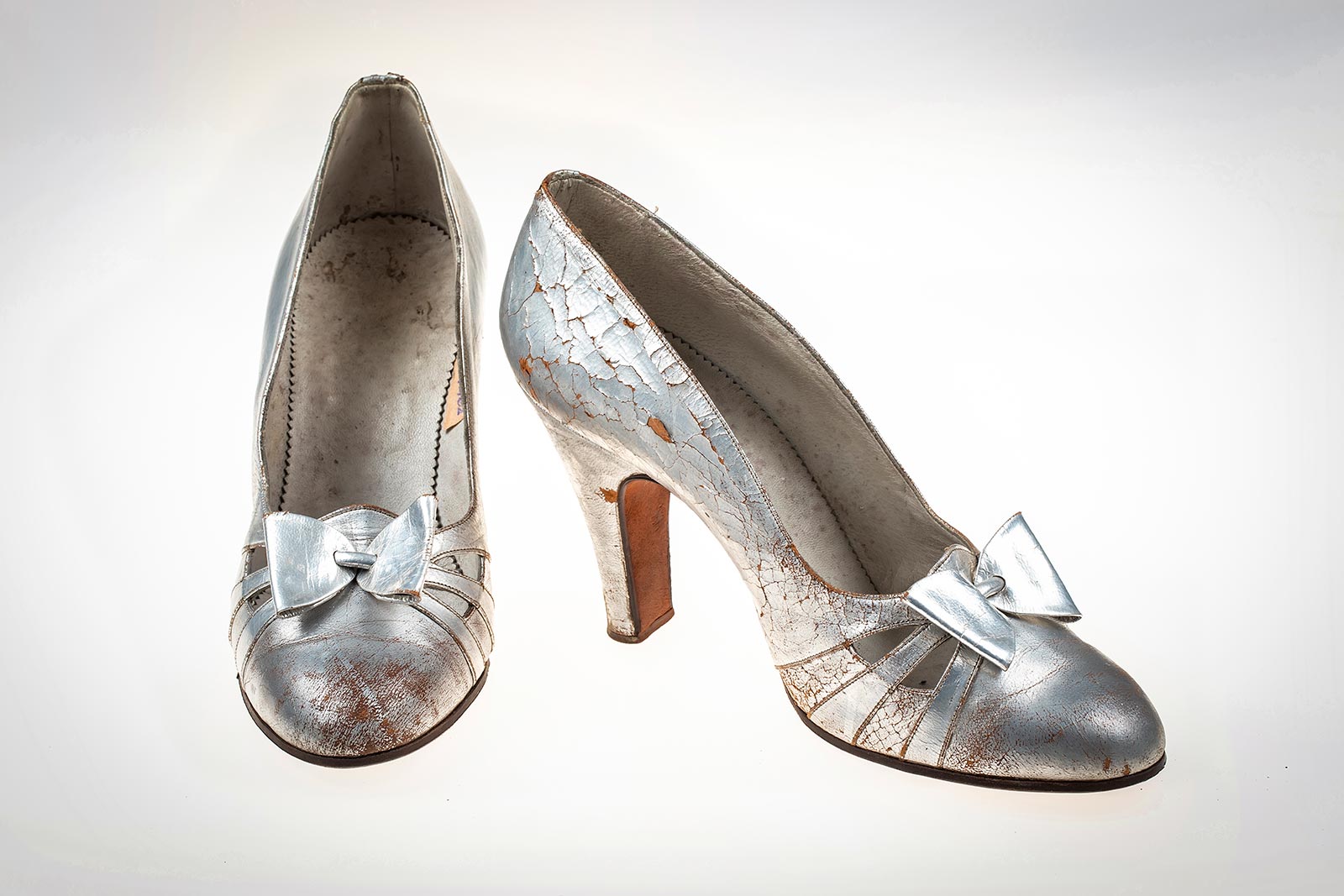
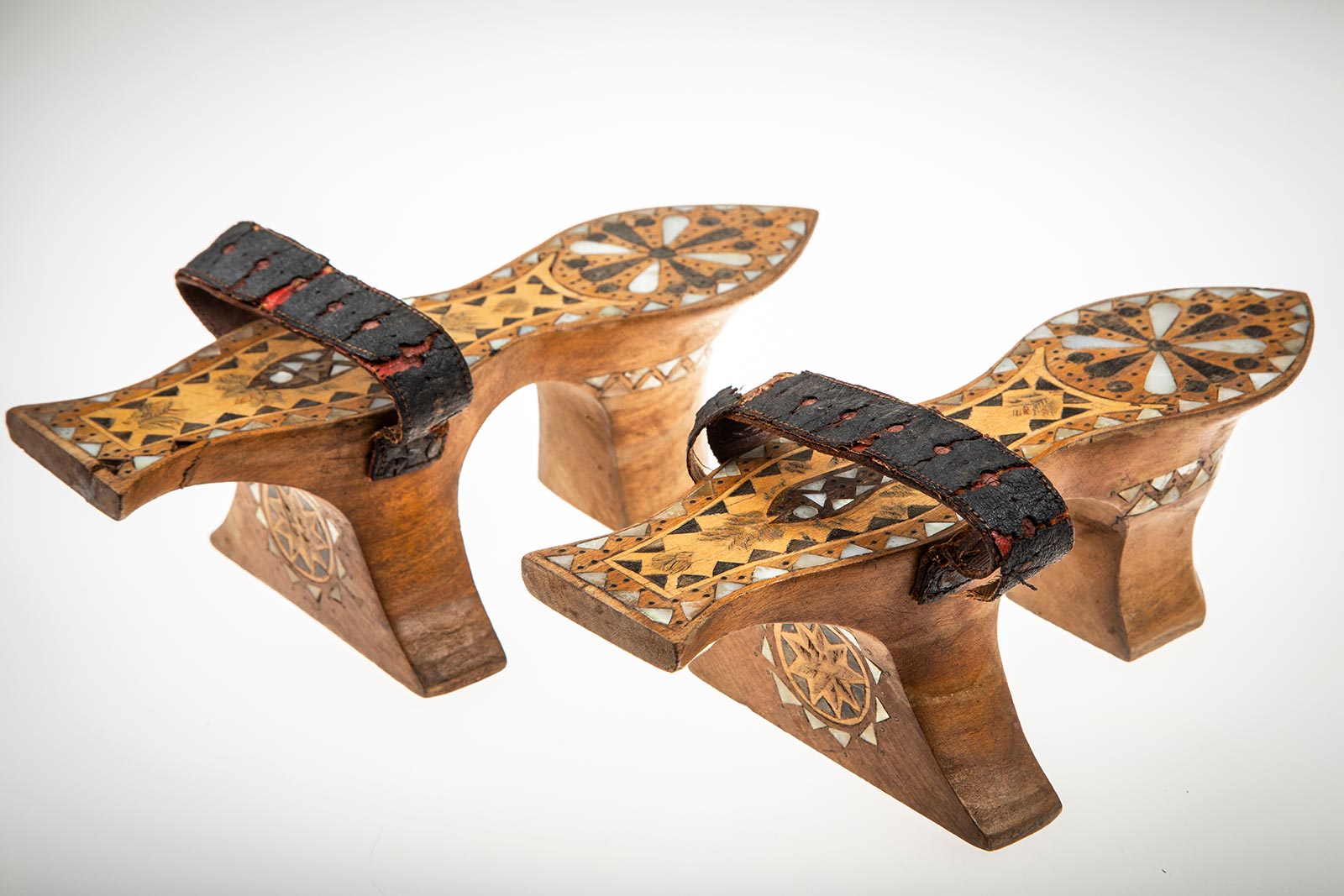
Women’s clothing is most widely represented: lavish outfits, velvet capes with ostrich feathers and beads, hats with feathers, flowers and veils, umbrellas, fans, shoes, handbags. Some of them belong to the wives and daughters of Bulgarian politicians, diplomats and public figures.
The stage costumes of Bulgarian theatre, opera, cinema and ballet artists are also a significant presence: the great Gena Dimitrova, Mimi Balkanska, Elisaveta Yovovich, ballet dancer Nadia Vinarova, Nevena Kokanova, Konstantin Kisimov, Stefan Getsov, Apostol Karamitsev, etc.
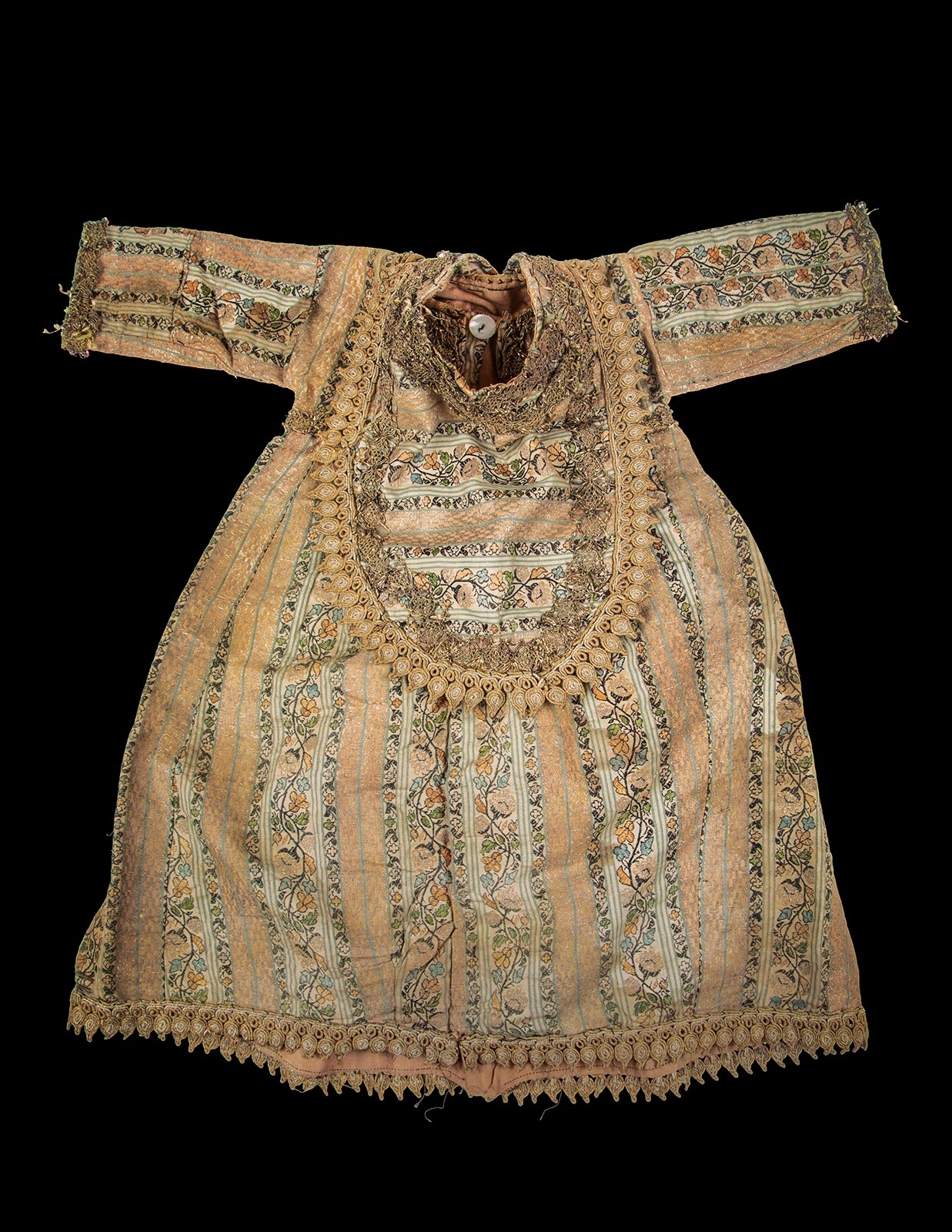
And children’s clothing has its place in the collection. Dresses, costumes, shoes from the late 19th century to the 1950s.
The collection also contains costumes from Bulgarian films, which are part of the “Museum of Bulgarian Cinema” collection, received at the NIM in early 2006 as a donation from the then management of Boyana Film EAD, headed by film director Evgeni Mihailov.
The collection includes unique costumes from the films created in the period of the “golden age” of Bulgarian cinema: from historical films relating to the First and Second Bulgarian states – “Khan Asparuh”, “Boris I”, “The Golden Age”, “Kaloyan”, “The Day of the Rulers”, “The Weddings of John Asen”, “The Boyana Master”, “Konstantin Kirill the Philosopher”, “Time Divided”, etc.
Authentic garments are created on the basis of archaeological and historical records of the times and events to which they relate. Their technical execution is fully in line with the traditions of the respective era, making them as close as possible to their originals. They are all handmade, from natural materials. Some of the costumes are subject to quite intricate workmanship. For example, to make the costumes of Sevastokrator Kaloyan and Sevastokratoress Desislava, the artists used the frescoes in the Boyana Church, the fabrics were supplied from Syria, and specialists from the Netherlands and France were engaged to make them, and in their final form they were finished in Bulgaria.
Another section of film clothing includes costumes related to Bulgarian films depicting events from the late 19th century to the mid-20th century. Here are the lace dresses and accessories of Nevena Kokanova, in which she recreated the images of her heroines from The Peach Thief, Tobacco, etc.
In addition to recreated historical costumes, the collection also includes unique original treasures such as authentic footmen costumes from the royal palaces of Tsar Ferdinand, military uniforms from the early 20th century and women’s clothing.
Part of the collection consists of clothing used in the mass scenes of Bulgarian films. They are often used in the educational programs of the National History Museum.