In Hall 1 – Prehistory is traced chronologically and thematically the development of the Bulgarian lands in the prehistoric period – from the Neolithic period to the end of the Bronze Age.
In its central part are displayed some of the most representative finds of the period, which are part of the grave inventory in different eras. The objects found in Varna, Durankulak, Dobrich, Tabashka Cave in Lovech, Rupite, Petrich, Izvorovo, Harmanli and Chervenobrezhko illustrate the level of society and the idea of power of the ancient people.
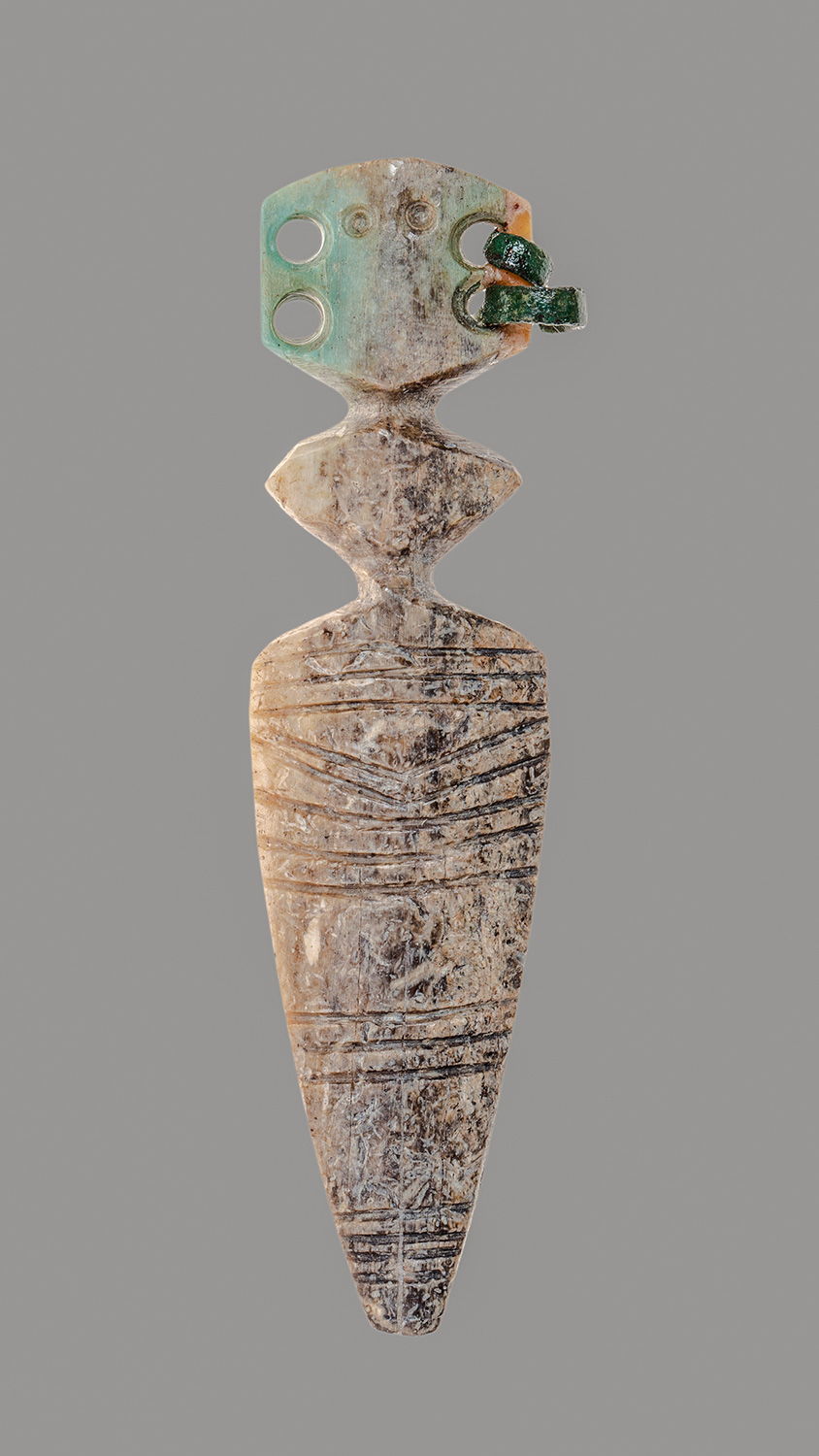
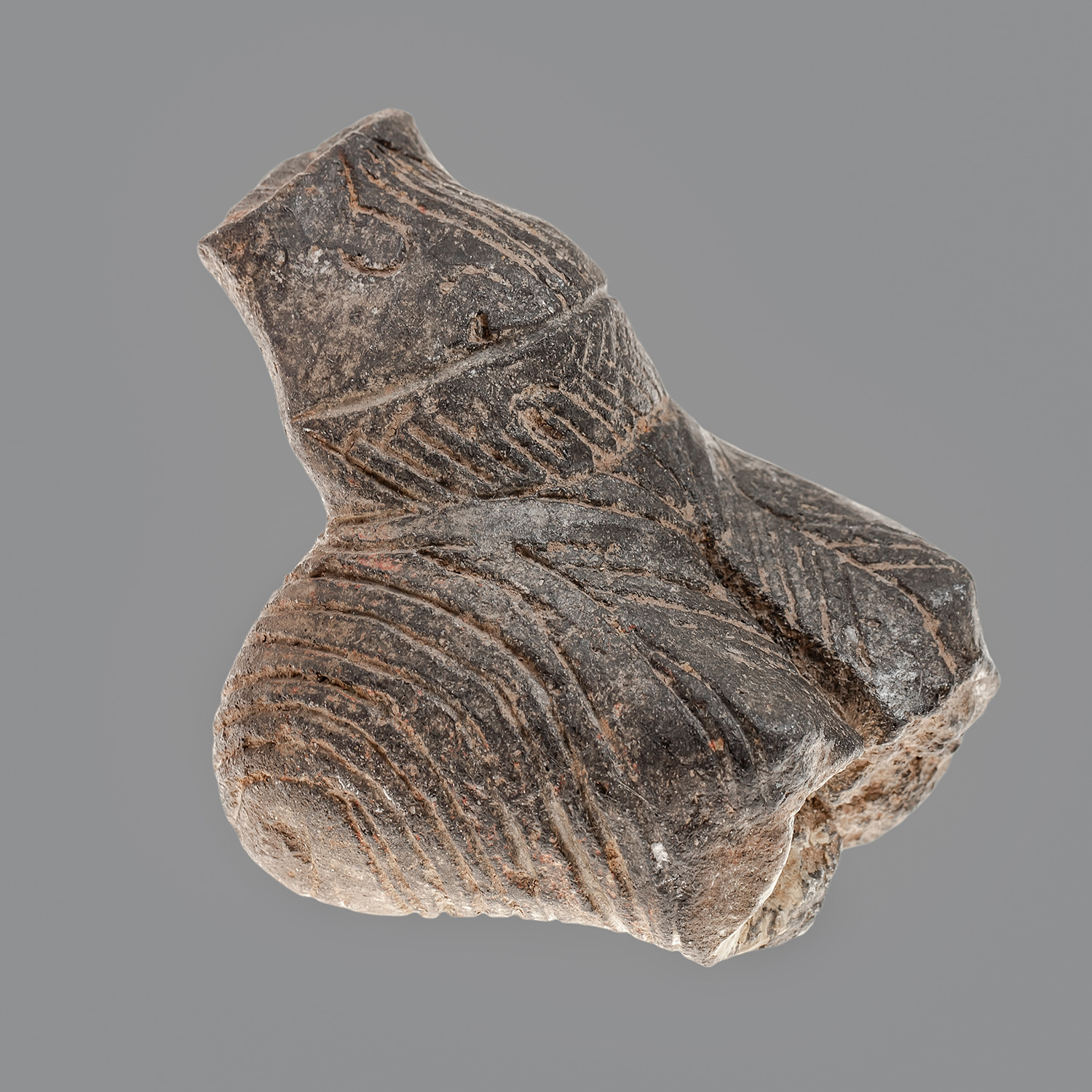
During the first epoch represented, that of the New Stone Age (late 7th – early 5th millennium BC), the first centres of an economy based on agriculture and livestock breeding were formed and developed on the Balkan Peninsula. The transformation of land into a means of subsistence became a prerequisite for long-lasting settlements. The construction of permanent settlements begins. In some cases, long occupation leads to the accumulation of settlement mounds. In some of the settlements fortification with ditches and ramparts is used. The new stone tools with a smoothed surface have considerable efficiency. The production of pottery began. The early agricultural ritual-mythological system emerges, which includes the ideas of the Mother Goddess and the Sky God, the guardian spirits, and the associated with them cults of the forces of nature, the ancestors, the home and the domestic hearth, etc. Anthropomorphic and zoomorphic sculptures became quite common. During the Neolithic period the present-day Bulgarian lands were part of a large cultural zone that included Western Anatolia and a considerable part of the Balkans.
This is illustrated in showcase 2 in the hall, where ceramic vessels, tools, anthropomorphic sculptures, etc. from sites such as the Azmashka mound in Stara Zagora, settlements near Galabnik in Pernik, Hotnitsa in Veliko Tarnovo, Topolnitsa in Blagoevgrad and Kurilo in Sofia, etc., are exhibited.
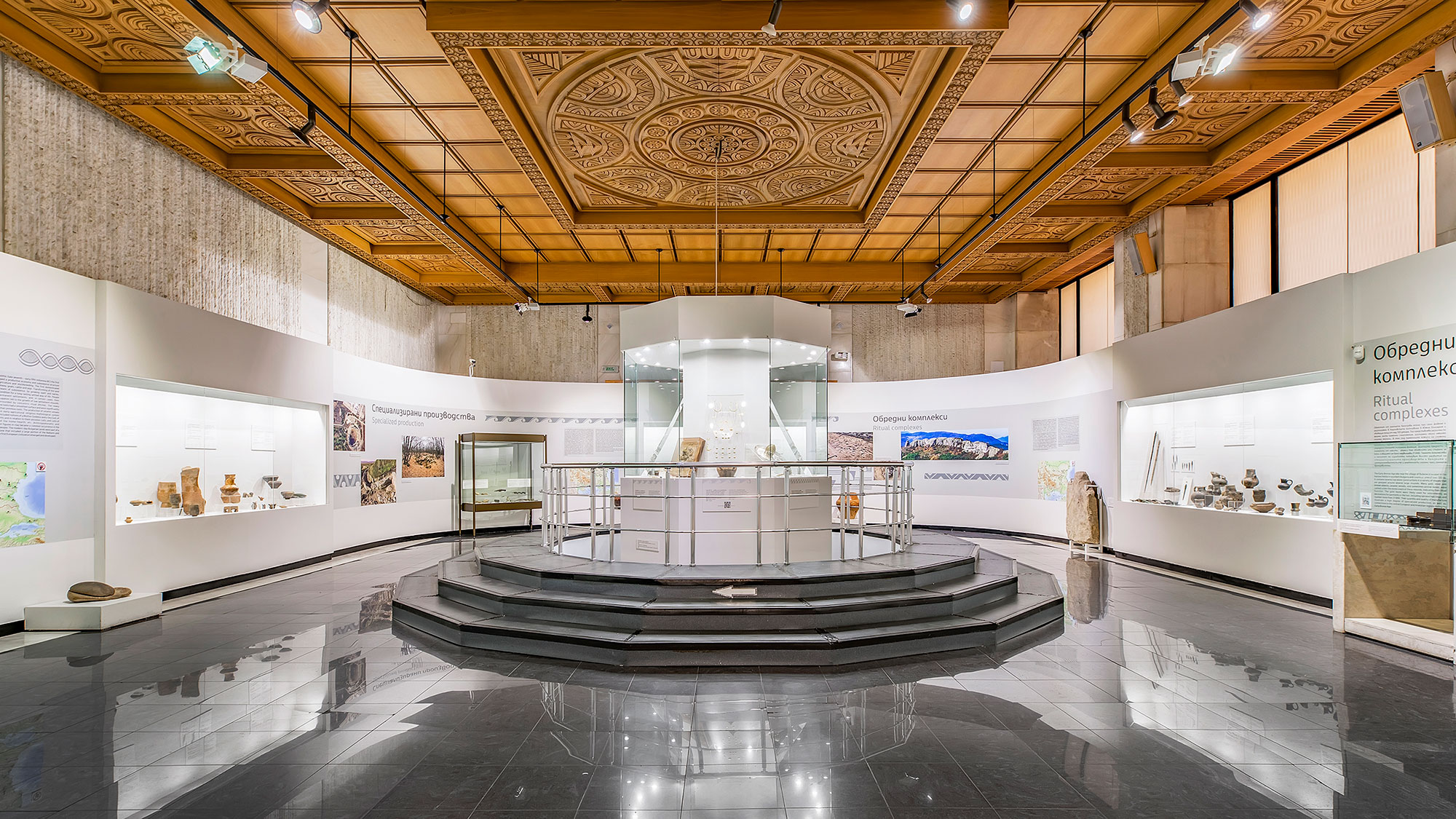
These processes of change in society, its economy and its spiritual life are shown through the exhibits in showcases 3 and 4, which display samples of raw materials, finished products of tools and jewelry, ceramic vessels and anthropomorphic and zoomorphic sculptures. The presented finds are from the settlements of Slatino, Kyustendil, Durankulak, Dobrich, Poroy, Burgar, Ovcharovo, Targovishte, Telish and Lepitsa, Pleven, etc.
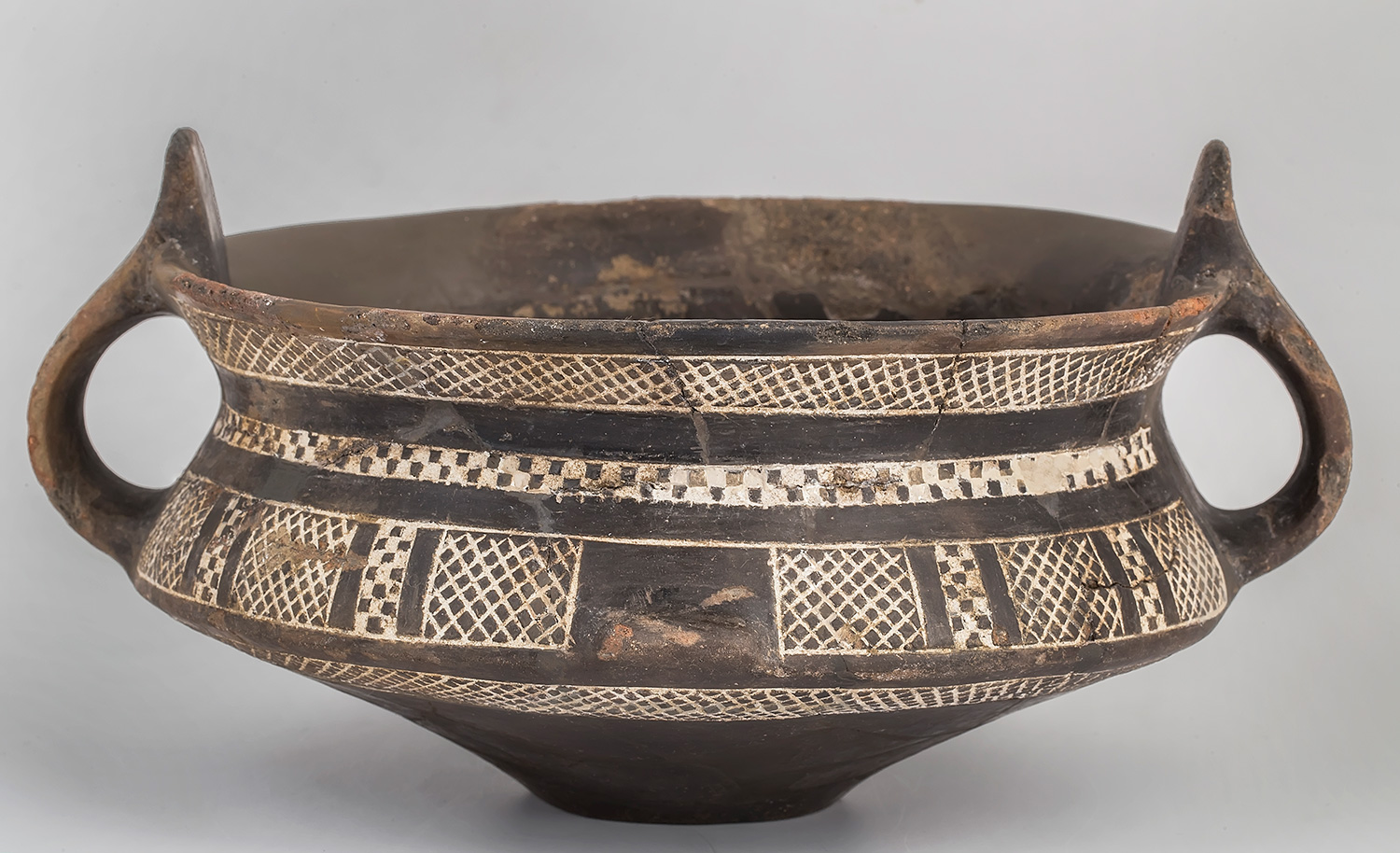
Ethnocultural changes mark the beginning of the Bronze Age (4th–2nd millennium BC) in the Balkans. The emergence of bronze, an alloy of copper and tin, led to the development of new metallurgical centers. Along with agriculture and livestock breeding, specialized production continued to develop. Settlements were fortified with stone walls or moats, and dwellings were built with an apse plan. A new settlement system took shape, consisting of a central settlement (citadel) and so-called “open settlements” located on the periphery. This reflects the emergence of a new social model in which the people living in the citadel are assigned a special role. The need for export and delivery of raw materials leads to the emergence and establishment of wheeled transport. Conditions were created for trade relations with the Eastern Mediterranean and Central Europe.
The new economic and social relations are presented in display case 5, where they are demonstrated through new types of tools and weapons, ceramic vessels, etc. from the Bereket mound, Stara Zagora, Sozopol, Daben, Karlovo, the settlement mound of Galabovo, Stara Zagora, Tarnava, Vratsa, etc.
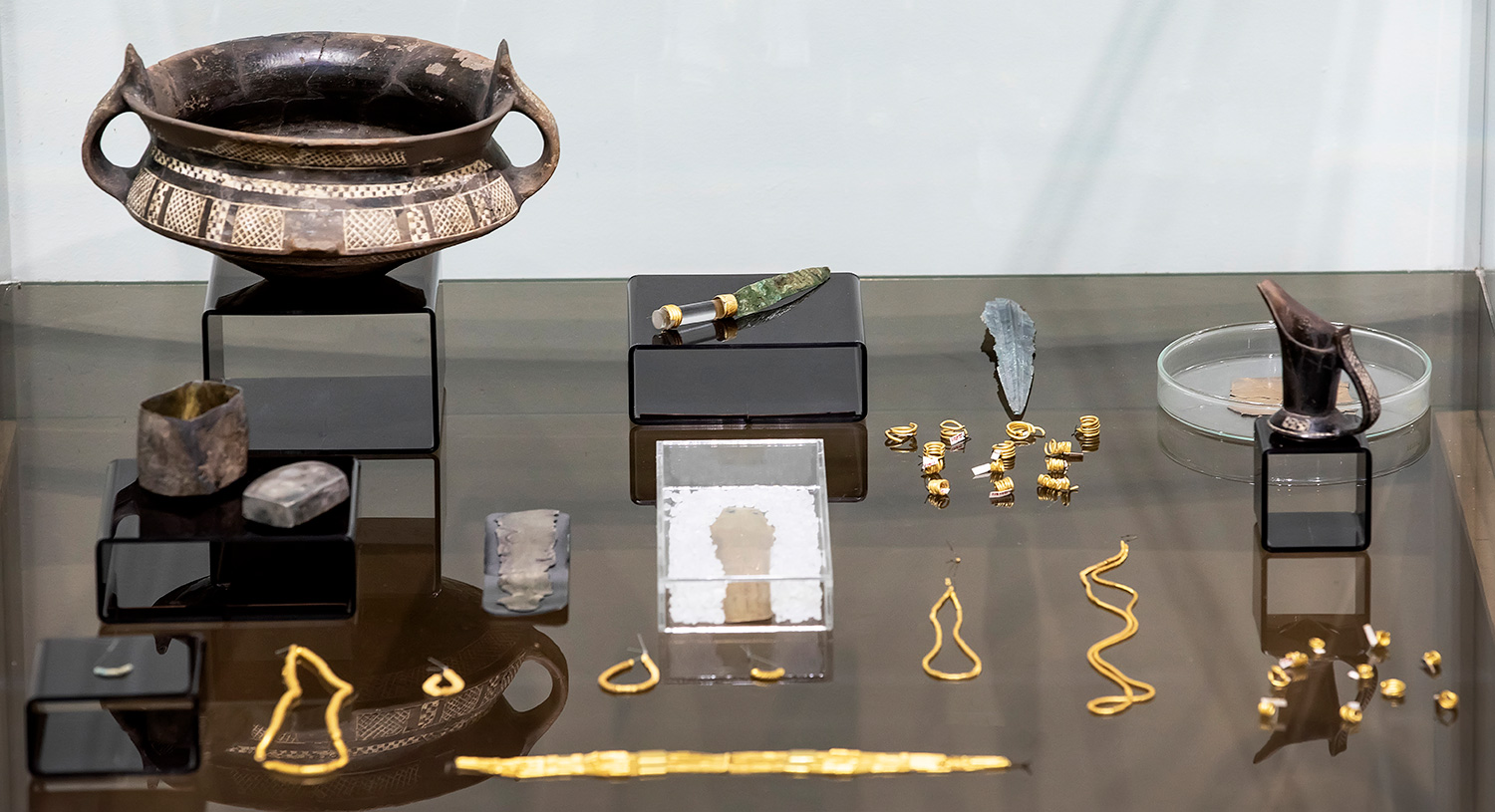
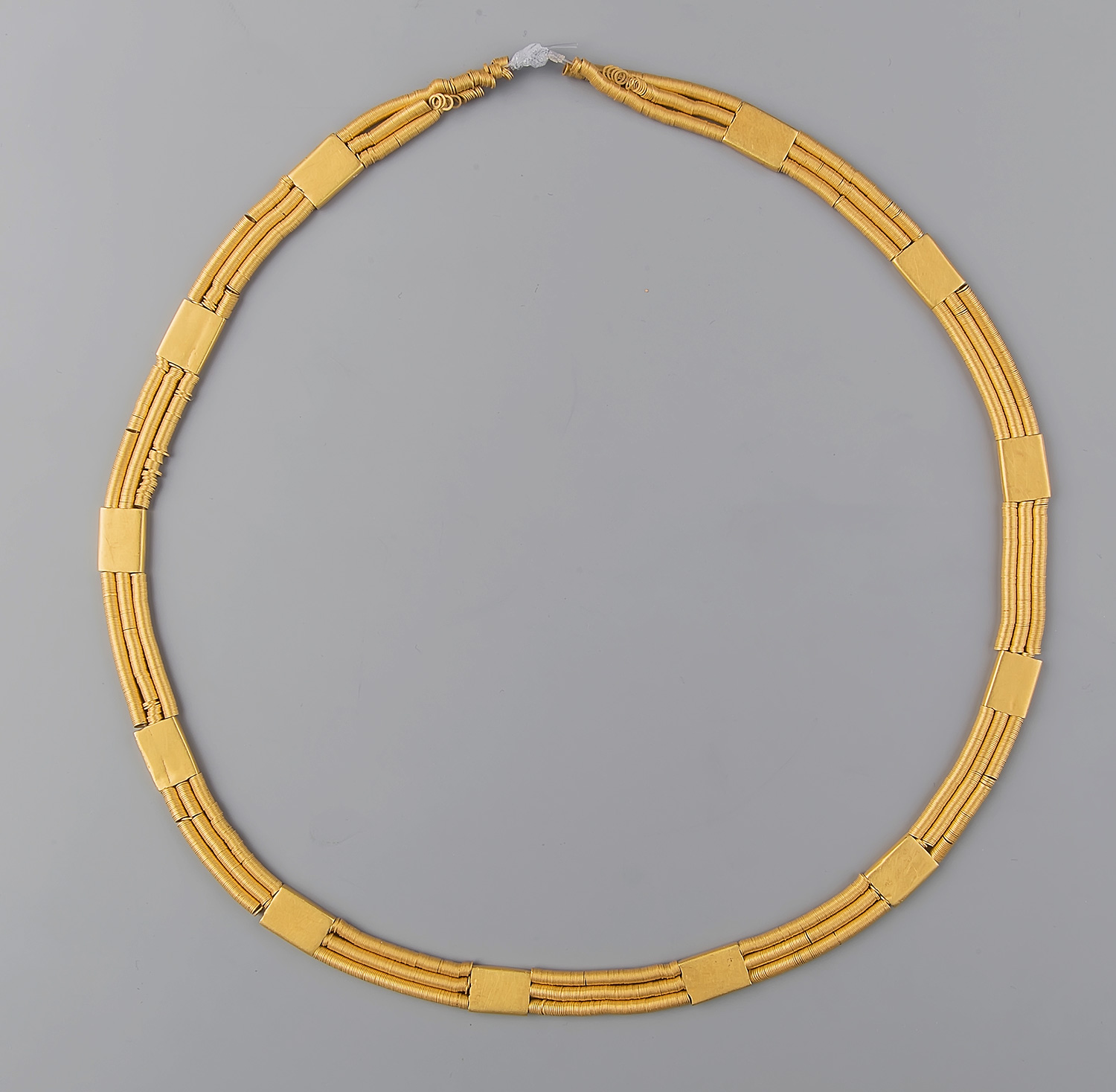
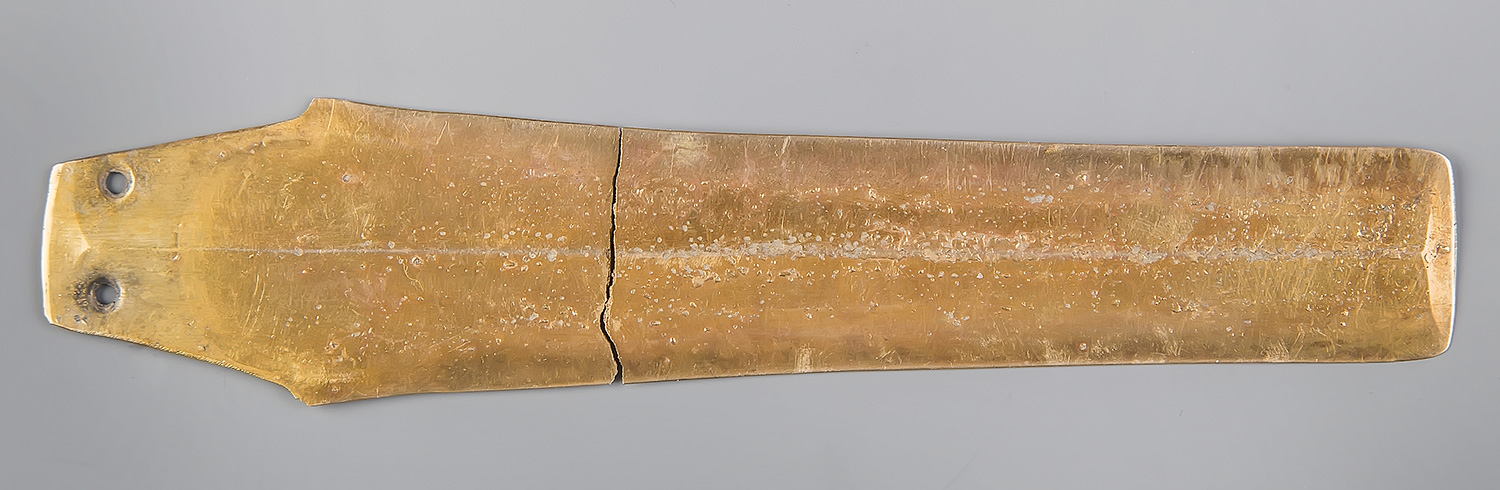
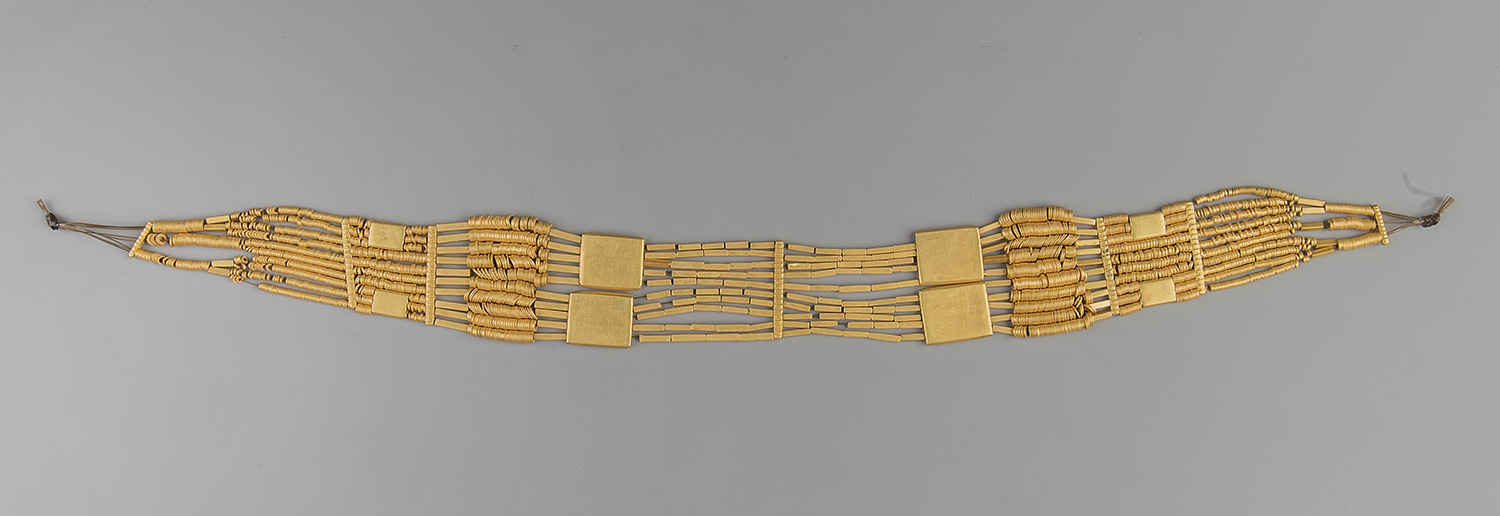
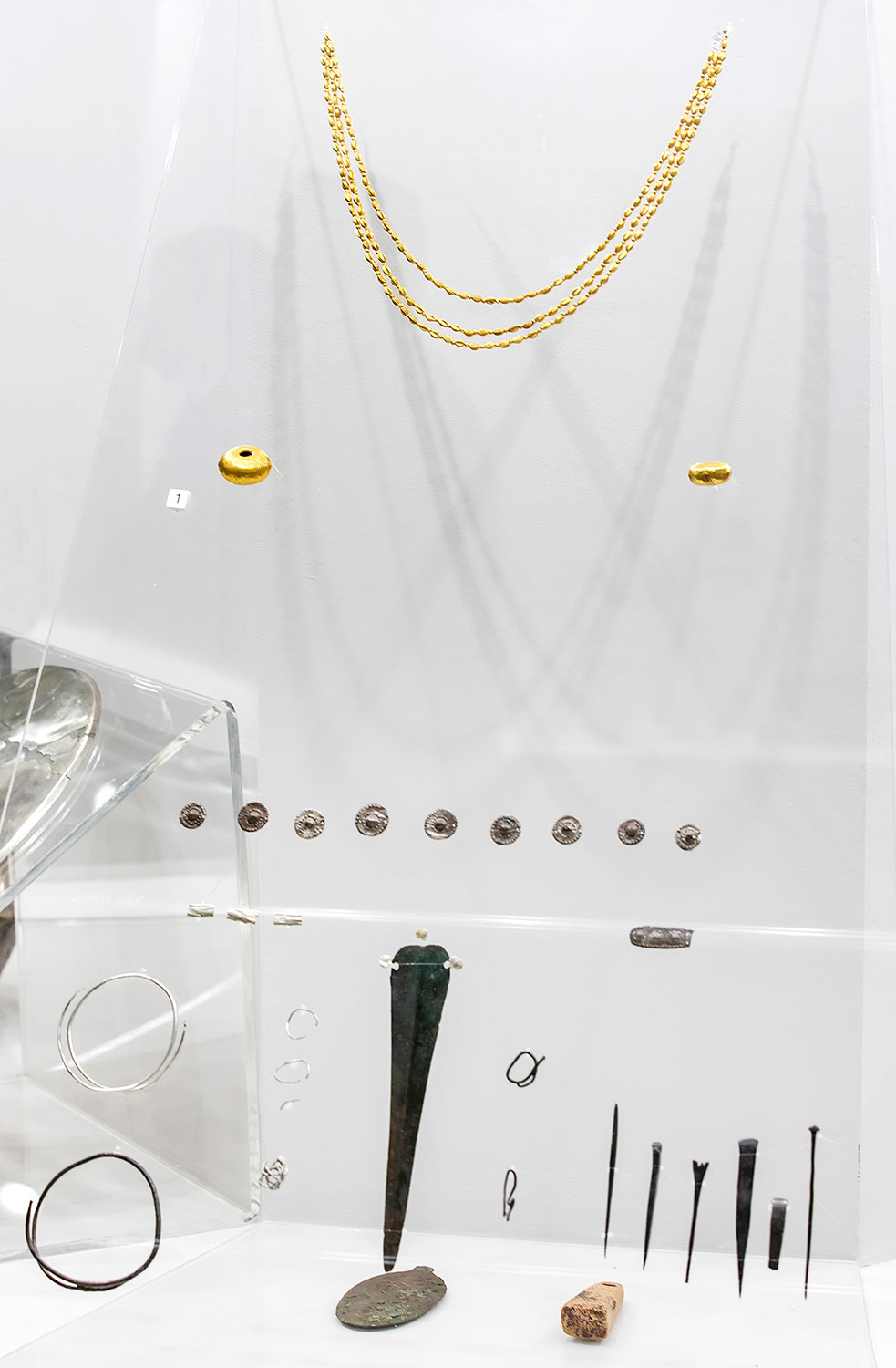
The site near the village of Daben is located in the Karlovo Valley in southern Bulgaria. It consists of stone structures of various shapes, in which numerous gold, silver, and bronze objects, as well as ceramic vessels, have been found. The gold objects are elements of jewelry, clothing decorations, or hair spirals, and their total number exceeds 21,000. Their quantity and craftsmanship indicate a high level of development of specialized production and connections with Central European and Anatolian regions during the early Bronze Age. The finds from this site are displayed in showcases 6, 7, and 8.