Stefan Makedonski was born on March 25, 1885
Stefan Makedonski (1885–1952), one of the founders of Bulgarian opera and the leading tenor on Bulgarian opera stages for decades, was born on March 25, 1885. After receiving a solid education at the Moscow Conservatory, he studied in France and Germany, where he also performed with great success in opera productions.
He has performed on the stages of the National Opera, the Opera Druzhba, the Free Theater, the Cooperative Theater, and the Art Theater.
For decades, he has performed the most demanding repertoire for tenors, demonstrating not only vocal talent but also strong acting skills. “He possesses a powerful temperament, which he masterfully controls, and his physique is perfect for the stage,” critics note. His signature role is considered to be that of Canio in “Pagliacci”; his interpretations of Radames (“Aida”), Don José (“Carmen”), Othello (“Othello”), Samson (“Samson and Delilah”), Hermann from “The Queen of Spades,” and others.
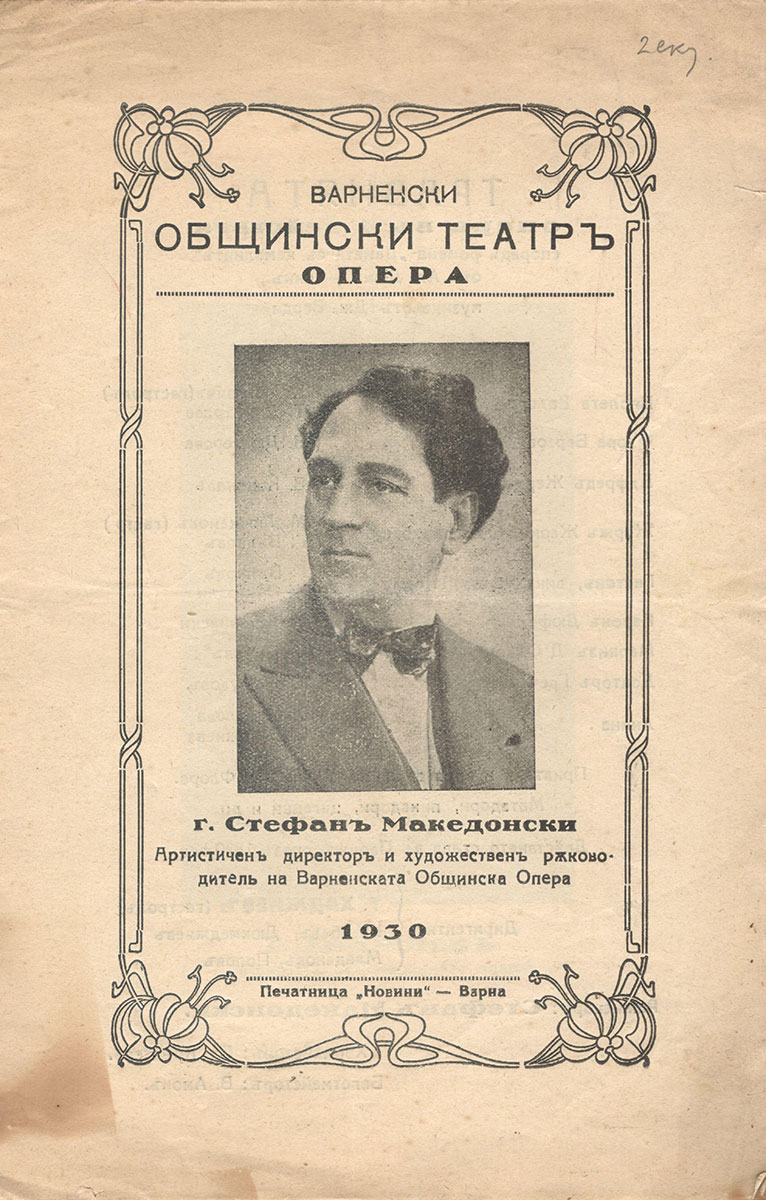
From 1930 to 1932, he served as artistic director of the Varna Opera. The program for his production of Giuseppe Verdi’s “La Traviata” in the seaside city is preserved at the National Institute of Archaeology. From 1934 to 1937, he directed operas and performed roles in the Mobile People’s Opera, which he had founded. He distinguished himself as a concert singer, vocal teacher, and director. In 1948, he founded the State Musical Theater and became its first director; the theater has borne his name since 1952.
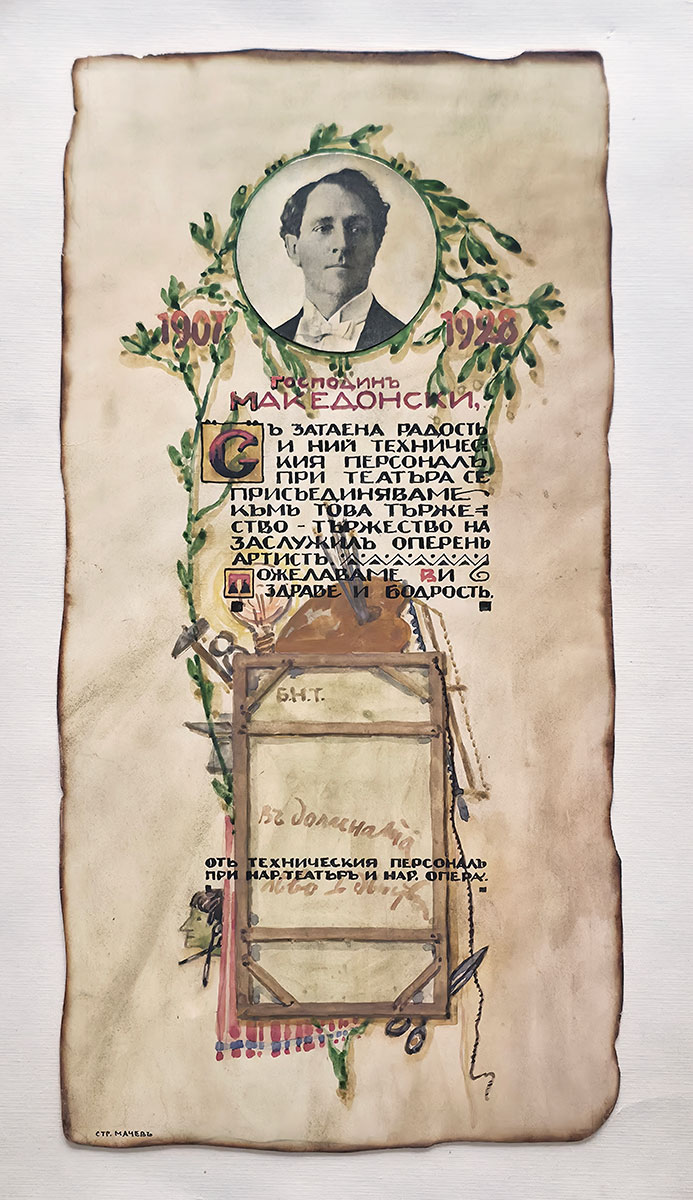
A beautifully crafted commemorative plaque marking the 20th anniversary of Stefan Makedonski’s creative career adorns Hall 5 of the National History Museum’s permanent exhibition. The anniversary was celebrated on January 11, 1928, at the National Opera.
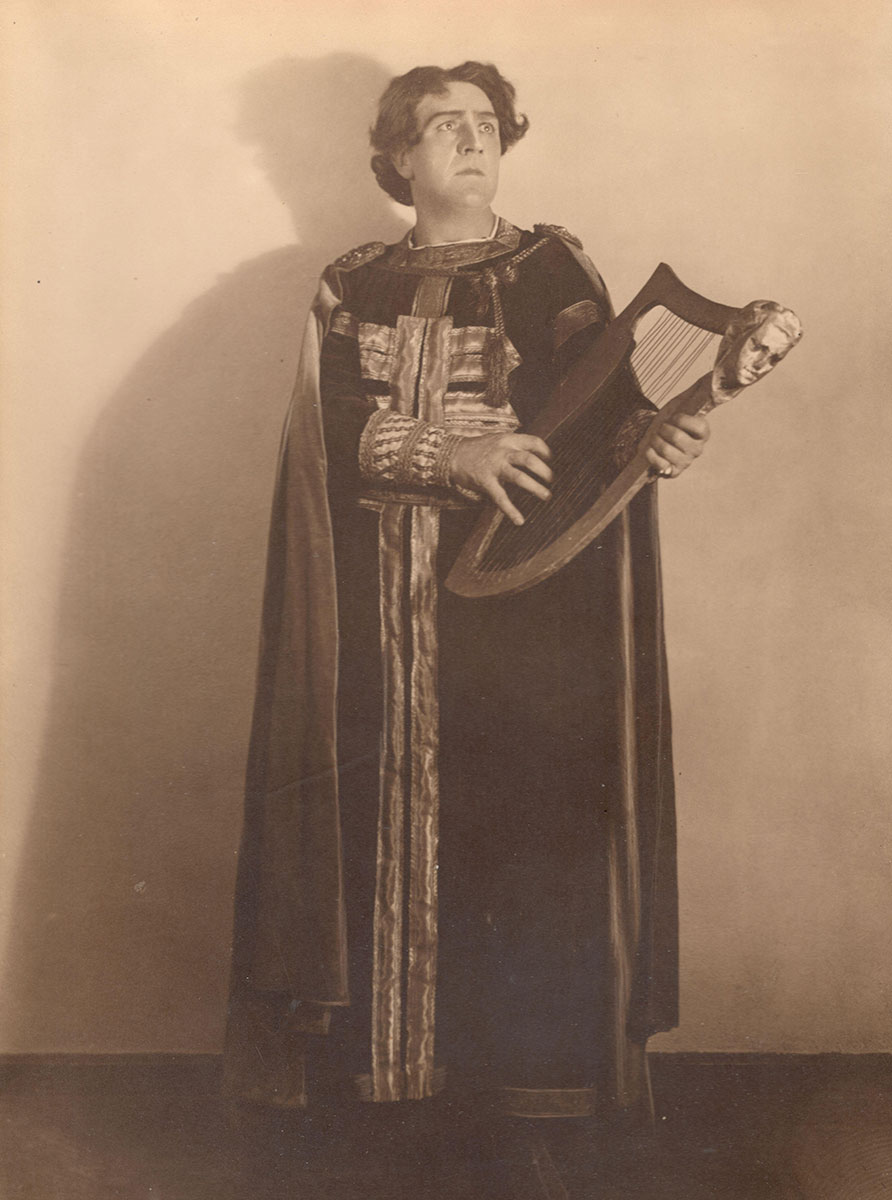
The address is interesting because, in addition to the obligatory commemorative dates—1907 and 1928—and the portrait of the honoree, it depicts a hammer and pliers, a wooden frame, a handsaw, a light bulb, scissors, a spool of thread, an artist’s palette, and a piece of fabric. From this, we can infer that the congratulatory document is on behalf of the tailors, artists, wigmakers, lighting technicians, and carpenters who craft the sets. In short—the opera’s technical staff—and indeed, the sheet is signed exactly as such following the wishes “for health and vigor.” The exhibition also features a photograph of Stefan Makedonski in one of his opera roles, donated by Eleonora Makedonska.
Text: Mariana Parvanova