Hall “Late Antiquity”
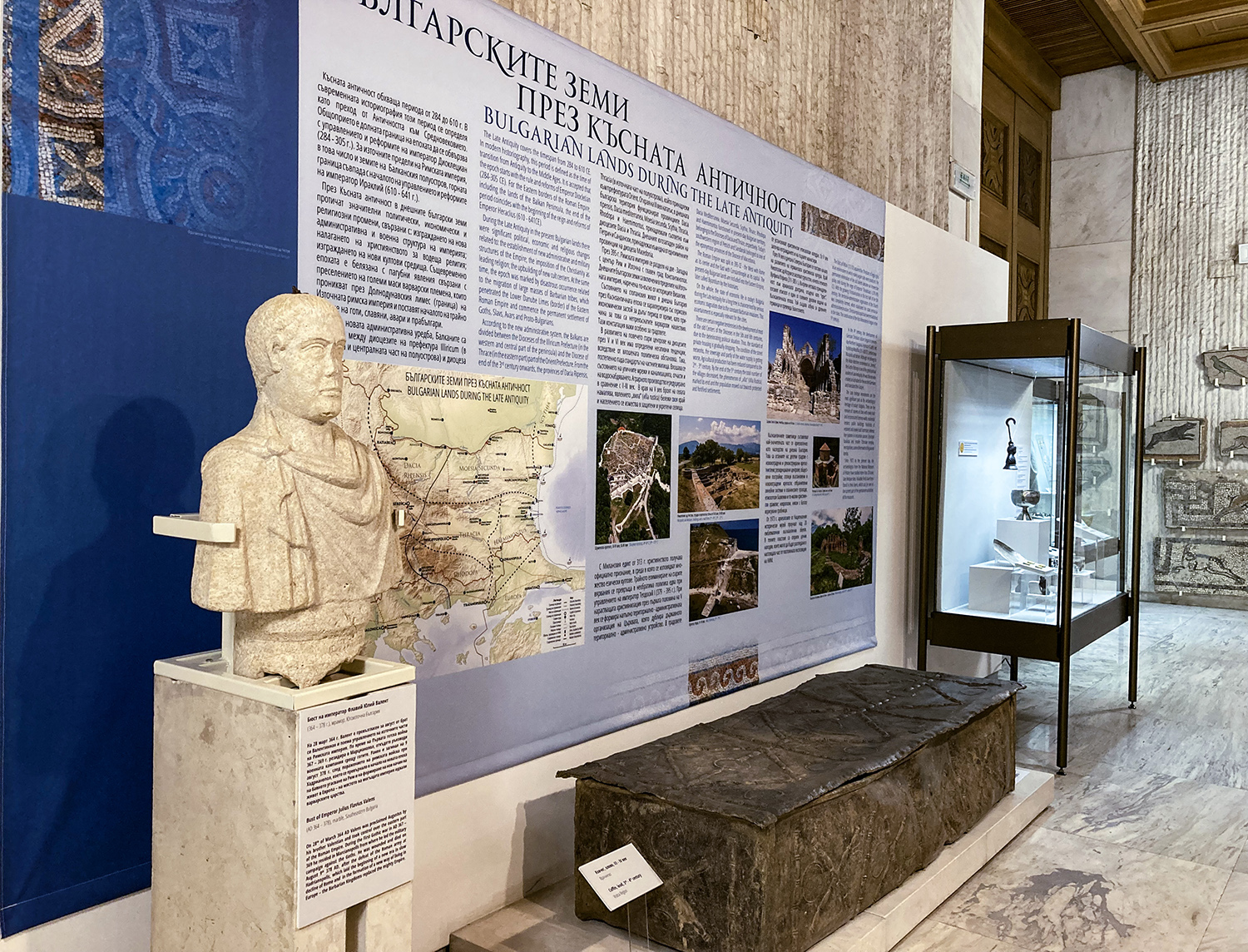
The exhibition “Late Antiquity” features monuments from the present-day Bulgarian lands, representing the significant political, economic, and religious changes that took place between the end of the 3rd century and the beginning of the 7th century.


In the first place, the exhibition displays a monument to Emperor Flavius Julius Valens (364–378). On March 28, 364, Valens was proclaimed “Augustus” by his brother Valentinian and took over the rule of the Eastern Roman Empire. During the First Gothic War (367–369), he resided in Marcianopolis, from where he led the military campaign against the Goths. Wounded and killed on August 9, 378, after the defeat of the Roman army at Adrianople, Valens’ death marked the beginning of a new era and the slow decline of Rome.
An important highlight for the period is the only lead coffin of its kind found in present-day Bulgaria, discovered in the Vratsa region. The monument is not only unique for Antiquity, but also bears the distinctive characteristics of early Christianity.
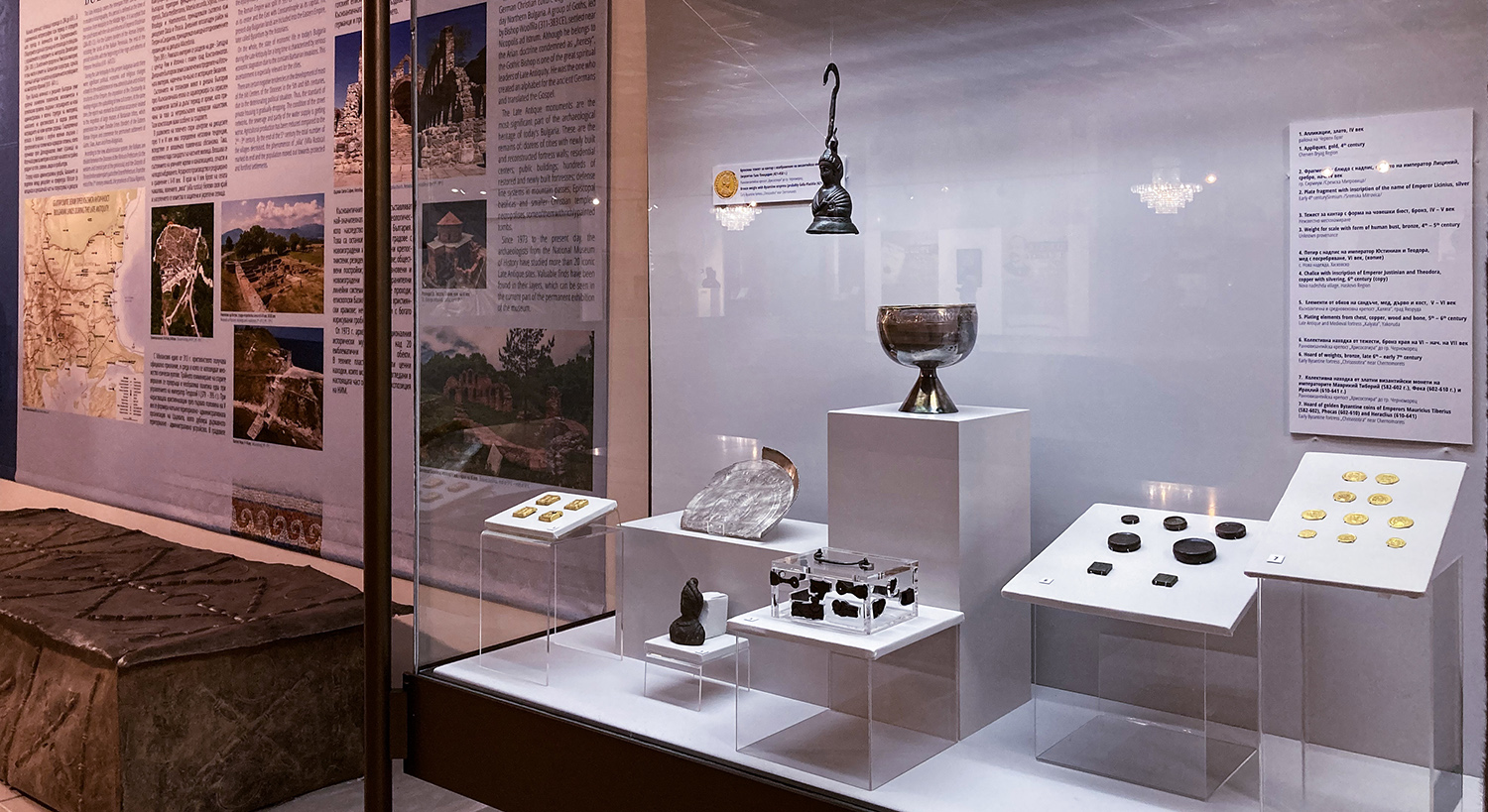
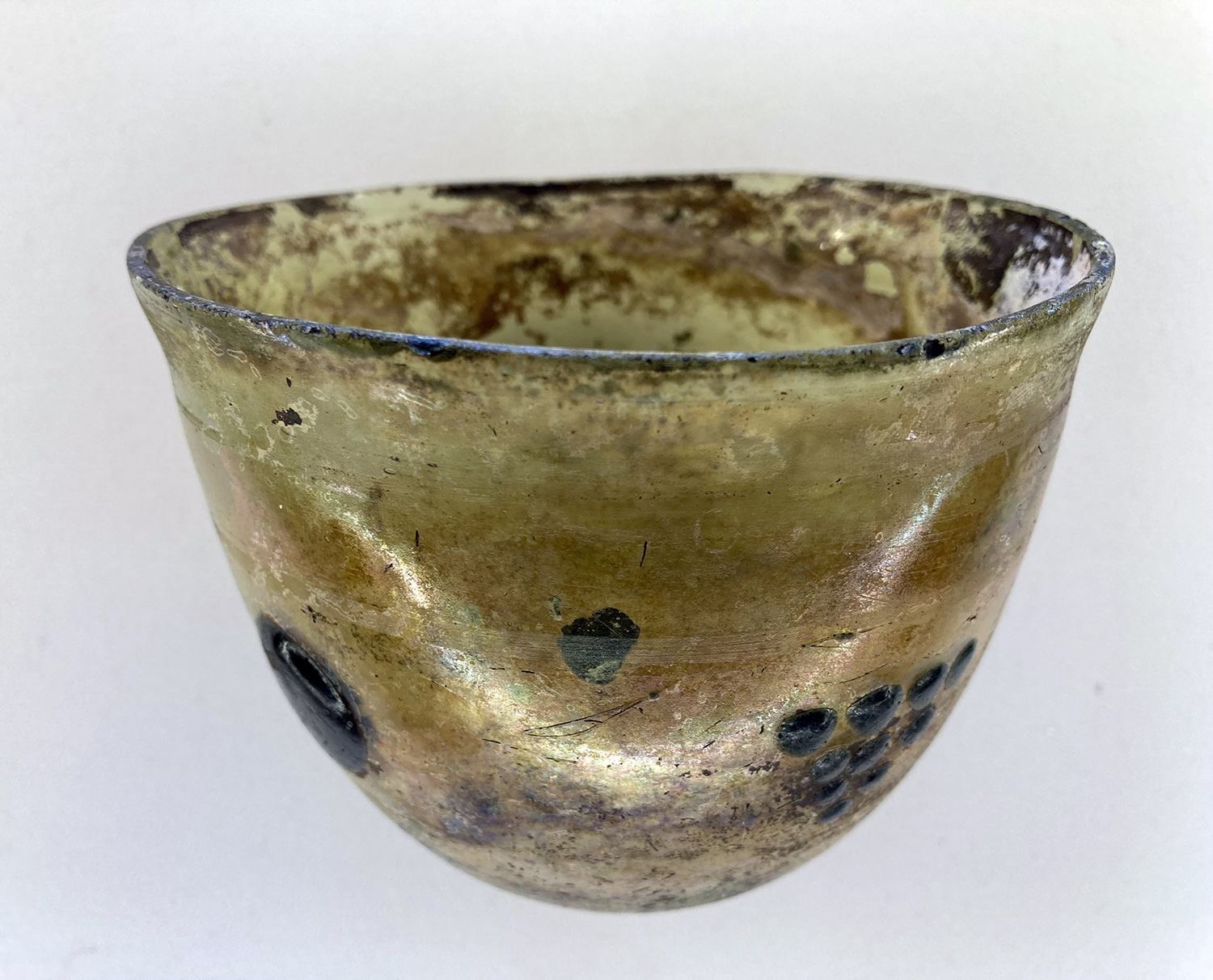
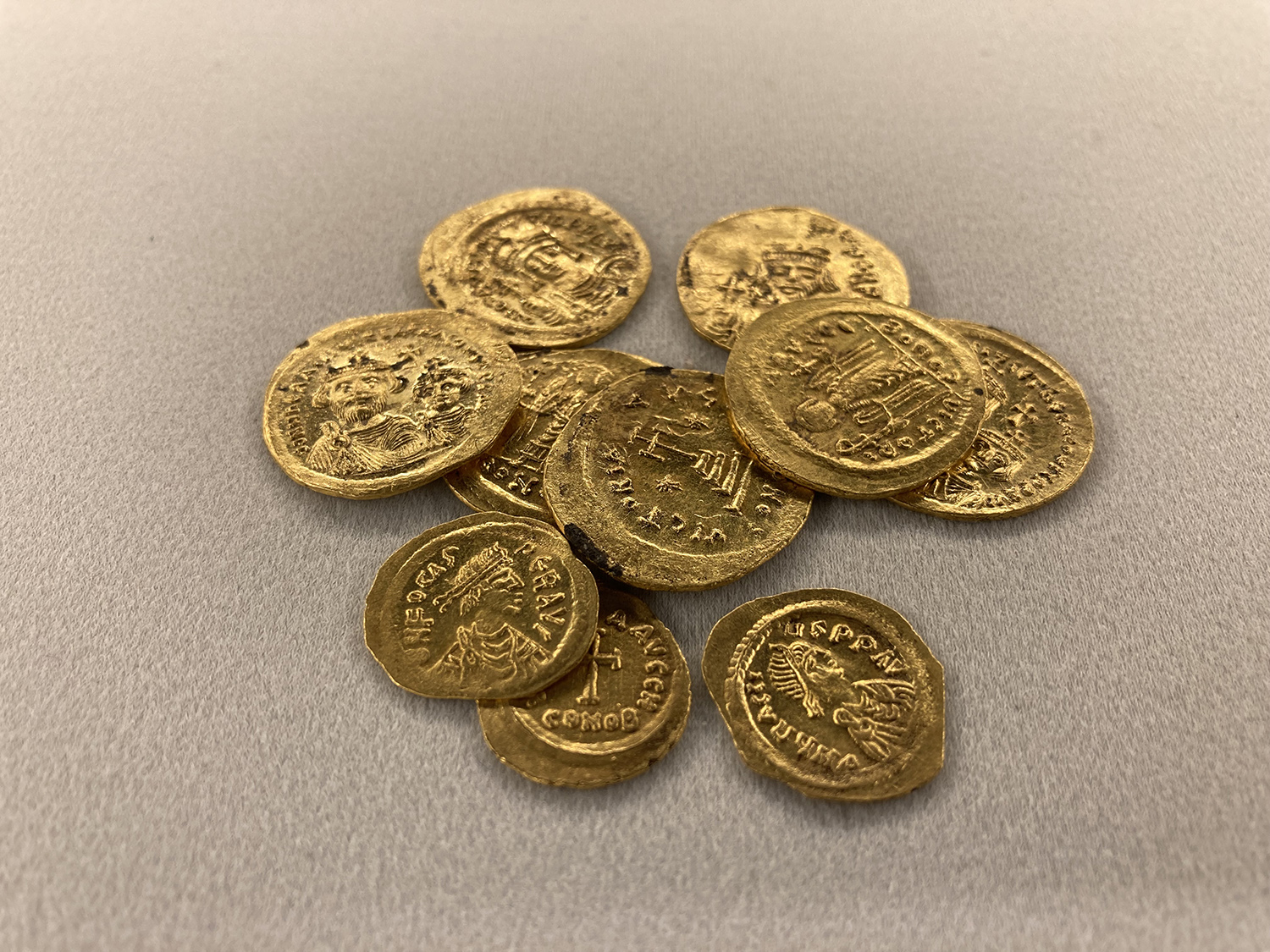
In the first showcase, you can see the administrative and economic changes of that time, presented through works of toreutics, jewelry, and numismatics. Here you will be able to see a collective find of gold coins of the emperors Maurice Tiberius (582–602), Phocas (602–610), and Heraclius (610–641) from the Black Sea fortress of Chrysosotira. A bronze weight for scales with an image of the Byzantine Empress Galla Placidia (412–450), a silver dish with an inscription, the name of Emperor Licinius, a replica of a silver-plated copper chalice with an inscription of Emperor Justinian and Theodora, gold appliqués from the 4th century, and more.
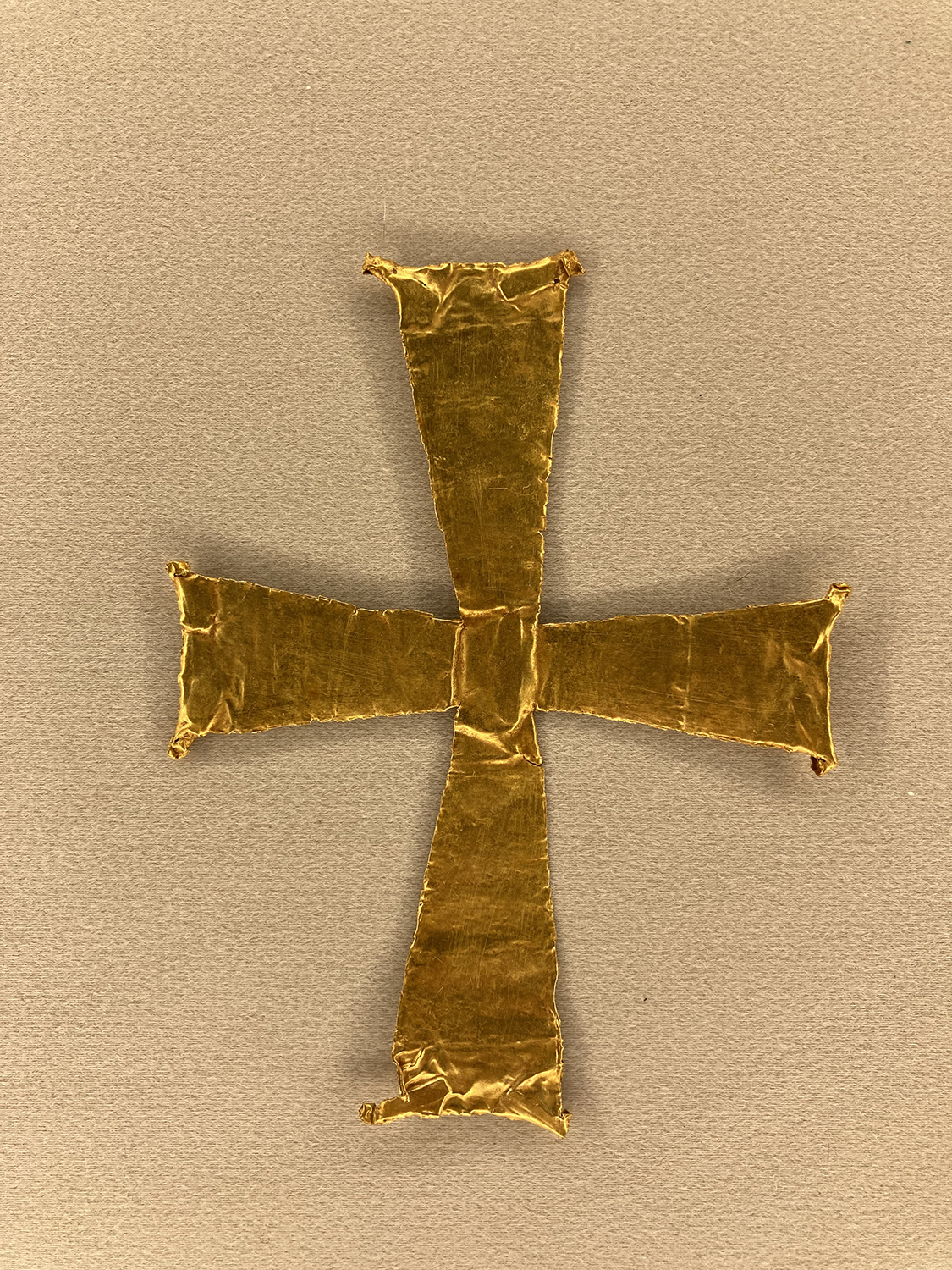
The second showcase focuses on changes in religious beliefs. It displays a rich collection of crosses made of lead, bronze, bone, and gold, as well as bronze lamps. Of particular interest is a ceramic fragment with an inscription in Greek from the Atia Peninsula, Burgas. The group of religious monuments includes two reliquaries, one of which depicts a religious scene.
The Late Antiquity period was marked by events that were disastrous for the empire, related to the migration of large masses of barbarian tribes who crossed the Lower Danube Limes and laid the foundations for the permanent settlement of the Goths, Slavs, Avars, and Proto-Bulgarians.
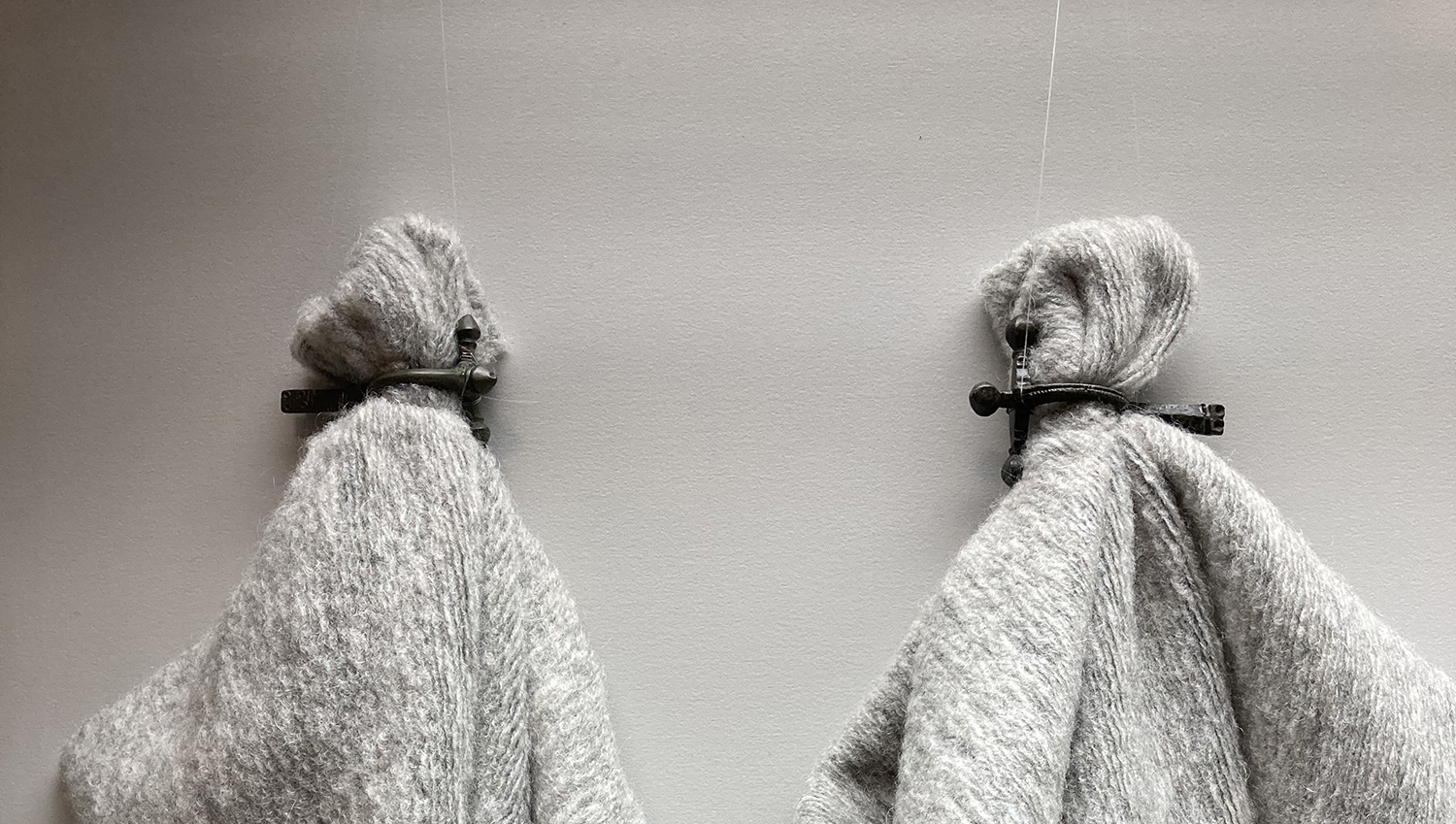
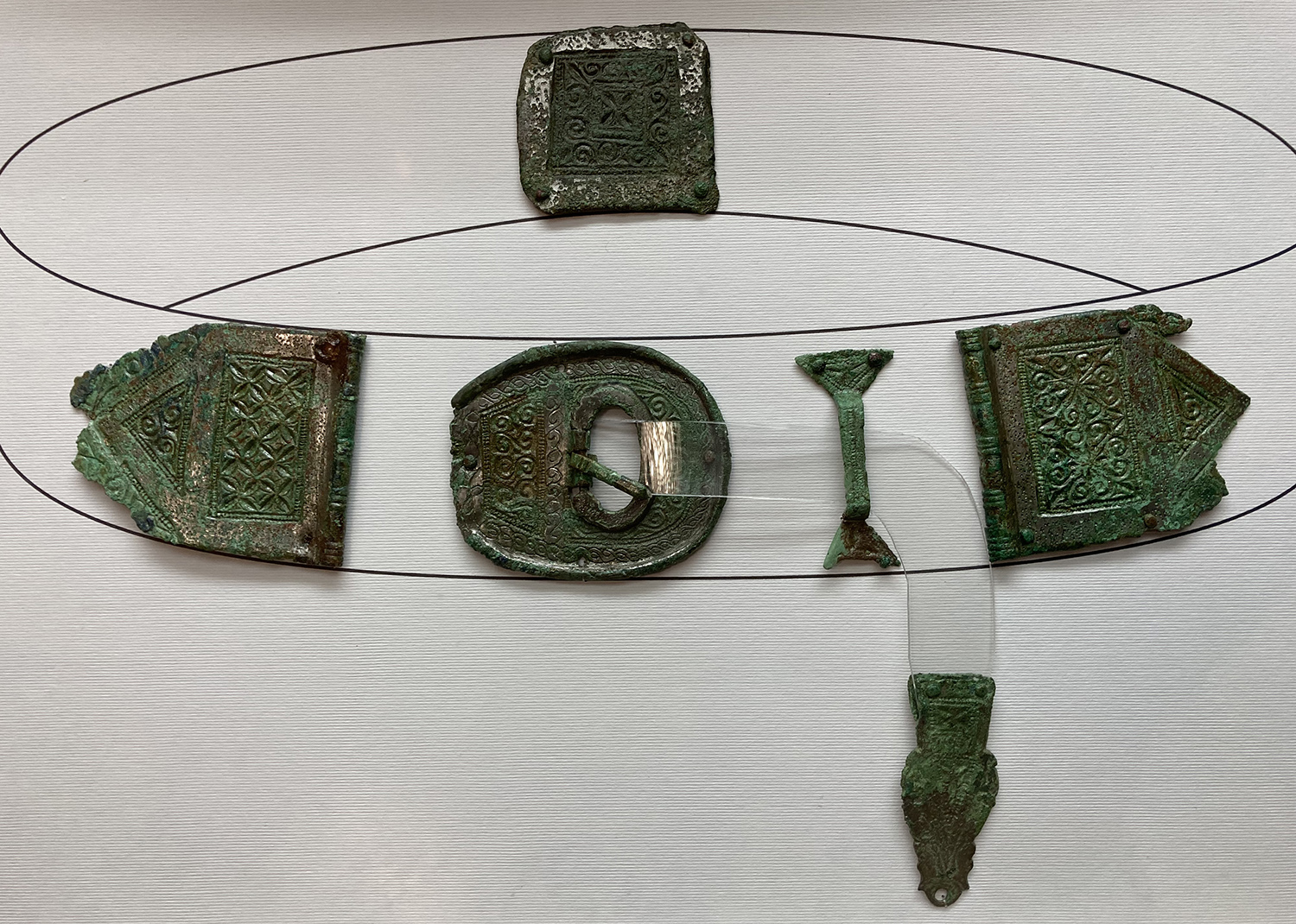
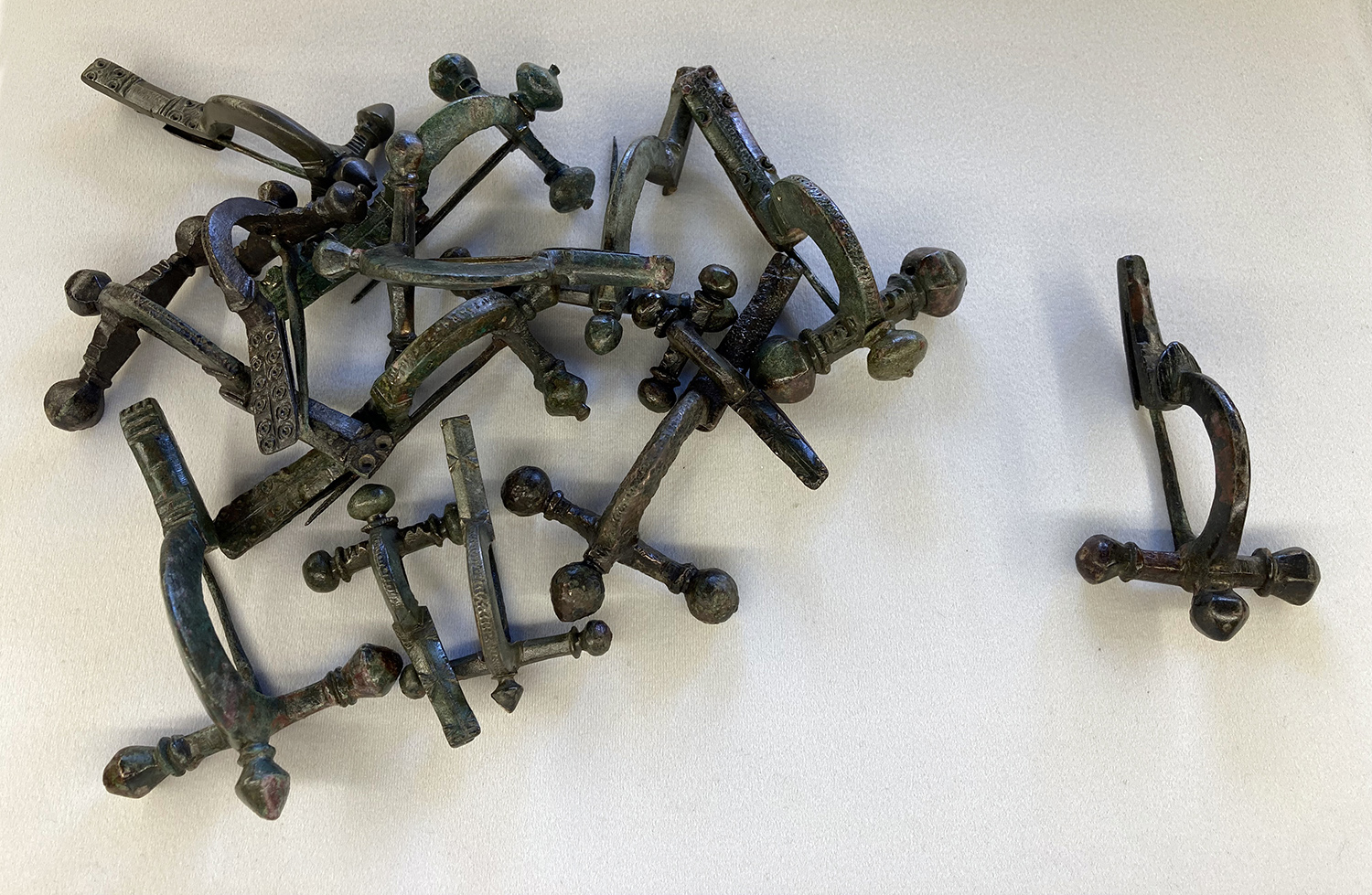
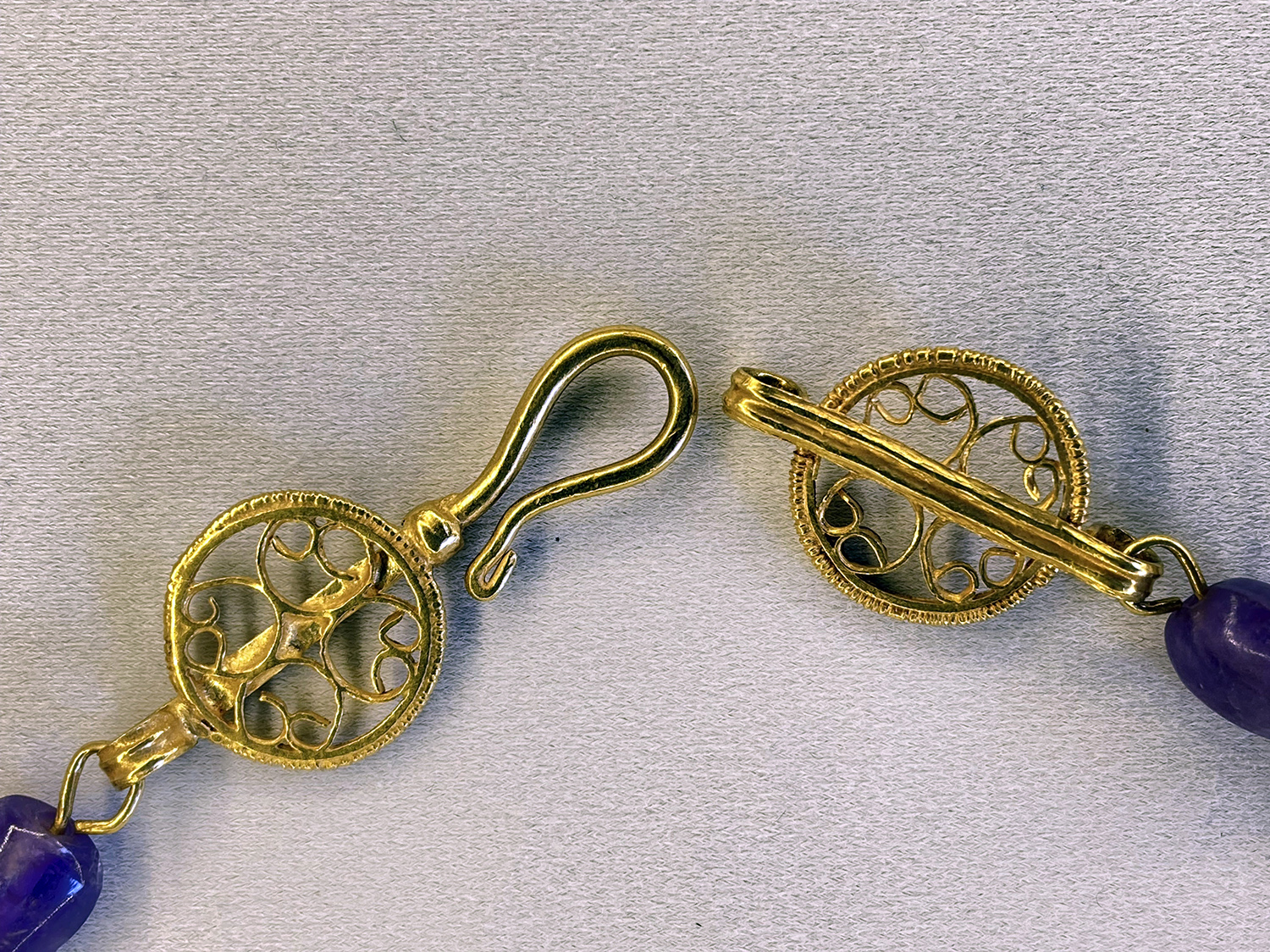
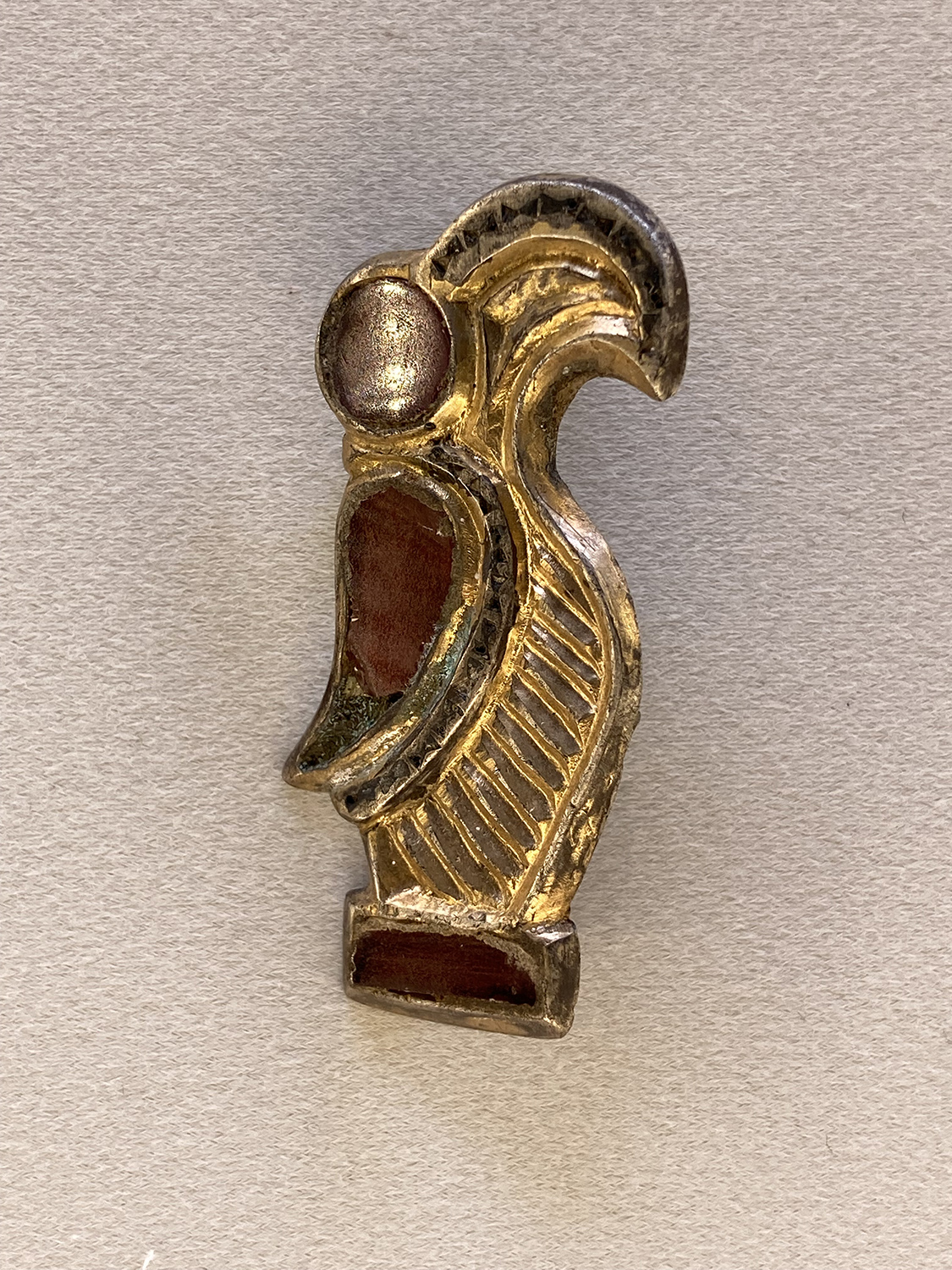
The third showcase displays elements of clothing, jewelry, and items of everyday use, reflecting the new influences of the barbarian invasions and the development of Byzantine jewelry.
The quality of life in the old centers during the 5th and 6th centuries had certain negative trends as a result of the deterioration of the political situation. Thus, the standard of private housing gradually declined, and in the middle of the 5th century, the phenomenon of the Roman villa disappeared from the territory of present-day Bulgaria. In the “Late Antiquity” exhibition, you can see mosaics from this period with animal and floral ornaments, the last examples of a dying era of luxury and Roman standards.