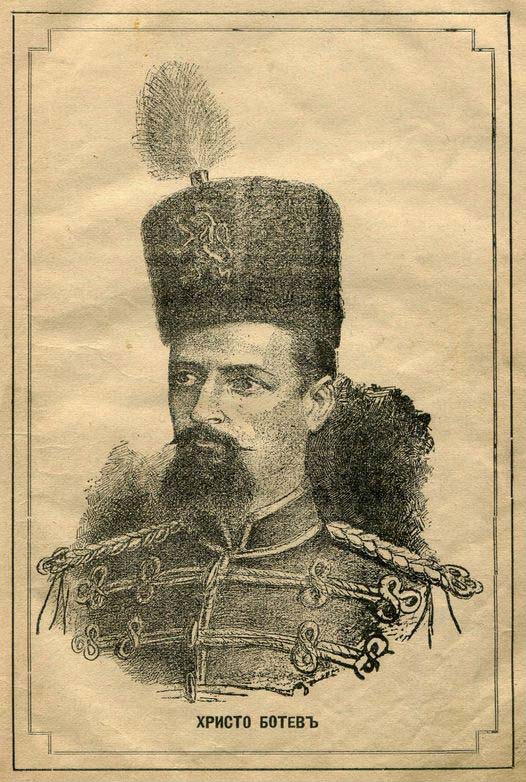
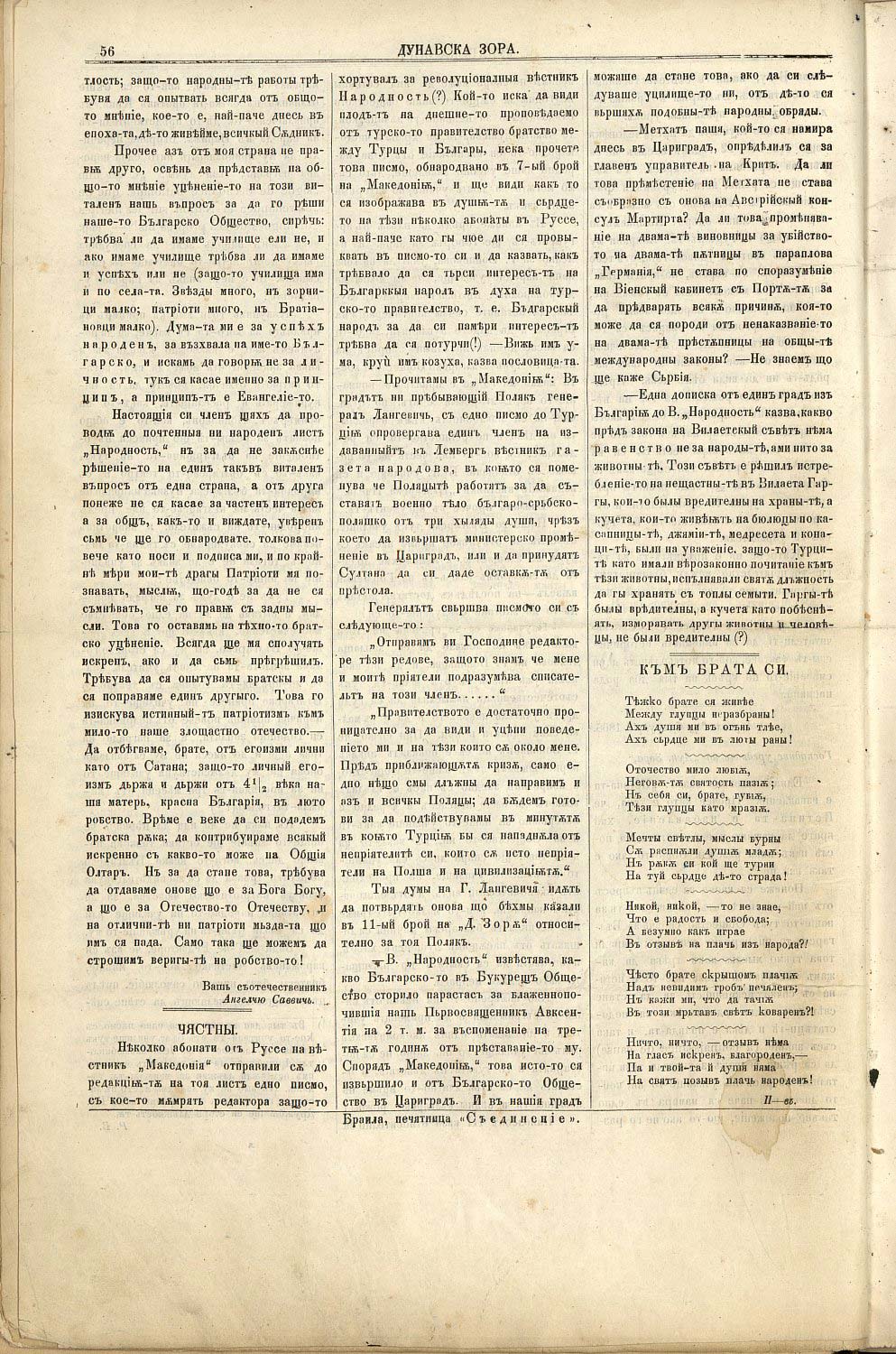
178th anniversary of the birth of Hristo Botev
“…..I love my homeland dearly,
I keep its covenant;……”
/”To My Brother,” in newspaper “Danubian Dawn”, February 12, 1868, Brăila, Romania/
On January 6, 1848, the prominent Bulgarian revolutionary, poet, and publicist Hristo Botev was born in the city of Kalofer (Plovdiv province, Karlovo minicipality). Raised with a love for his homeland and intolerance for injustice and violence, Botev embarked early on the difficult path of emigration to Romania. In Brăila, Giurgiu, and Bucharest, he got to know the Bulgarian rebels and collaborated with prominent representatives of the Bulgarian emigration. His acquaintance and collaboration with Hadji Dimitar, Lyuben Karavelov, Stoyan Zaimov, Vasil Levski, Dimitar Panichkov, Dobri Voynikov, and others. In 1874, Hristo Botev became actively involved in the activities of the Bulgarian Revolutionary Central Committee (BRCC), of which he became secretary. He took part in the preparation of the Stara Zagora Uprising in 1875, and after its failure, he left the committee.
The young revolutionary was not indifferent to the uprising in Bulgaria being prepared by the Giurgiu Revolutionary Committee. He set about recruiting volunteers and gathering weapons. During the April Uprising of 1876, Botev led a detachment in the Vratsa Revolutionary District. Despite the news of the defeat of the uprising in Panagyurishte, on May 17, 1876, Botev’s detachment forced the captain of the Austro-Hungarian ship Radetzky to stop near Kozloduy and head for Vratsa. On the way, it was pursued by Turkish troops and forced to engage in constant skirmishes. Surrounded in the Vratsa Balkan, it suffered heavy losses, including the death of its leader.
Hristo Botev met his death on May 20, 1876 (June 1 according to the new calendar). He remains in the memory of generations of Bulgarians not only for his revolutionary activities and heroic death, but also for his creative work. His most famous works are: the poems “Hadzhi Dimitar,” “The Hanging of Vasil Levski,” “Farewell,” “My Prayer,” “To My Brother”; the journalistic works “Instead of a Program,” “Examples of Turkish Justice,” “Ridiculous Crying”; the feuilleton “This is What Awaits You!” and others. As a journalist and publisher, Botev published the newspapers “Word of the Bulgarian Emigrants,” “Alarm Clock,” “Flag” (the official publication of the Bulgarian Revolutionary Central Committee), “New Bulgaria,” collaborated with a number of newspapers (L. Karavelov’s “Freedom” and “Independence,” D. Voinikov’s “Danubian Dawn”), did translations, etc.
Over the years, the Bulgarian people have expressed their admiration and respect for their hero. A number of monuments in Bulgaria are dedicated to Botev, including in Vratsa, Kalofer, and other cities. Dozens of schools, community centers, and libraries in Bulgaria and abroad bear his name. A monument to Botev’s detachment has been erected on Okolchitsa Peak in the Vrachanski Balkan, and June 2 is celebrated as the Day of Hristo Botev and those who died for the freedom and independence of Bulgaria. Thousands of Bulgarians visit the museums dedicated to Botev and his detachment in Kalofer, Kozloduy, and Skravena every year.
At the Bulgarian Historical Museum in Boyana district, Sofia, visitors can view a number of exhibits related to the life and work of Hristo Botev, such as his portrait photograph from 1874-1875, his farewell letter from May 1876, the ultimatum letter to the captain of the ship Radetski, and others.
Text: Petrana Kamenova