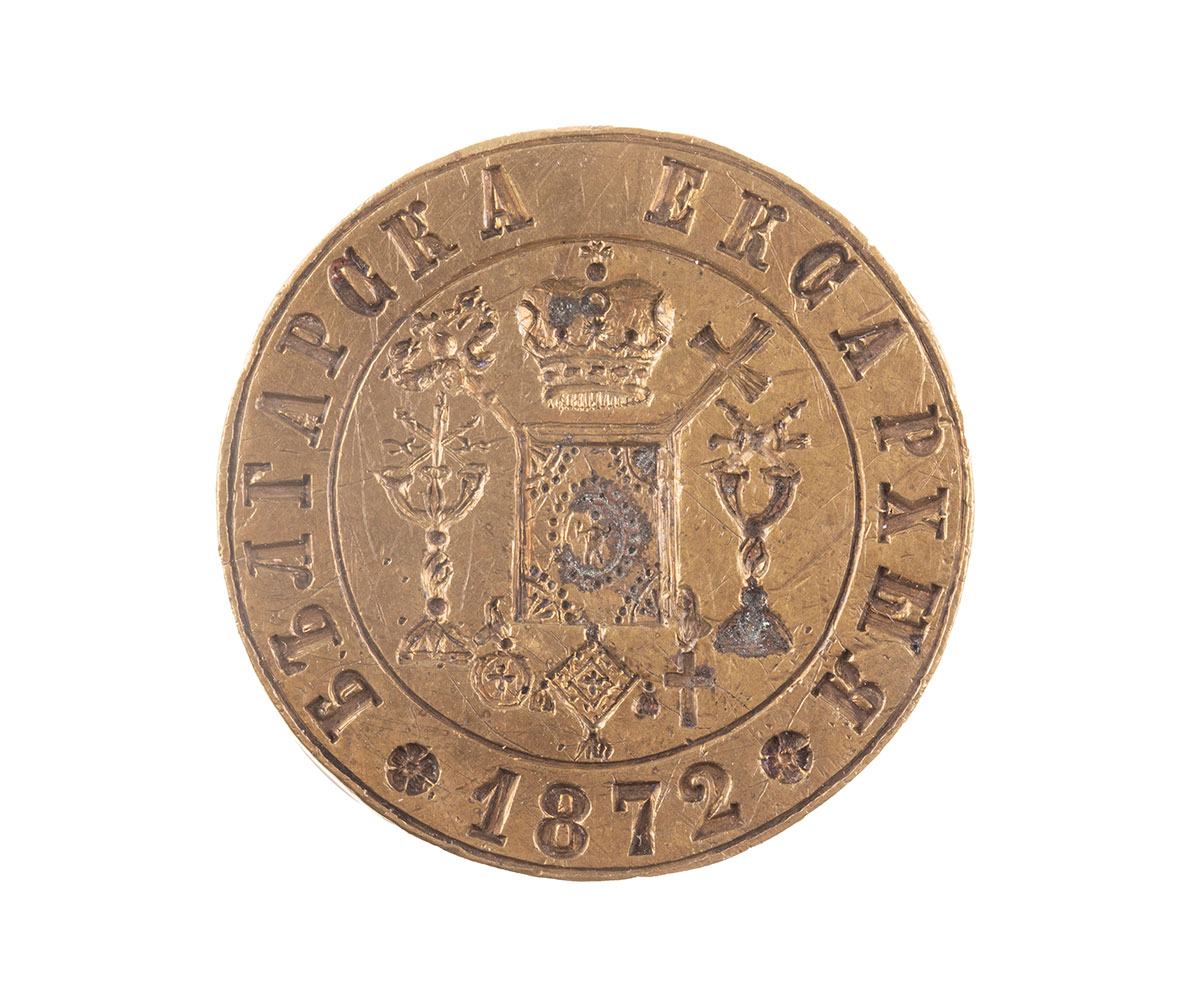
156 years since the establishment of the independent Bulgarian Exarchate
On February 27, 1870, the Bulgarian Exarchate was established. It was the result of a mass movement for ecclesiastical and national independence that unfolded during the 19th century. This movement was only formally ecclesiastical in nature, as its goal was the separation and international recognition of the Bulgarian people within the boundaries outlined by the church dioceses. The establishment of the Exarchate marked the first major victory in the process of restoring statehood.
The church struggle that began in the early 19th century gradually gained mass support among the population. Its leadership center became the Bulgarian colony in Constantinople, and its leaders were Neofit Bozveli and Ilarion Makariopolski. The church movement found support among all Bulgarian communities and among Bulgarian emigrants, as the National Revival activists understood its purpose and meaning very well. This explains the strong support and commitment among the people, the clergy, and representatives of the cultural-educational and revolutionary movements.
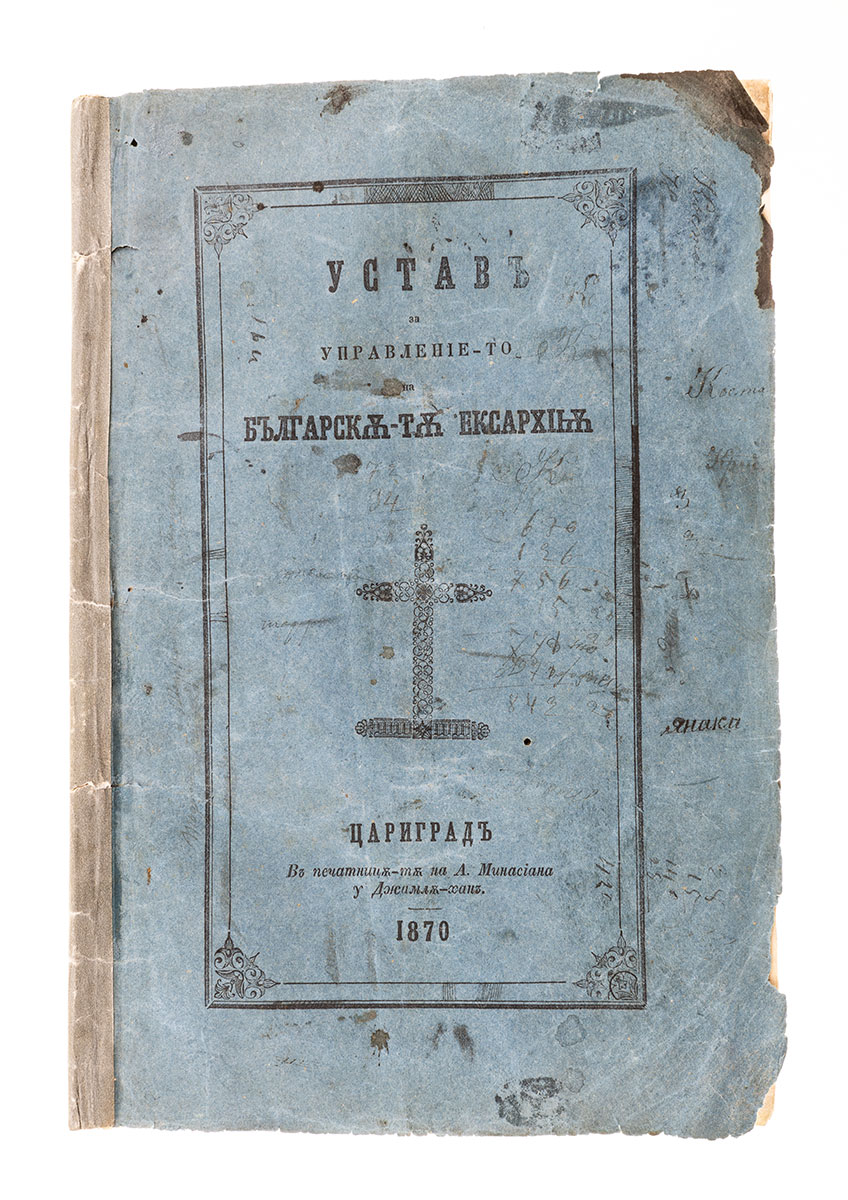
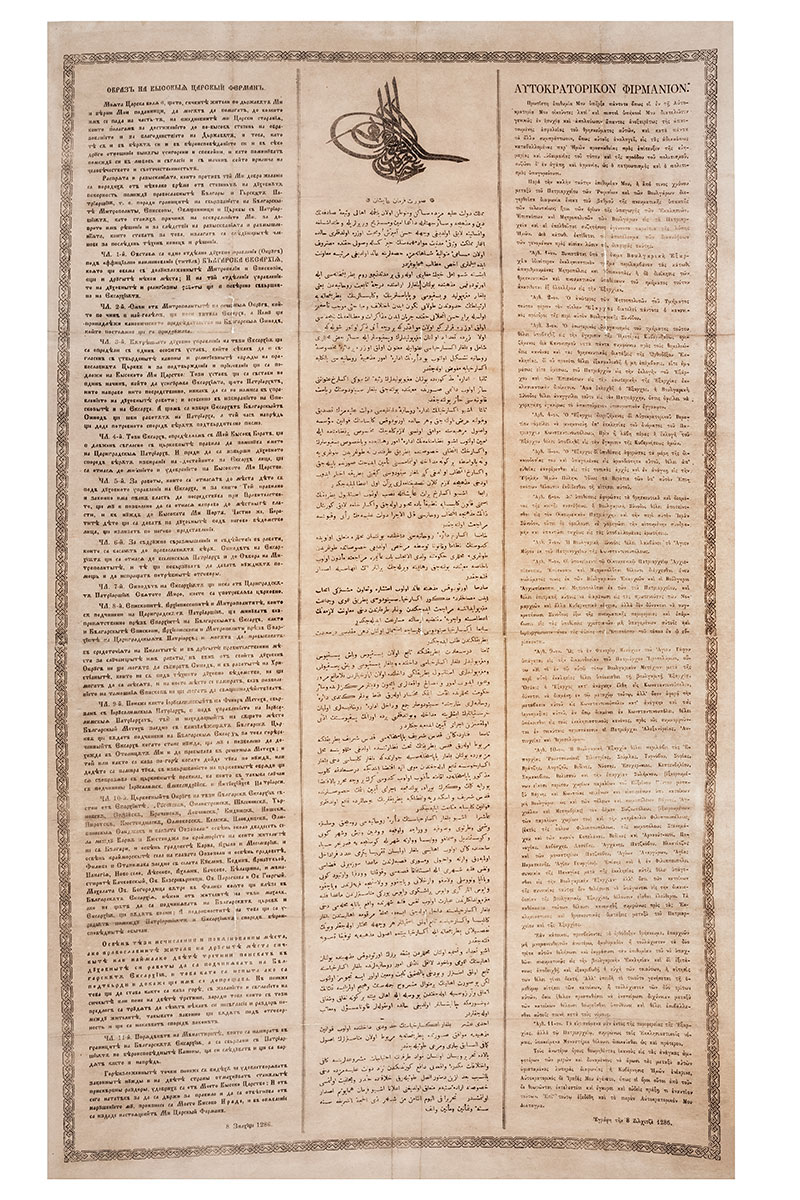
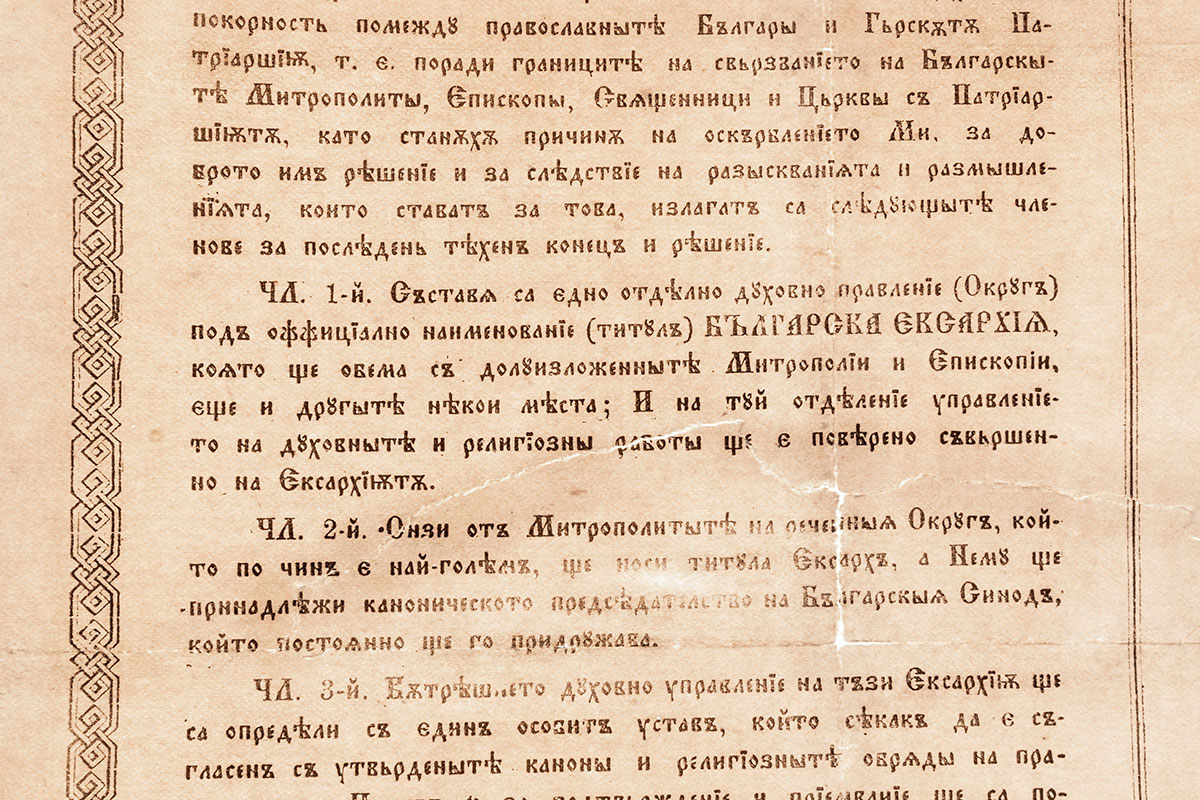
The decree establishing an independent Bulgarian Exarchate was issued by Sultan Abdul Aziz on February 27, 1870. The boundaries of the Exarchate included all territories inhabited by Bulgarians. In certain settlements and areas with a mixed population, a referendum was to be held. Church leaders immediately set about the practical organization of the Bulgarian Church. The First Church Council in Constantinople in 1871 First Church Council in Constantinople in 1871 drafted and adopted the Statute of the Exarchate, which was characterized by a liberal spirit and progressive and democratic regulations. On February 16, the first Bulgarian Exarch, Anthim I (1816-1888), was elected.
The Exarchate was the first institution officially recognized as representing the Bulgarian nation in the Ottoman Empire. Since its establishment, it has performed functions characteristic of a state. The draft for the creation of two autonomous Bulgarian regions, presented at the Constantinople Conference (1876), refers to its borders. Its borders were used in the drafting of the preliminary peace treaty of San Stefano (1878).
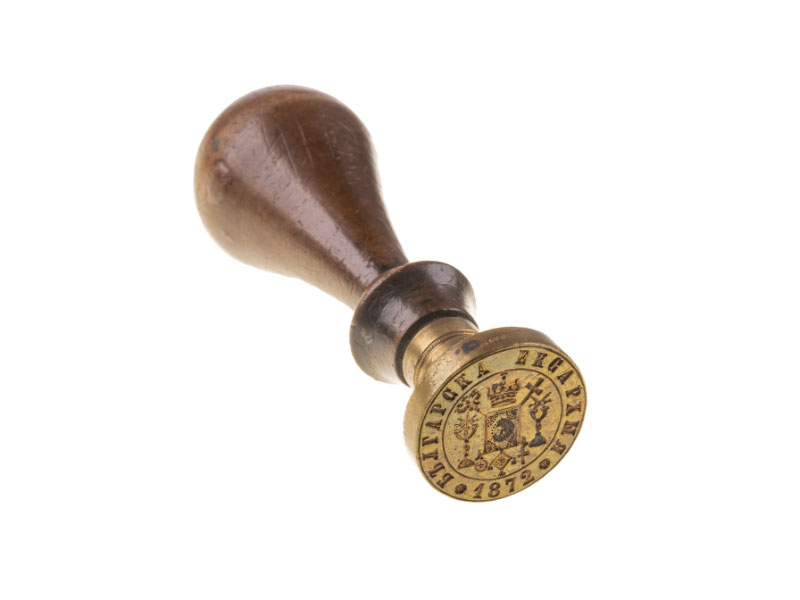
In the permanent exhibition of the Bulgarian History Museum (NIM), “Bulgarian Lands in the 15th-19th Centuries,” museum visitors can get a close look at church and personal documents, artifacts, and photographs related to the Bulgarian people’s struggle for church independence and the establishment and organization of the Bulgarian Exarchate. Among them, the following deserve special attention: the decree for the establishment of the Bulgarian Exarchate from 1870, the first charter of the Exarchate from 1871 and its seal, the staff of Exarch Anthim I, etc.
Text: Petrana Kamenova