Violina Kiryakova: Despot Konstantin is the sixth son of Tsar Ivan Alexander
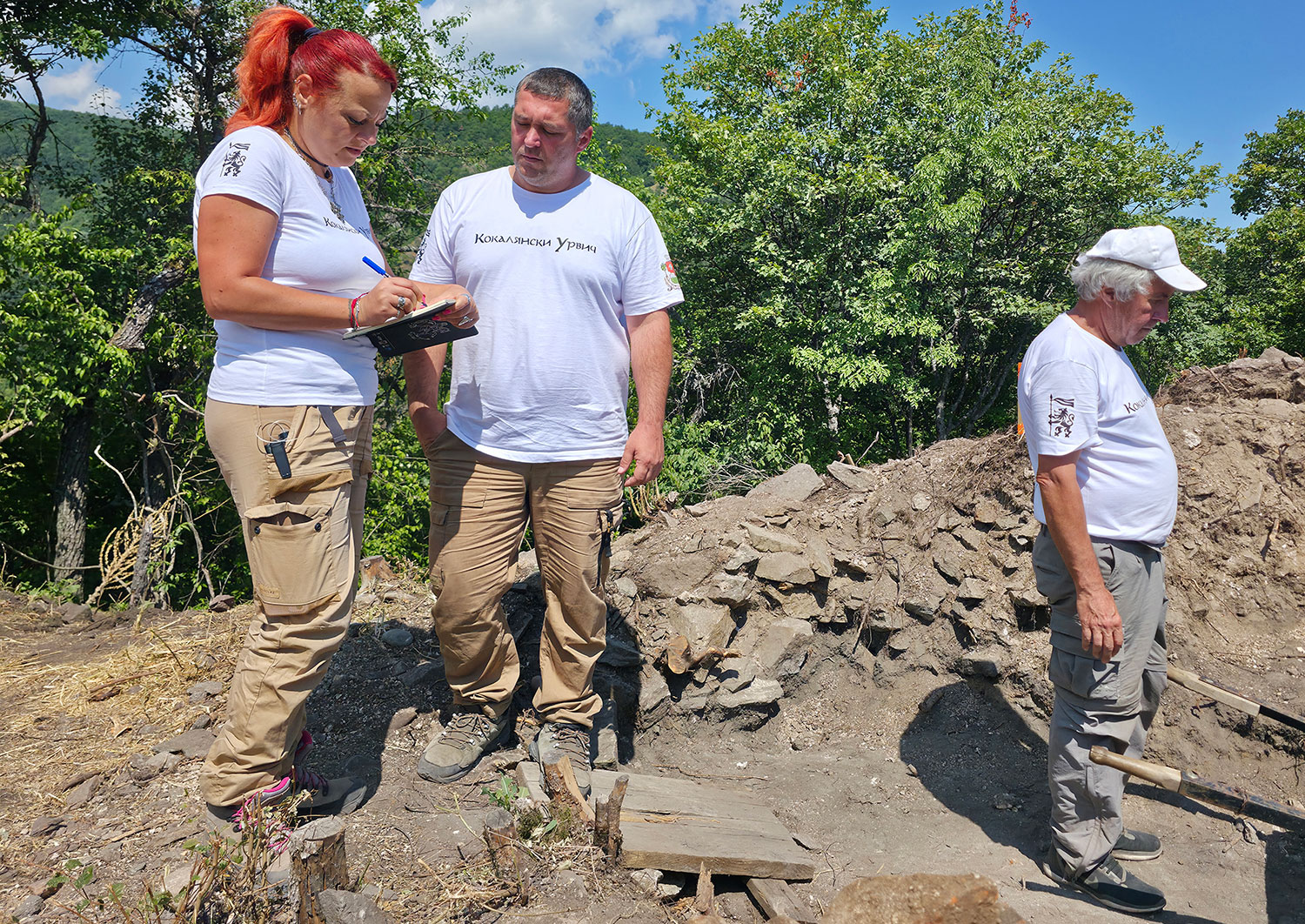
A few days ago, the archaeological expedition of the National Museum of History under the project “The House of the Double-Headed Eagle” came to an end.
In a brief conversation with the head of the excavations, Violina Kiryakova, we will present in several parts the findings so far, as well as the history of the research.
Mrs. Kiryakova, what are the main highlights of this year’s archaeological expedition?
Thanks to the “Culture” Program of the Sofia Municipality, this year the National Museum of History continued the research of Kokalyanski Urvich through the project “The House of the Double-Headed Eagle.” We focused on the exploration of a residential room, where we discovered a finely crafted kitchen utensil (spatula) as well as an upholstery nail with a large gilded head. This suggests that the furnishing of this room was quite sophisticated for its time and that the people who lived there held high social status. Immediately behind these premises, we found a shaft created by treasure hunters and over the years filled with various types of waste—human bones, tin cans, bottle caps, and even a triangulation stone.
Did you manage to explore this shaft?
Yes, during the excavations we established that it is a triangular tower. Its lowest part dates back to the Roman era, 2nd–3rd century, and is remarkable for the perfectly fitted stones, with the mortar between them still retaining its adhesive properties.
The first reconstruction was carried out in the 12th century, dated by the discovery of a coin of the Byzantine Emperor Isaac II Angelos.
The third phase of construction belongs to the 14th century and involves height modifications and the addition of a stone casing to the existing structure.
What else did you manage to accomplish in the limited time you had?
The funding allowed us to continue improving the surrounding environment and enhancing the site’s accessibility. We installed new directional signs as well as informational boards to provide visitors with essential information about the fortress. The path leading to the citadel is also regularly maintained and cleared of wild vegetation.
What does the logo of Kokalyanski Urvich represent?
The logo is directly connected to the discovered finds and the purpose of the fortress. It depicts a monk-warrior, a guardian. He holds a sword with his hands resting on the hilt. This image symbolizes the inseparable link between the purely military functions of the fortress and the rich religious activity carried out in the monastery. A goldsmith’s hammer can also be seen on the monk’s belt, referring to the diverse craftsmanship practiced by the monastic community.
You and Dr. Petrunov support the thesis that the body of the young man buried in the Church of “St. Nicholas, Bishop of Myra”, next to whose remains you discovered the ring with the double-headed eagle, is that of Despot Konstantin. What other arguments would you provide to support this claim?
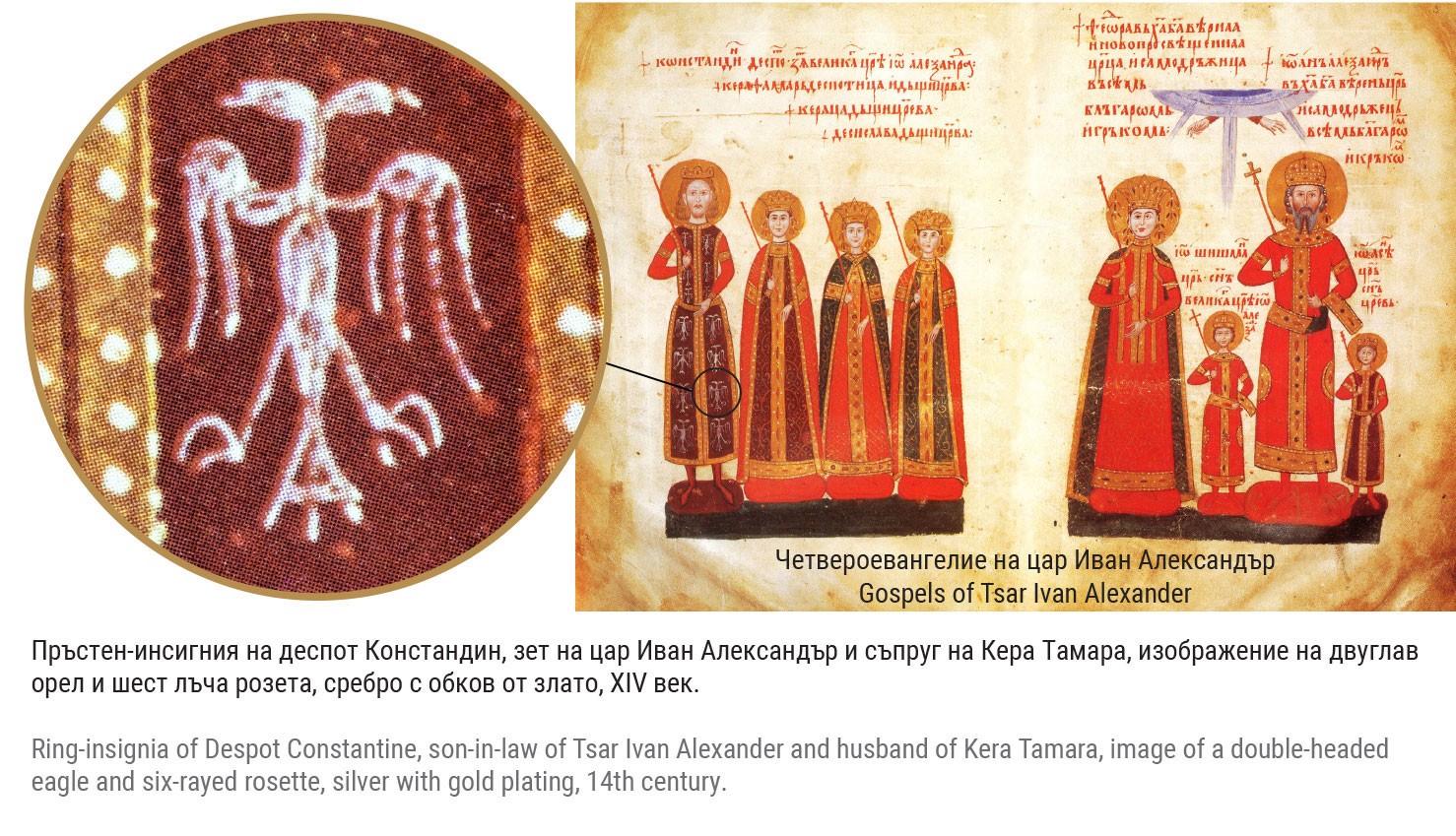
The image on the discovered ring directly refers us to the Tetraevangelion of Tsar Ivan Asen. As Dr. Petrunov mentions, the double-headed eagle appears only with two people — the tsar himself and his son-in-law Konstantin, married to his daughter Kera Tamara.
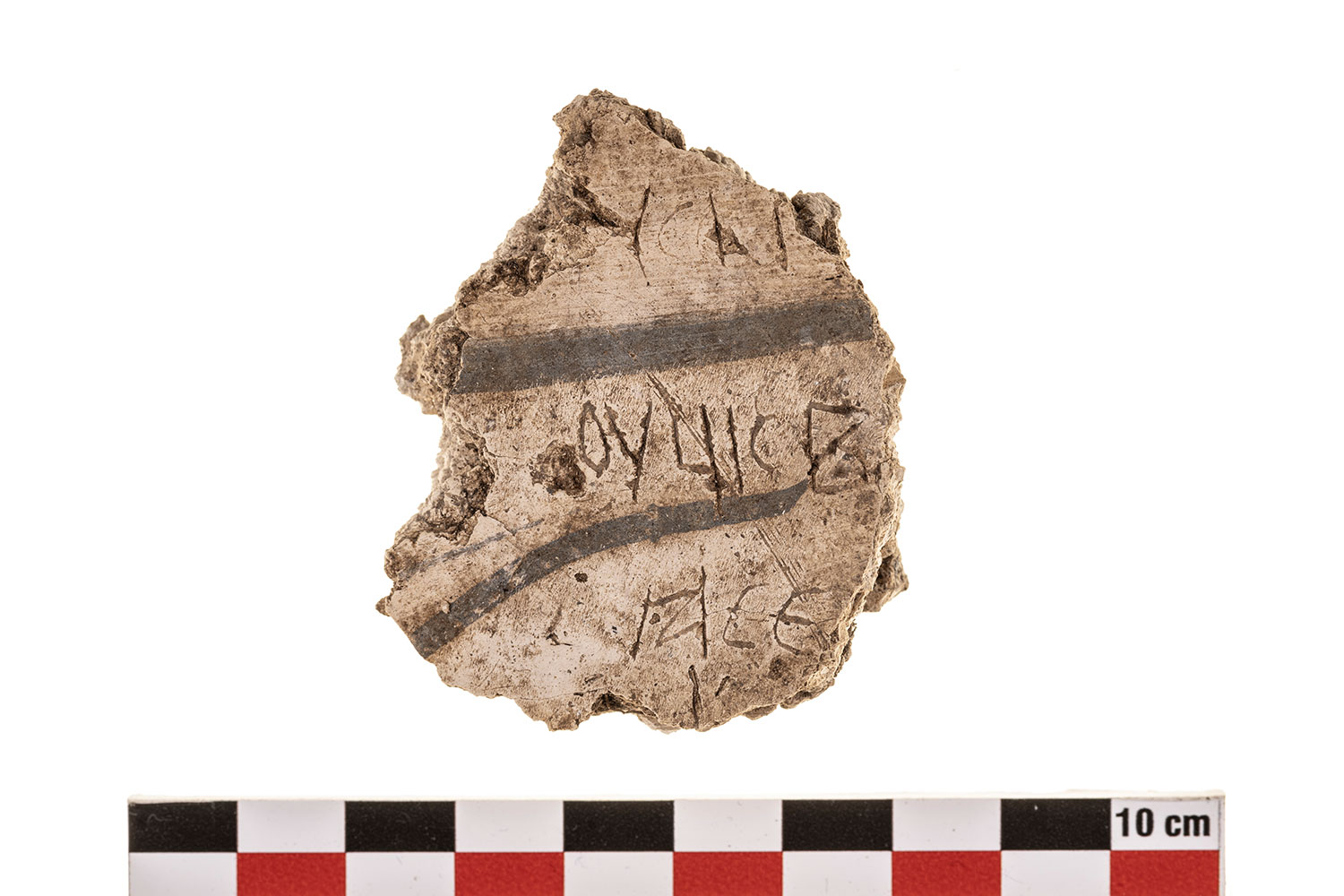
On the scratched graffiti found on a fragment of the fresco decoration, the old Bulgarian letter “yat” (ѣ) appears in the name Yasen. This letter was part of the Bulgarian alphabet until the orthographic reform carried out by the communist regime in 1945.
Similarly, the letter “yat” is formed in the tail of the sixth double-headed eagle on the garment of Despot Konstantin, depicted in the Tetraevangelion. And it can be said that the despot is “by law” the sixth son of Tsar Ivan Alexander.
Another striking feature is the craftsmanship of the ring itself. So far, only two other rings with such an image have been found in Bulgaria — one in Church No. 2 on Trapezitsa Hill in Veliko Tarnovo, and another in the Church of St. Sophia in the capital. In both cases, the eagles are very schematically represented, lacking any additional ornamentation, and the rings themselves are made of silver.
In contrast, the one found at Urvich is characterized by high jewelry craftsmanship and depth of the images. Chemical analyses proved that the relief on the ring was filled with niello.
Additionally, the ring itself has six-rayed rosettes. These rosettes are an important symbol dating back to the First Bulgarian Empire on one hand, and on the other hand, again point us to the sixth son of Tsar Ivan Alexander.
Stoyan Pramatarov